

In the ever-evolving business world, the need for continuous learning and professional development has never been more crucial. Organisations are increasingly aware that investing in their employees’ growth boosts productivity and drives engagement and loyalty.
At Fife College, we have long recognised the importance of credit rating training programmes for placement on the Scottish Credit and Qualifications Framework (SCQF), which ensures that training programmes are effectively recognised and valued beyond the confines of their organisation.
Why SCQF credit rating matters
The SCQF)offers a universally understood system that recognises learning achievements.
It is a common language for qualifications, enabling employers, employees, and educational institutions to speak and understand the value of various training programmes.
When your training programmes are credit rated, they gain a level of national recognition as a qualification that can set your organisation apart from competitors.
In an age where talent is one of the most valuable assets a company can have, offering SCQF credit rated training can significantly enhance your employer brand.
It demonstrates a commitment to employee development, which, in turn, attracts top talent.
Moreover, employees are more likely to stay with an organisation that invests in their growth, reducing turnover and fostering a culture of loyalty.
Enhancing employee engagement and career progression
For employees, SCQF credit rated training isn’t just a badge of honour – it’s a tangible acknowledgement of their skills and achievements.
It provides them with formal acknowledgement that is not confined to the walls of their current employer, but is viewed across industries and educational sectors with recognition as a qualification.
This recognition can be a powerful motivator, driving employees to engage more deeply with their work and pursue further learning opportunities.
Career progression is another critical aspect where offering programmes on the SCQF to employees can make a difference.
Employees can see how their training translates into career advancement. The structured nature of SCQF provides clear pathways for growth, making it easier for employees to plan their careers and for employers to support their development.
By mapping out these pathways, organisations can ensure that they are not only developing skills but also nurturing future leaders.
Embedding a training and development culture within your organisation that is centred around the SCQF can also help advance an organisation in their understanding of less traditional/innovative qualifications and can open opportunities for attracting, recruiting and establishing a more diverse and competitive workforce.
There is also the opportunity for organisations to further build on this culture to become SCQF Inclusive Recruiters, which widens the pool of attracting new talent and skills as part of an organisation’s recruitment process.
A strategic move for organisations
From a strategic perspective, having your programmes credit rated can transform your organisation’s approach to training and development.
It goes beyond merely providing training, it’s about creating a structured and recognised learning environment. This alignment with national standards ensures that the training provided is of a recognised level and confirms competence, which is critical in an increasingly competitive market.
Moreover, credit rating facilitates collaboration with educational institutions and other organisations.
It opens doors for partnerships and exchange programmes, further enriching the learning experience. In a globalised economy, such collaborations can provide a competitive edge, offering insights and innovations that drive business success.
The role of Fife College
At Fife College, we understand the complexities of aligning corporate training with recognised frameworks like the SCQF. Our dedicated team works closely with organisations to tailor the credit rating process to meet specific needs.
We have successfully collaborated with a range of organisations such as Youthlink, The British Computer Society, the London Examinations Board, Skills Development Scotland, and College Development Network.
These partnerships underscore our commitment to providing high-quality, accredited training that meets industry standards.
Get in touch
Investing in SCQF credit rating is not just about ticking a box – it’s about making a strategic decision that benefits both the organisation and its employees.
It’s about supporting businesses by enhancing the value of training, increasing employee engagement, and fostering a culture of continuous improvement.
If you’re ready to take your training programmes to the next level, get in touch with the SCQF team today at https://scqf.org.uk/contact-us/.

It’s SCQF Week 2024!
This year’s SCQF Week, from September 16 to 20, celebrates our various services and the launch of our brand new website.
SCQF Week will encourage people to share their own SCQF journey or wishes for the future, and will have a specific focus for each day of the week:
- Monday, 16 September – Know your SCQF level
- Tuesday, 17 September – Our Inclusive Recruiter initiative
- Wednesday, 18 September – Credit rating
- Thursday, 19 September – Our School Ambassador programme
- Friday, 20 September – SCQF expertise around the globe
We have created a social media toolkit so you can join in and help us celebrate SCQF Week 2024.
Currie Community High School is a comprehensive, non-denominational school in Southwest Edinburgh, writes John Schmidt, curriculum leader technologies, and Fraser McLachlan, depute head teacher.
We offer a wide range of subjects and qualification levels from Broad General Education (BGE) in S1-3 to the Senior Phase (S4-6). We also offer numerous extracurricular opportunities.
Designated as a Community High School in 1997, Currie shares its extensive facilities with the local community, a practice that will continue when we move to our new building in early 2025. As Scotland’s first Passivhaus secondary school, we are committed to sustainability and a curriculum that helps our students thrive and reach their full potential.
Our SCQF journey
Currie joined the SCQF School Ambassador program in April 2019, marking the start of our Developing the Young Workforce (DYW) journey. We’ve continued to progress, through the challenges of Covid-19, with a focus on expanding opportunities for all learners. This includes not only traditional courses but also interdisciplinary learning that fosters skills development, knowledge, and valuable experiences.
Since our initial SCQF training, we have been enhancing the capacity of staff, students, and parents/carers to understand how the SCQF and a wider range of qualifications can be transformative. This shift in mindset has led to the introduction of additional qualifications at SCQF levels 5 and 6, such as the National Progression Awards (NPA) in Skills for Work Laboratory Science. Additionally, many students are pursuing Foundation Apprenticeships at SCQF level 6 in partnership with Edinburgh College.
Learner pathways
At the core of our Creativity & Employability Strategy (aligned with HGIOS 4 and formerly DYW) is the use of the SCQF to inform our learner pathways. This strategy helps shape the three-to-18 learning journey at Currie, focusing on skills development, industry-recognised qualifications, and careers education. It’s also a key driver for raising attainment and embedding the 15-24 learner journey.
One of our recent developments is the creation of the ‘Pathways with Purpose’ webpage, which combines learner pathways with labour market information and utilises My World of Work to support informed choices. This has raised the profile of vocational qualifications while working to develop parity of esteem.


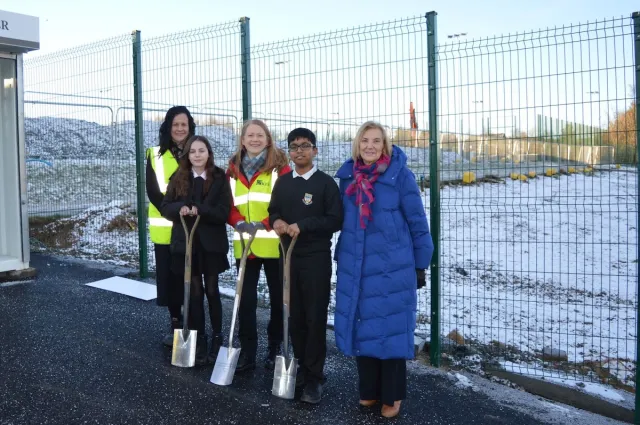
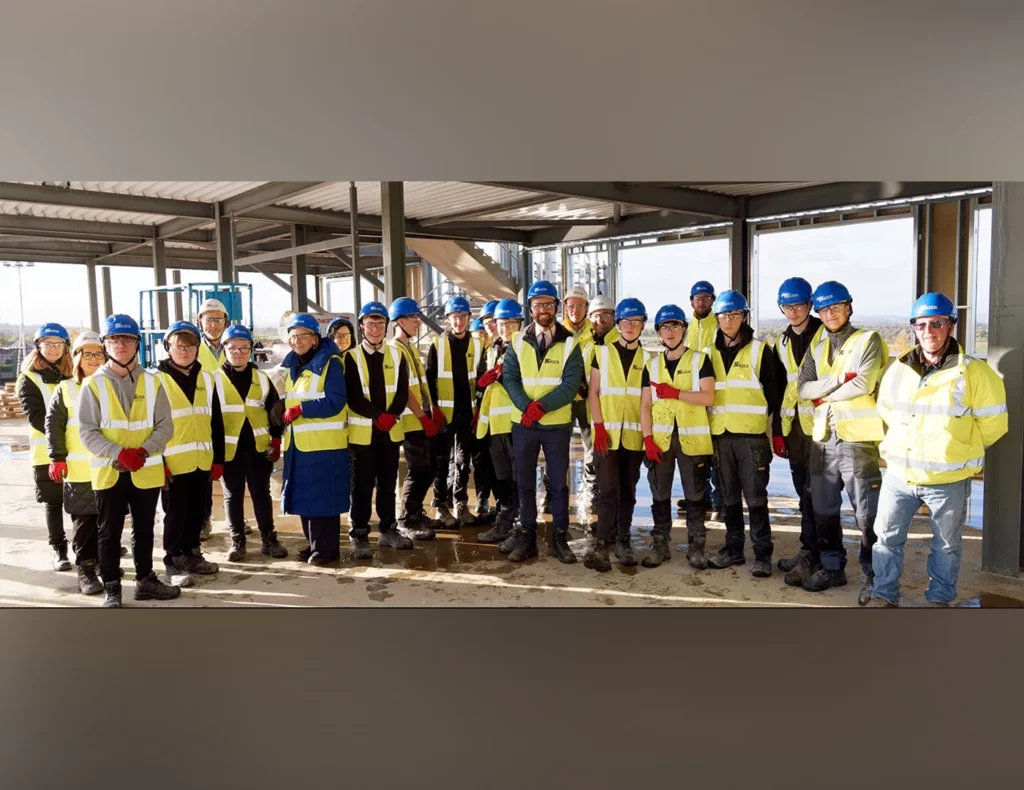

As we prepare to move into our new school, we remain focused on local and national contexts to support improving attainment and achievement for all. Currie consistently surpasses national and city averages in attainment at every stage, and our post-16 stay-on rate is very high, with many students progressing to further and higher education. We support these aspirations by offering a variety of qualifications on the SCQF, including:
- Sports Leaders at levels 4 and 5
- JET Academy leading to the Employability Award at level 4
- Prince’s Trust Achieve leading to a level 4 in Personal Development
- Creative Industries at level 6
- Business with Information Technology at levels 5 and 6
- Enterprise and Business at level 6
- Construction Award at level 5 (linked to new school developments)
- Barista at level 5, among a range of others.
A key focus moving forward is raising awareness and sharing information about the SCQF and qualifications with our stakeholders. We aim for the SCQF to become a ‘common language’ for everyone. We’ve built on past successes, such as distributing leaflets, hosting parents’ evening displays, and attending PiP meetings to emphasize the importance of the SCQF.
Spreading the word
We are enhancing communication by embedding Rights Respecting Schools principles, using interactive resources for course information, producing videos on new course terms like NPAs, sharing the interactive framework on our foyer screen linked to QR codes, and launching our new Pathways with Purpose webpage.
Our next steps as an Ambassador School include:
- Exploring alternative qualifications to suit our learners’ pathways
- providing opportunities for students to learn new skills through interdisciplinary learning
- building capacity and legacy for all students to be ambassadors of the Framework
- continuing to develop opportunities for recognising wider achievements, including opportunities for accreditation, eg. we have created a Leadership Academy
- working towards consistency across our curriculum being right for every child.
For more information about Currie Community High School, visit our website, follow us on X, or explore our silver evidence.
July has been a busy month at the SCQF Partnership, with two new additions to our team. Find out more about Paul White, who joins us as our new Lead for Transnational Opportunities.

What is your role within the SCQFP Team?
I am the Lead for Transnational Opportunities, which is a brand new role. I will be seeking out and leading international projects, as well as providing support to other SCQFP Leads in their areas of expertise.
What do you look forward to achieving in your role?
I’m really excited to enhance the international reputation of the SCQF and expand our networks with partners across the globe.
Tell us a bit about your career to date?
Following an undergraduate Law degree and a master’s in International Relations, I joined Skills Development Scotland (SDS) on their graduate scheme in 2019.
I had several different roles during my time at SDS, with my longest involving working on the development of new Scottish apprenticeships. While there, I collaborated with hundreds of apprentices, employers, training providers, qualification experts and industry bodies.
Tell us something interesting about yourself
I once bungee-jumped 111 metres off the Victoria Falls Bridge, which is over the Zambezi River. I would say I enjoyed the view, but I couldn’t focus on anything other than the fear!
Meet Susan Lauder – the newest addition to the SCQFP team. Susan joins us as an Executive Assistant and brings a wealth of experience.

What is your role within the SCQFP Team?
As Executive Assistant I provide high level administrative support to the CEO and senior leadership team, as well as the Board and the various sub-committees. I am also responsible for the day to day office management for the SCQF Partnership.
What do you enjoy most about your role?
Variety! My job role provides a lot of variety in terms of my day to day tasks which allows me to utilise my skills in lots of different ways – and for the things I’m not sure of, there’s always Google!
Tell us a bit about your career to date?
I started my career in administration as an office junior for a firm of solicitors in Glasgow city centre at the tender age of 16. Since then I have held a variety of administrative positions in a wide range of industries including recruitment (where I spent some time on secondment as a recruitment consultant), private healthcare and third sector organisations.
During my career I have also undertaken two SCQF level 7 HNC qualifications; one in Health & Social Care and the other in Counselling Skills.
Before joining the SCQF Partnership I spent nine years providing administrative support for a team of surgeons within NHS Greater Glasgow and Clyde.
Tell us something interesting about yourself
In my spare time, I like to attend the theatre and have a great love of all things musical. I was once lucky enough to get backstage to a well-known musical during its tour of Glasgow where I met some of the cast and even got to step out onto the stage. Thankfully, the auditorium was empty at the time!
Youth work in Scotland plays a crucial role in the development and well-being of young people, impacting their personal growth, social inclusion, community engagement, education and overall health.

The CLD Standards Council Scotland is the professional body for people who work or volunteer in community learning and development in Scotland. This includes adult learning, community development and youth work.
They developed the Scottish Vocational Qualification (SVQ) in Youth Work in partnership with the CLD sector and employers in the public and third sector. The SVQ is a mandatory component in the Modern Apprenticeship in Youth Work.
It is a broad-ranging qualification aimed at school leavers, volunteers, those wishing to upskill and reskill, and for those looking for a pathway to the professional qualification at SCQF level 9 and above.
The qualification offers an understanding and grounding in theory and approaches to youth work, group work skills and the values and ethics underpinned by the CLD Competent Practitioner Framework.
SCQF levels
Set at SCQF levels 6 and 7, and worth 52 SCQF credit points (level 6) or 72 SCQF credit points (level 7), the award aims to develop occupational skills and enhance learners’ future career prospects.
Learners who achieve this SVQ can continue to the SCQF level 7 HNC Working With Communities or progress on to the professional qualification at SCQF level 9, which is offered in Scotland by five universities.
All the SVQ Youth Work units are intended to be practical, where learners are provided with the opportunity to develop as youth work practitioners by working directly with young people in a variety of settings.
The benefits
Steven Maclennan, Development Officer at the CLD Standards Council, said: “This SVQ and Modern Apprenticeship offers learners the chance to work directly with young people and support them in a variety of settings.
“It provides opportunities for learners to engage and practice different types of group work skills, involve young people directly in decision making and links well with the UN Convention on the Rights of a Child.
“Learners will also support young people with digital skills and tools, as well as engage with young people to promote their emotional well-being and mental health. It allows them to take responsibility for elements of programme planning in partnership with young people, and to support the personal and social development of those young people and their communities.
“Learners develop skills in problem solving, group work, reflection, communication, confidence and assertiveness – all of which are widely transferable skills for further study or employment.
“As CLD practitioners, reflection in and on action plays an incredibly important role in our professional development and informs our response to working with young people, and reflection is a core requirement of this SVQ.
“This practical course opens the gateway to becoming a professionally qualified worker and offers a great opportunity to upskill, re-skill and ‘grow your own’ practitioners.”
Grow your workforce
Steven added: “I would encourage organisations to think about whether they can offer this qualification and/or the Modern Apprenticeship to help strengthen and grow their workforce.
“The CLD Standards Council are happy to meet and discuss ‘growing your own practitioners’ with practitioners and organisations.”
Participants
Bethany Mclay, Go! Youth Trust Youth Worker in Falkirk, who has completed the SVQ, said:
“This course has helped me with having a better understanding of the impact of youth work on young people. It has supported me with being able to reflect upon the sessions I do at my work and better support the young people I engage with. I enjoy having the opportunity to learn more about the benefits of youth work and all this entails for helping me in my career. This course has helped boost my confidence and knowledge about the work I do.”
Shania Jensen, Fife Council Youth Worker, who is working towards the qualification, said:
This course has helped me gain confidence as a practising youth worker. It has shown me the importance of youth work and why it’s needed for the young people in our community. I love that I get the opportunity to deliver my work while generating evidence for my vocational qualification in youth work. This allows me to learn on the job and use my vocational studies to better my practice.
Find out more about SQA’s SVQ in Youth Work at SCQF levels 6 and 7 or Community Development at SCQF Levels 5, 6 and 8.
Sustainability is no longer just a buzzword for businesses – it’s a necessity for organisations looking to stay competitive and relevant. As the world’s population continues to grow and resources become more strained, it is vital we adopt practices and policies that promote long-term environmental, economic, and social well-being.
The Institute of Sustainability Studies (ISS) has developed a Diploma in Business Sustainability course at SCQF level 7 aimed at individuals and businesses looking to enhance their sustainable business practices and drive organisational change.
At ISS, we believe all companies can be successful in weaving sustainability into their operations but there is a substantial need to demystify sustainability as a concept. We strive to break down these barriers with hands-on, comprehensive educational courses, backed by some of the world’s leading academics and enterprises.
About our business sustainability courses
Our flagship offering is our Diploma in Business Sustainability course, at SCQF level 7 with 24 credit points, which is designed to equip participants with a deep understanding of key sustainability topics. In addition to our Diploma course, we also have the Certificate in Corporate Sustainability Reporting Directive (CSRD) designed to equip participants with the knowledge and tools needed to master CSRD reporting. We will also be launching other short courses this year and customised course bundles, allowing participants to choose from a diverse range of modules to meet their organisation’s specific needs.
Who are these courses for and why undertake them?
Our courses are ideal for business leaders, managers, employees and entrepreneurs, across all levels of their careers, helping them to gain practical insights and strategies applicable in real time.
Our past participants have come from a range of industries and sectors; for example, retail, hospitality, finance, construction, food, real estate and business consulting.
Developed by expert educators and practitioners, the course content is academically rigorous, relevant and current. Our courses have also been designed to be relevant to organisations of all sizes and capacities.
Being fully online, participants can engage at their convenience, joining a community of like-minded professionals and experts. Additionally, our masterclasses, exclusive to ISS course participants, are led by industry leaders, and provide valuable, up-to-date knowledge and practical strategies.
What benefits does the credit rating of these courses provide for learners completing them?
The SCQF credit rating, undertaken by Glasgow Caledonian University, means that learners can rest assured they are enrolling in a course that has undergone a rigorous process to ensure it meets the highest educational standards. This adds immense credibility to our courses.
Learners told us …
“I couldn’t recommend this course highly enough – an information-dense trip from the drive to net zero to the fundamentals of circular economy. Particularly enjoyed learning how to get ready for CSRD!” – Sheena Crean, Banking Professional
“The Diploma in Business Sustainability course helped 11 Encirc employees gain clarity and understand key sustainability topics, and have insightful and impactful conversations with our clients.” – Theresa Clarke, Environmental Manager, Encirc
“The course was easy to keep on top of while working full-time. It helped me gain a better understanding of key concepts and hit the ground running in my new sustainability role. I also liked the interactive element.” – Mandy Hughes, Sustainability Manager, DeltaQ
The ISS is a pioneering educational institution dedicated to providing practical tools and expert insights to integrate sustainability into various organisational contexts.
To find out more, visit https://instituteofsustainabilitystudies.com/.

Driving anxiety and test nerves are major hurdles for learner drivers. With long waiting times for tests and pass rates below 50%, they can feel under immense pressure to succeed.
But now there’s a qualification at SCQF level 7 that teaches driving instructors how to support their students’ mental health and well-being, and put them on the road to success.
Delivered by Confident Drivers, ‘Drive with Confidence: Stress Management, Anxiety Reduction and Confidence Building in Driver Training’ has 15 credit points, which equates to 150 hours’ learning.
Confident Drivers has been helping nervous drivers since 2018. It provides a membership website and online training platform for anxious drivers, as well as for driving instructors and trainee driving instructors who want to better support their nervous students.
Online support
The website offers online courses and effective techniques to help drivers manage driving stress, nerves and anxiety. It also has The Driving Confidence podcast, which shares tips, advice, and real-life stories about overcoming driving fears, with a library of over 100 episodes to provide support.
Confident Drivers has been conducting training courses for driving instructors for two years and sought to formalise the training through the SQA credit rating service. The goal is for instructors not only to apply what they have learned, but also to submit evidence in the form of assignments that can be assessed.
The programme is suitable for any driving professional. While most participants are likely to be driving instructors and trainee driving instructors, it may also benefit fleet managers or talking therapists dealing with driving anxiety and phobias. The programme consists of four units, each covering different aspects of how stress, nerves, and anxiety may be connected to driving, including:
- Unit 1: Effective questioning techniques in driver training
- Unit 2: The brain and anxiety
- Unit 3: Neurodiversity and driver training
- Unit 4: Confidence building in driver training
Quality assurance
The credit rating provides participants with confidence that the training and assignments will help them achieve the course’s learning outcomes, rather than just receiving a certificate of attendance.
Participants understand that they will need to put effort into using their new knowledge and can proudly celebrate their achievements upon completing the course.
This also gives their future learner drivers confidence that their instructors have undergone a rigorous quality assurance process regarding training for nerves and anxiety.
For more information on the programme, visit www.confidentdrivers.co.uk/drive-with-confidence