


Colleges across Scotland are opening their doors from March 21 to 28 to mark the second national Big College Open Week – aka #BigCOW.
A host of exciting activities are taking place in colleges across Scotland during the week, which has been organised by the College Development Network (CDN) Marketing and Communications Network.
The purpose of the week is to demonstrate all that colleges offer – including the wide range of learning pathways and options open to students.
Choosing to study at college can be the best way to start, change or develop a new career right on your doorstep. By coming together, Scotland’s colleges will show how they are the right choice for anyone – young and not so young – who wants to start or change their careers, and for businesses looking to develop their workforce.
What’s on offer
During the week, colleges will be offering taster sessions, tours, the chance to meet course tutors and members of Students’ Associations, who will be on hand to talk about clubs, societies and support. There are taster days and open evenings, and you can ‘learn to student like a pro’ with short talks on careers, the library and admissions.
Marie Hendry, Chief Executive of CDN, said: “We are really excited for this year’s Big College Open Week.
“It’s all part of the Choose College campaign and aims to highlight the incredible opportunities colleges offer.
“The week will showcase the support and expertise that has helped countless pupils, school leavers, career changers, career developers, employers, graduates and apprentices to take the next steps in their journey.
“We want to get the message out to parents, grandparents, guardians, teachers, mature students and school pupils that college is so much more than a course – it offers pathways, experiences and qualifications that lead to real careers and future success.”
Explore what is happening at your local college at https://www.cdn.ac.uk/choose-college/big-college-open-week/

Glasgow Chamber of Commerce is the latest organisation to join the SCQF Inclusive Recruiter Programme, helping it to streamline recruitment practices and put the right person with the right skills in the right job.
The qualifications landscape in Scotland has changed significantly over the last decade and it is important that employers are able to recognise and compare the wide range of qualifications and learning programmes now available in Scotland.
The SCQF has 12 levels and covers both academic and vocational qualifications delivered at school, college, university, the workplace and the community – including apprenticeships and industry-specific qualifications – recognising and valuing skills in a variety of fields.
By using SCQF levels and tools in recruitment processes, including job descriptions and adverts, Glasgow Chamber of Commerce hopes to increase the pool of potential talent from which to select employees and to enable prospective employees to better understand the skills needed to fulfil the roles available.
Becoming an SCQF Inclusive Recruiter supports the Chamber’s commitment to being a forward thinking and inclusive employer, working to create positive change in Glasgow and beyond.
Ashleigh McCulloch, Creative Director at Glasgow Chamber of Commerce and Regional Lead, DYW Glasgow, said:
Becoming an SCQF Inclusive Recruiter promotes equality of all qualifications, properly benchmarks the skills of staff and applicants to our roles and broadens the pool of potential talent.
Nicola Smith, Lead: Projects and Employer Support at the SCQF Partnership, added:
As Scotland’s national lifelong learning, qualifications and skills framework, the SCQF brings a huge number of different types of qualifications together in the same place so they can be compared and understood. Glasgow Chamber of Commerce have recognised the importance of changing the language they are using when recruiting to match the language being used now in education.
If you are an employer and would like to elevate your recruitment practices, please get in touch. The process of becoming an SCQF Inclusive Recruiter is simple and there is no cost. We provide staff training and will talk you though how to:
- Recognise and compare qualifications
- Benchmark your job roles to the SCQF
- Recognise skills and experience at different SCQF levels
- Word your job adverts to attract the widest range of candidates with the right skills for your role
Have a look at our SCQF Inclusive Recruiter wall, and join these progressive employers who are using the SCQF in a variety of ways to enhance their business practice.
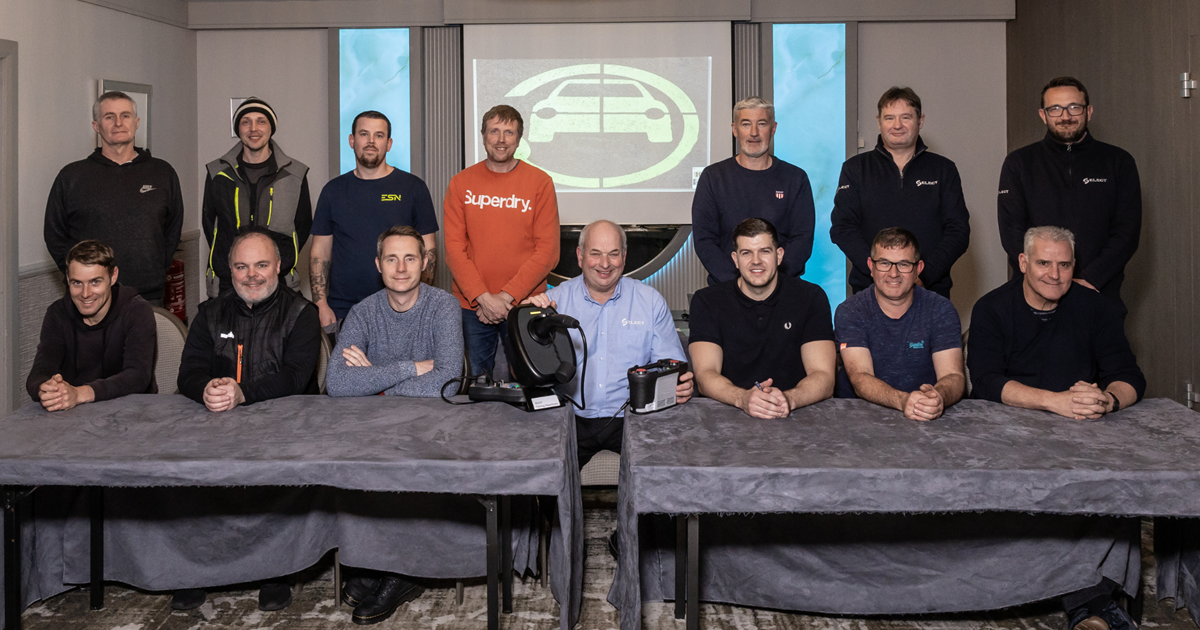
There’s no doubt that the demand for electric vehicle (EV) charge points is rising all the time and that installations are becoming part of the modern electrician’s world.
It’s also essential such work is carried out safely and efficiently, which is why SELECT spent the first half of 2023 creating and shaping a new EV charge point installation course.
Developed in line with feedback from our members, the result was the SQA Customised Award in Electric Vehicle Charging Equipment Installations, a one-day module that can be delivered in person or online.
Learning at SCQF Level 7
The Scottish Qualifications Authority (SQA) credit rated the learning programme at Level 7 on the Scottish Credit and Qualifications Framework (SCQF), with 2 credit points.
As well as providing a Credit Rating that allows the qualification to be understood on the Scottish qualifications framework, this allows us to compare the learning programme to similar qualifications throughout the UK.
Created by Training Development Adviser, Stuart McKelvie, and Consultant Technical Adviser, Billy McRobert, the course aims to provide expert guidance to learners wishing to gain knowledge and understanding of EV charging equipment installations.
Suitable for qualified electricians only, the session focuses on the IET Code of Practice for Electric Vehicle Charging Equipment Installation (5th Edition).
Course aims
By the end of the course, learners will understand and be able to design and install domestic, commercial and industrial EV charging installations.
Stuart is pleased with the take-up so far, saying: “Delegates have seemed to enjoy the practical side of getting involved, using the equipment and familiarising themselves with how everything works. A few have also said that they’ve gone away feeling more confident with the requirements of installing an EV charge point and that they’ve enjoyed the fact that it’s all completed in one day.”
Billy added: “With EVs and charge points becoming more popular, this course will help members add another string to their electrical bow and provide more business opportunities as they learn how to work with EV technology safely and efficiently.”
Among the feedback, Shaun Taylor from SELECT member company, South Ayrshire Council, said:
The course was very interesting and I learned a great deal about charging modes and options, costs and installation and potential DNO issues.
A fellow member was also impressed, telling us:
It was a good comprehensive course. There’s a lot to learn in one day, but if you do the study beforehand, it’s definitely manageable.
Thanks to the donation of three top-of-the range charge points by Luceco Group, the in-person sessions are also completely mobile and can be delivered anywhere in Scotland.
Founded in 1900, SELECT represents the electrotechnical industry in Scotland and is the country’s largest construction trade association. Further information about its work and training can be found at select.org.uk


In 2022, the SCQF Partnership was asked by the Scottish Government to administer a small amount of funding for learning programme providers to bid into to support the work they are doing in the area of Learning for Sustainability. The aim was to increase the understanding and participation of young people in this area and build skills for future green jobs. This follows on from a report we developed for Scottish Government in 2021 which identified some of the barriers faced by providers to having programmes in this area credit rated on to the SCQF.
Eight of the bids submitted received a share of the funding and we are delighted to report that four of the successful organisations have now completed the creation and development of materials to support their Learning for Sustainability aims.
The organisations involved are:
Daydream Believers – creation of materials for the Forestopia challenge, linked to the Creative Thinking programmes at SCQF levels 5 & 6.
The Forestopia challenge invites learners to reimagine a theme park connected to the ecosystem of the forest. In doing so they learn about circular economy, sustainable development, and the need to learn from and protect all our ecosystems. The funding has helped support the development and delivery of the Forestopia experience in schools, ensuring that students have access to high-quality, engaging, and impactful learning opportunities that empower them to take action towards a more sustainable future.
Royal Highland Education Trust (RHET) – development of a suite of learning for sustainability and food resources for use in their learning programmes to engage learner voice and choice and for sharing with the wider teacher and community audience to build connections to, and understanding of, food.
The aim is to build skills and an interest in young people (S1-4) and to encourage them to look towards careers in these areas. The resource provides information and the chance to explore and engage with food sustainability through quizzes, games and interactive platforms.
The Social Enterprise Academy – creation of two brand new resources (LfS No Big Deal and SDG Audit) which form part of the larger resource library available to all teachers and pupils engaged with Social Enterprise Schools.
The Social Enterprise Schools programme provides young people in Scotland with the opportunity to establish their own social enterprise which will operate like a regular business, but will have an environmental or social cause at its core. When young people and schools take part they are introduced to a tool they can use to create change. Change within themselves, their schools, their communities, and even change across the world. However, the intention to change behaviour and mentality can be challenging. This project aims to make things clearer, to enable young people to maintain this behavioural and mental shift while embedding LfS in their school lives which will ultimately help build a socially just, sustainable, and equitable society.
Youth Scotland – development, design and print of a Learning for Sustainability Toolkit linked to the achievement of Hi5 and Dynamic Youth Awards at SCQF levels 2 and 3.
Offered as a free online resource, the Toolkit, themed around sustainability and the circular economy, is being used to provide programme ideas and activities to complement new Climate Action challenge sheets. Experience has shown that the practicalities of delivering activities within youth group and classroom settings with young people means that there would be significant demand for it to be available as a hard copy resource too.
Teacher quotes:
RHET:
“I really like the resources… and think it will be a great place for educators and students to find out more about sustainability, looking at it in different contexts. The information is succinct and easy to understand. It will be easy for an educator to pick up these resources with little background knowledge and be able to use them to make an impact.”
The Social Enterprise Academy:
“Social Enterprise as a concept and way of working is a good example of LfS in action. The new materials developed are good at making that explicit especially with the People, Place & Economy wheel tool as too often when LfS is mentioned I think people automatically think about nature, but not the social aspect of LfS. These resources help make that element more explicit. The practical element of running a social enterprise will be very engaging for young people and being on that journey from start to finish and working with issues that are important to them is great.”
For more information on the Learning for Sustainability projects, contact Nicola Smith.
Students wanting to learn about biodiversity can now study a recognised qualification at SCQF level 4.
‘Biodiversity Action’ was added to Scotland’s framework for qualifications after programme owner Keep Scotland Beautiful (KSB) received funding for credit rating.
The funding was administered by the SCQF Partnership on behalf of the Scottish Government. The aim of the investment was to increase the range of Learning for Sustainability (LfS) qualifications on the SCQF. It’s hoped this will help young people learn and build the skills needed for future green jobs.
It follows on from a report the SCQF Partnership created for the government in 2021 which identified the barriers faced by organisations that want their LfS programmes added to the SCQF.
Several applications were received for the recent round of funding, and eight of the bids were successful, including KSB.
Striving to inspire change
KSB aims to inspire environmental action. Its vision is for a clean, green, sustainable nation and it works across Scotland to help combat climate change, reduce litter and waste, restore nature and biodiversity and improve places.
It strives to inspire changes in behaviour to improve our environment, the quality of people’s lives, their wellbeing and the places that they care for.
The Biodiversity Action programme supports Scotland’s net zero ambitions and aims to develop understanding of biodiversity and local and global threats, encouraging action to prevent biodiversity loss.
Course aims
Aimed at secondary school pupils, the course will help young people develop their knowledge of key biodiversity concepts on how the natural world works and how we are dependent on its healthy functioning. It will build awareness of what positive action they might take to address the causes of biodiversity loss and skills to plan action for a nature positive future.
In creating an action plan to target causes of biodiversity loss, learners will develop skills that will help them construct social, systemic and physical changes to create a nature-positive legacy for the school, the community and themselves.
What’s involved
Students will develop:
- awareness and understanding of the causes and consequences of biodiversity loss.
- a personal connection to the natural world.
- motivation to take action to address biodiversity loss through changed behaviours, systems and physical spaces.
The course, which has 1 credit point, is particularly relevant to staff with responsibility for learning for sustainability, outdoor learning, and green careers. It is deliverable over one term through a minimum of 12.5 hours.
Material is primarily delivered by the class teacher, with optional support from a KSB trainer. Summative student work is shared with the trainer electronically, who will mark it and provide feedback for the students.
Nicola Smith, SCQF Partnership Lead for Projects and Employer Support, said: “It is great to see an increasing number and range of courses for young people on the SCQF that have a Learning for Sustainability focus. This will provide teachers and youth leaders with the tools they need to build a growing understanding of, and interest in, Learning for Sustainability topics among our young people, building the skills and understanding needed in our future workforce to face the significant challenges ahead.”
Eve Keepax, Senior Officer, Education and Learning at Keep Scotland Beautiful, added: “We’re excited to add this Biodiversity Action course to the Keep Scotland Beautiful Climate Action Schools programme. Both the biodiversity and climate change crises are intertwined and cannot be resolved in isolation. We tend to take action on things we care about so the course offers young people an opportunity to develop their own connection to the natural world alongside their academic learning. It also provides a framework to support students to develop their ideas on what they want to change, and different ways to achieve it. Beyond the immediate benefit to schools and candidates of a relevant qualification, I am looking forward to seeing biodiversity action projects emerging across Scotland, led by students energised by the course in a spirit of discovery, wonder and agency.”
For more information on the Learning for Sustainability projects, contact Nicola Smith.
To learn more about the KSB qualification, visit Biodiversity Action.
When I tottered into infant school, aged 4 years and 11 months, in September 1958 I had no way of knowing that it was the start of an involvement with formal education and training in one way or another almost continually for over 65 years.
Since then I have been at various times a pupil/student, a teacher/lecturer, an examiner/assessor, an adviser, a manager, a governor, a parent; I have been located in a range of institutions focused on primary, secondary, further and higher education “levels”; I have had some experience of education and training systems on three continents; I have worked in both of the rather different systems in England and Scotland; I have observed various cycles of innovation/reform and the subsequent reforms of the reforms; I have lived through periods of rapid increases of investment in education and training, and periods of sustained cuts in funding.
So, given all the variables of time, space, level, resources, purpose, locus and ideology, I have inevitably seen a lot of variation in what “formal education and training” means and what its outcomes can be. I have seen people leaving formal education well-equipped to contribute to society and to manage their own lives, and also observed people leaving formal education hopelessly ill-prepared for work or the challenging world awaiting them.
EFFECTIVE EDUCATION
It’ll be no surprise to you if I say that, in my view, having an effective education and training system accessible to all is fundamental to the success of any economy, to the health of any society, and to the well-being (in its broadest sense) of every individual – and I would hope this is a perspective that all members of our society could sign up to and around which we could coalesce in face of the increasingly divisive “culture wars”.
In this context, I have really appreciated my time since 2016 chairing the Board of the SCQF Partnership, and seeing it continue to develop as a key component of the arrangements that help to provide a coherent system of education and training in Scotland.
You’ll be familiar with many of its uses: providing a metric by which very different types of learning can be compared in terms of their demands and thereby given due recognition; helping to establish “parity of esteem” between academic and vocational learning; providing recognition of skills and knowledge acquired in less formal educational settings; helping to develop access routes into university for those with a wider range of types of qualifications; establishing the equivalence of qualifications obtained elsewhere with those attained in Scotland; helping provide structure and transferability to employer-delivered staff training programmes; enabling former service-personnel to demonstrate the value of their skills in civilian life; avoiding duplication of learning …
respecting the framework
Fulfilling these roles requires the Framework to be respected across the education and training system, the agencies that support them, government, employers, learners, and parents and carers of learners.
Maintaining and promoting its integrity and functionality in a fast-changing world, and a rapidly-evolving landscape of education and training, is no easy task.
The small team at SCQF make a big impact and I have huge respect for all the members of the team for the diligence, creativity and flexibility that they apply to their work of supporting this essential national asset.
The Board members who oversee the work of the SCQF team in maintaining and developing the Framework are drawn from a broad range of sectors of education and training but have been united in their determination to preserve and promote the framework. As I step down from my role as Chair, my thanks go to all of them for the professionalism, commitment and good humour that has characterised their deliberations and decisions.

From left, Marie Hendry of College Development Network; John Evans, the SCQFP board’s new chair; Pauline Radcliffe, chief executive of the SCQFP; Kathryn O’Loan from QAA Scotland, outgoing SCQFP chair Rob Wallen; Fiona Robertson of the SQA, Professor Malcolm Foley, chair of the SCQFP’s Quality Committee; Stuart McKenna of the Scottish Training Federation; and Alastair Sim of Universities Scotland
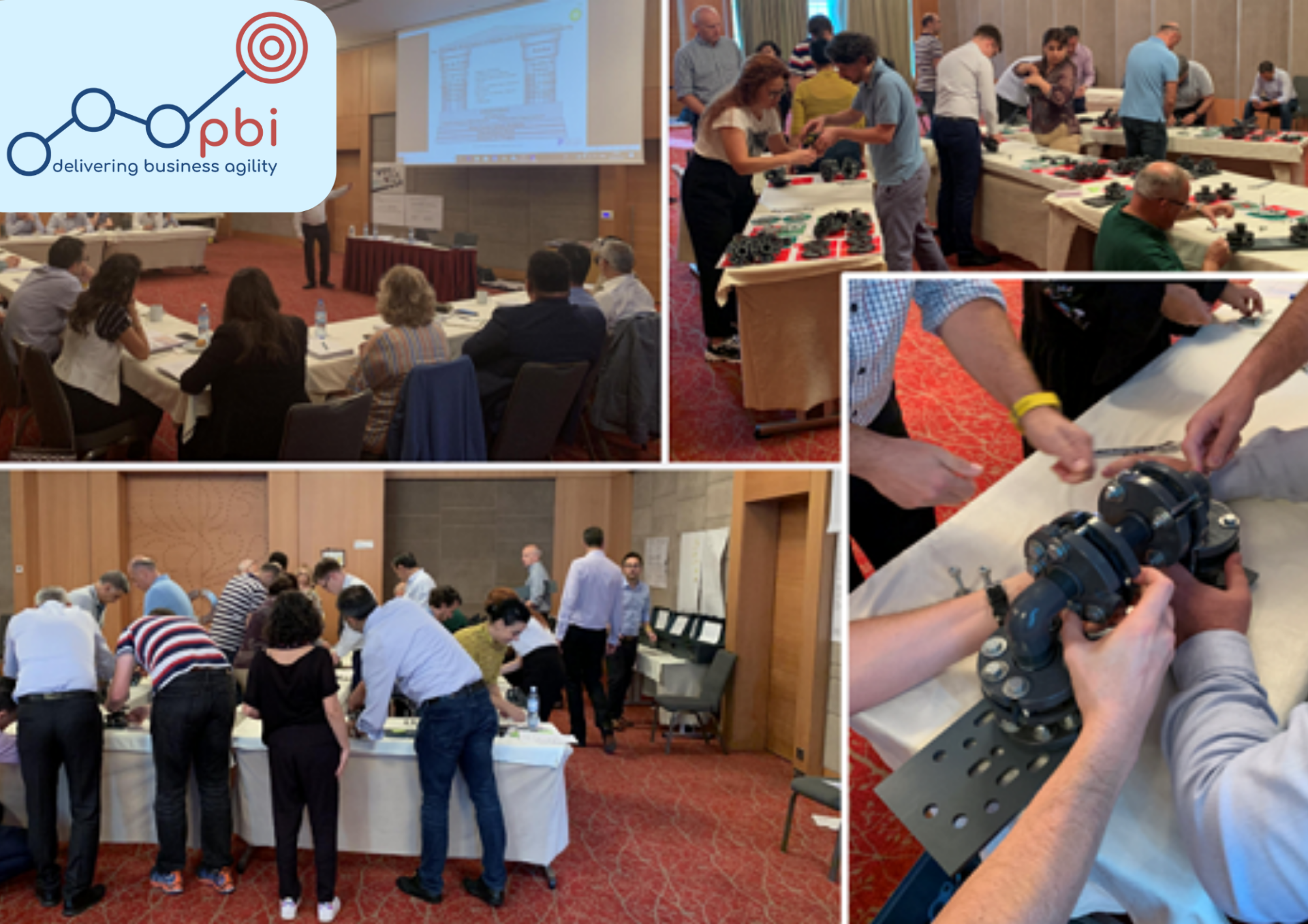
Practical Business Improvements (PBI) is a Management Consultancy with the aim of maximising the potential of businesses and their employees.
The 3-day Lean Practitioner training programme, at SCQF level 7 with 3 credit points, is designed to equip participants from any industry in any role with the knowledge and practical skills needed to apply Lean Mindset and Agile Ways of Working in their business areas.
The programme promises individuals the invaluable ability to foster a culture of continuous improvement, collaborative leadership, and problem-solving agility in their workplace, ultimately enhancing their professional growth and impact.
There is no requirement to have any prior knowledge of the topic, just a willingness to learn how you and your team can enhance your ways of working.
AIMS
The objectives of the programme include gaining an understanding of Lean and Agile concepts, identifying the appropriate tools to solve various types of problems, and learning the behaviours and commitment required to sponsor improvement activities.
Participants will also develop the skills to lead, participate in, and sponsor improvement initiatives and collaborate effectively with Kaizen Facilitators and Agile Coaches.
The training is immersive and hands-on, focusing on challenging traditional problem-solving approaches and implementing proven methods to address business issues. It covers key topics such as Visual Management, Huddle boards for team communication, Campaign rooms for departments/projects, Value Stream Mapping, 5S for workplace organisation, the role of leadership/sponsors, Kaizen Events, Kanban for limiting Work in Progress (WIP), and Setup Reduction.
Qualifying with an SCQF Level 7 certification affirms your understanding of Lean Mindset and Agile Ways of Working, which can then be used practically within your organisation to improve processes, communication and company culture.
GRADUATES
We also offer ‘Passport Programmes’ for graduates, which can help newly qualified Lean Practitioners through the journey of application within the workplace.
One of the programme’s key highlights is the practical application of the learned concepts to address current business challenges.
Participants are encouraged to identify areas within their business where Lean and Agile principles can be applied to solve problems effectively.
Past graduates have said that the frameworks “are really clear and I am already looking at incorporating them into how we work (i.e. Project Charters, Huddles etc)”.
LEAN AND AGILE METHODOLOGIES
In summary, the 3-day Lean Practitioner training programme will give participants the knowledge and skills to embrace Lean and Agile methodologies. It emphasises the importance of practical application, leadership commitment, and continuous improvement in addressing real-life business challenges.
Participants leave the programme with an SCQF Level 7 qualification and the ability to challenge the status quo and make meaningful improvements in their respective areas of the organisation using Lean and Agile principles.
Please contact sales@pbi-ltd.co.uk or visit our website https://www.pbi-ltd.co.uk/ for more information.
The SCQF Partnership is looking for a co-opted Director to SCQF Partnership Board, who will also act as the Chair of the Board’s Quality Committee.
The current postholder, Malcolm Foley, is retiring from the role in March 2024.
The SCQF Partnership has a staff of 12 based in central Glasgow. It is a company limited by guarantee and is a Scottish registered charity. The SCQF Partnership has a Board of Directors which comprises the senior officer (Chief Executive) from each of the following organisations:
- College Development Network;
- Quality Assurance Agency for Higher Education;
- Scottish Qualifications Authority;
- Universities Scotland.
In addition, the Board may co-opt up to two Directors. One of those co-options is reserved for the Chair of Quality Committee and it also currently has a co-opted Director representing employer interests.
The Scottish Credit and Qualifications Framework (SCQF) supports individual learners and exists to sustain a vibrant lifelong learning culture in Scotland.
In order to maintain the quality and integrity of the Framework, the Board appoints a Quality Committee to oversee all of the work related to the approval and monitoring of Credit Rating Bodies, all work linking the SCQF to European or International Frameworks and the development of principles, criteria and guidance for the process of credit rating.
Further detail on the role of Quality Committee, plus the role of the Chair can be found in the annexes. Please note that because of the potential for conflict of interest we cannot accept applications from anyone currently employed by a Credit Rating Body. To apply, please send your up-to-date CV and covering letter/supporting statement expressing why you are interested in this opportunity and your suitability to Beverley Wallace, Senior Administrator, at b.wallace@scqf.org.uk
If you would like to discuss the role in further detail please contact Pauline Radcliffe, Chief Executive, at p.radcliffe@scqf.org.uk or on 07824865019.
We have provided below a note of all the critical dates within this recruitment campaign which we hope will help you plan your diary:
|
Closing date for applications |
15 January 2024 |
|
Interviews with Chair of the Board and Sheila Dunn, Head of Quality Enhancement and Recognition |
February 2024 |
|
Recommendation to Board |
March 2024 |
|
Commencement of appointment |
April 2024 |
For more information about the role, download the job advertisement