

- One is for DYW co-ordinators in schools/pastoral care support/teachers
- The other is for parents and carers
Find out more and register via the links below:
Scottish Apprenticeships: Supporting your pupils, parents and carers
Tuesday, 17 January, 4pm-5pm
Get the latest information on Foundation, Modern and Graduate Apprenticeships and hear from a teacher, apprentice and employer on the benefits of apprenticeships.
The session will share information on how to access resources and tools and include a Q&A, to help you support pupils, parents and carers with information on in-school and post-school options through apprenticeships.
This live webinar will support:
- Teachers, including Pastoral Care Support Staff
- DYW school co-ordinators
If you have any questions, please contact careers.events@sds.co.uk
Overview of Scottish Apprenticeships for Parents and Carers
Thursday, 19 January, 6.30pm – 7.15pm
How much do you know about Scottish Apprenticeships? Sign up to the national webinar to hear about Foundation, Modern and Graduate Apprenticeships and how work-based learning can open the door to a wide range of careers.
In order to access this session, you will require to have downloaded the Microsoft Teams app on your device – we would advise that if you are using a mobile or tablet, you download this prior to the session.
Register to attend on Eventbrite
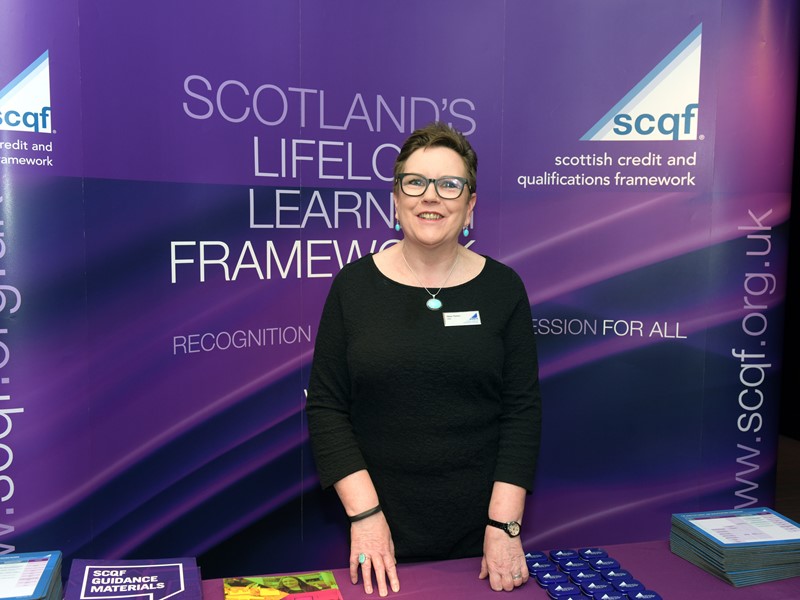
As I spend my last few weeks with SCQFP I have been reflecting on my own journey as well as that of the organisation. When I was appointed as CEO in July 2007 I had 1.5 staff, one room and a very long priority list from my Board. I had over twenty years’ experience in qualifications but knew very little about running a business. So my learning journey started right then and has continued on a daily basis right up until now.
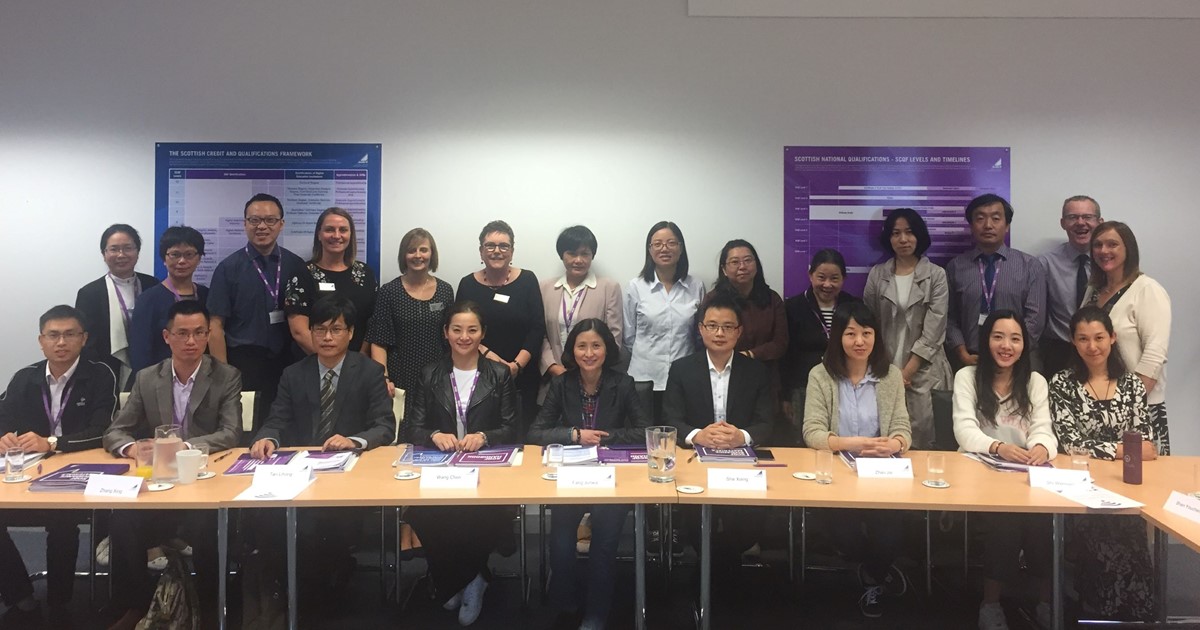 It is fair to say that I have loved every minute of that journey. I have worked with some terrific people both within the organisation and with my Board but also with external stakeholders. I have seen so much change and growth in the use of the SCQF which I put down to the efforts my team have made to ensure that they provide both a friendly and professional service, demonstrating on a daily basis how the SCQF can add value to learners, institutions and employers.
Back in 2007 only SQA and HEI qualifications were on the SCQF. Today we have our own SCQF database which includes over 11,500 qualifications and learning programmes owned by over 130 different organisations from public, private and third sectors.
The use of social media was minimal and now like most other organisations we have a communications strategy which includes digital media and we have developed a wide range of blogs, videos and case studies demonstrating the different ways in which the SCQF has been used.
We have an Inclusive Recruiter programme for employers getting them to advertise using SCQF levels rather than named qualifications, thereby increasing their pool of potential applicants.
We have over 186 schools trained as Ambassadors ensuring that our young people, their teachers and their parents and carers understand the range of qualifications on offer in Scotland and to support schools in developing a much more diverse range of pathways.
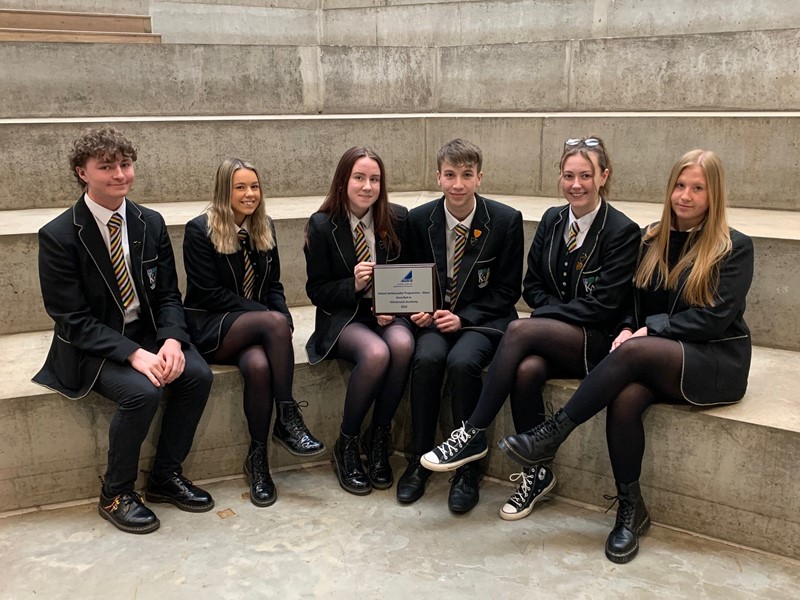
We now have 56 organisations recognised as Credit Rating Bodies (CRBs) for the SCQF and have a highly respected and flexible quality assurance system to meet the differing types of CRB. 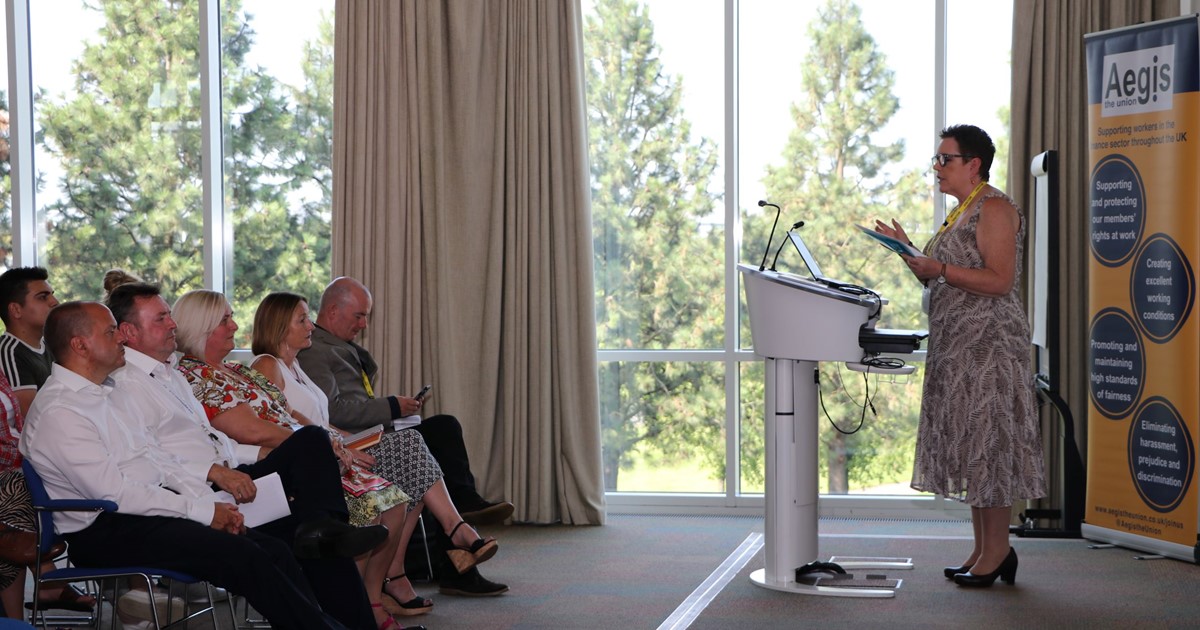
We have developed ourselves as a “centre of excellence” in relation to Recognition of Prior Learning and have provided advice and guidance on developing RPL policies and processes, using RPL to recognise skills separately from qualifications and benchmark these to a level providing guidance for learners on their options for next steps on their learning journey. This has supported individuals such as apprentices, veterans and migrants.
 We have developed a wide range of workshops, responding to demand from stakeholders, both online and in person and these continue to be very well attended, demonstrating again that the SCQF is seen as central to education, training and skills in Scotland today.
So, 15 years of learning, 15 years on a journey and every one of them has been a privilege to be part of. I know that with the new CEO and the great team even more will be achieved over the next 15!
In 2011 I started my journey into the world of photography and very quickly found a passion for newborn photography. Realising there was no available course or local training I had to teach myself. Fast forward to 2018, I am now well known for newborn and extremely busy. After many years of self-learning I began to question why my industry didn’t have specific qualifications. That’s when I contacted the SQA to enquire about this. Over the next 2 years we worked with many newborn professionals, midwives and doctors to put together a qualification for newborn photography. Our qualification, the Executive Diploma in Photography: Newborn and Baby Portrait, was credit rated at SCQF level 8 with 7 credit points.
As a result of this we became an SQA registered centre, which opened the door to many possibilities we never knew about. Primarily we are a flexible learning school offering newborn, photography and SFX make up courses, giving learners the chance to learn qualifications during their free time as well as the opportunity to be taught by industry professionals working in the industry.
Newborn photography in the wrong hands can be extremely dangerous – one wrong move and a child could be injured. It’s important for photographers as well as parents to understand the value of the qualification, not only in how to handle a baby but also overall for their business. Our course is aimed at anyone who is interested in newborn photography but has already been taught to use a camera and light, as the course does not cover basic skills. Over 5 intensive days and a further 6 months candidates will learn all they need to know, to confidently handle and safely photograph young babies (under 10 days old).
Trying to change the idea of an industry that hasn’t ever been governed by the offer of a qualification is hard and it will be a slow process but every day we continue to get the message out, as we believe the qualification is vital to the continuation of our industry.
While we continue to work on the newborn qualification we have also made steps to open an alternative learning school for young people who are struggling in the school environment.
Too many young people attending school are becoming disengaged with the school system as they struggle in classes not built for them. Working with schools and community groups we are aiming to offer short unit courses to young people, giving them the opportunity to experience alternative classes while engaging them back into education. Each young person will achieve qualifications and experience which we think will be vital for their progress into further education.
For more information visit Riverside Studios
The Social Enterprise Academy offers programmes for people and organisations enabling social change. Our vision is for a society that combines economic activity with community benefit and our mission is to contribute to this through learning and development, with a specific emphasis on leadership and personal development. We work at local, national and international levels, bringing together learners at all stages of personal and organisational growth.
The Academy believes that people learn best through a combination of approaches that use real life experience and mutual support to bring theories and problem solving to life. We offer a range of programmes, facilitated by experienced social enterprise practitioners that aim to facilitate transformational learning and contribute to positive personal and social change.
Through effecting transformational learning, Academy programmes aim to support learners to think, perform and behave differently. They provide the necessary conditions for learners to reflect, plan, and act, which is encapsulated in our four Learning Principles: Space, Safety, Strengths and Support. Learners are taken through a cycle that engages them at different levels to embed new concepts and behaviours.
There are currently six micro-credentials available at SCQF level 9, which were credit rated for the SCQF by Glasgow Caledonian University. These are:
|
Programme Title |
SCQF level |
SCQF credit points |
|
SEA Award in Leadership |
9 |
10 |
|
Action Learning in Practice |
9 |
10 |
|
Developing a Coaching Culture |
9 |
10 |
|
Facilitation Skills: Developing Others to Lead Change |
9 |
10 |
|
Developing Sustainability |
9 |
10 |
|
Understanding Social Enterprise |
9 |
10 |
The qualifications effectively consolidate the learning that takes place on, and is related to, a Social Enterprise Academy programme. The emphasis is on experiential and work based learning, and reflective practice is embedded in all assessment activities.
Providing a micro-credential that is credit rated by a highly regarded UK University complements and enhances the learning experience by providing a nationally and internationally recognised qualification. The qualifications stand alone, but also offer the further benefit of credit transfer, allowing learners to accrue and transfer credit to related degree programmes across Europe.
“Getting the qualification made the learners feel taller and lifted up.”
SEA Award in Leadership, programme partner
“The accredited programmes seek to build a community of leaders who can support and sustain each other as they develop their leadership abilities.”
Angela Jones, Social Enterprise Academy Qualifications & Quality Assurance Manager
For more information on the Social Enterprise Academy visit their website.
The Royal Conservatoire of Scotland is a national and international centre of excellence for performing arts education. We are the only place in Europe where you can study all of the performing arts on one campus. We offer undergraduate and postgraduate programmes in Music, Dance, Drama, Production, Filmmaking, Teaching and Research. Within our Short Courses department, we deliver a broad range of credit rated short courses, both in person and online and across all disciplines in the performing arts sector. Our credit rated short courses, which are designed in accordance with the SCQF, provide the opportunity for students to benchmark their learning against national standards. We deliver courses from SCQF level 5 to level 11.
Why the Junior Conservatoire of Filmmaking?
The Junior Conservatoire aims to train and develop the next generation of filmmakers in a city that is bursting with screen professionals and career possibilities. Our students are taught by award-winning industry practitioners with years of experience in the sector, with opportunities for working with children’s TV, Glasgow Film Theatre and GMAC.
Within our Junior Conservatoire, we currently offer three credit-rated programmes as follows:
- Junior Conservatoire of Filmmaking Level 1 (20 Credits, SCQF Level 5)
- Junior Conservatoire of Filmmaking Level 2 (20 Credits, SCQF Level 6)
- Junior Conservatoire of Filmmaking Level 3 (20 Credits, SCQF Level 7)
The Junior Conservatoire of Filmmaking programmes are aimed at students who are interested in filmmaking and would like to develop their skills in this area. Students should be interested in how films are made and the processes which are associated with their development. The courses are ideal for individuals who may be considering studying filmmaking at college, university or conservatoire and provide the opportunity to prepare for undergraduate study in this area. The Junior Conservatoire of Filmmaking programmes aim to provide students with the opportunity to develop their knowledge and skills in relation to the filmmaking process, including the technical and creative aspects of film development such as the creation of a film pitch, script development, working as part of a professional production team and collaborating with a film crew and actors. Students will develop their skills in relation to character development and narrative structures as well as their knowledge of professional industry processes. The credit rating of the Junior Conservatoire of Filmmaking programmes allows students to benchmark their learning with national standards as well as gaining summative feedback following assessments. Students receive SCQF credits and UCAS points after completion of the credit rated courses.
Visit for more information on the suite of programmes and how to apply.
Many thanks to the staff, parents, and carers from our SCQF Ambassador Schools for sharing and completing the impact review survey for the SCQF School Ambassador programme. The response has been excellent and we are in the process of reviewing the information and organising focus groups.
Survey of Pupil Ambassadors and School Pupils
We are now at the stage where we would like to survey both Pupil Ambassadors and wider groups of pupils within SCQF Ambassador Schools to gain their views on their knowledge of the SCQF and the difference the SA programme has made to this.
We would appreciate your support in distributing these surveys via pupil communications and social media channels to encourage your young people to take part. The surveys are very short and we would envisage them taking no longer than 15 minutes to complete.
Pupils can access the surveys via the links below:
- Access Survey for SCQF Pupil Ambassadors
- Access Survey for Pupils in SCQF Ambassador Schools (who are not SCQF Pupil Ambassadors)
We are looking for responses by Monday 12 December.
Thanks again for your continued support.
Hearing from our veteran community is vital and that is why the government has launched a UK-wide Veterans’ Survey.
This is the first-ever exercise to collect feedback from the veterans’ community across the UK coordinated by the Office for Veterans’ Affairs and the Office for National Statistics (ONS).
The online survey was launched on 10 November and will be live for 12 weeks. The survey gives ex-UK armed forces personnel and their families the opportunity to provide direct feedback to the government on their experiences, access to and use of services for veterans.
Responses to the survey will help us better understand the experiences, needs and well-being of our veteran community, and guide future action.
It is important we hear a wide range of views and we would like to encourage as many ex-UK armed forces veterans and their families to share feedback as possible. Your views matter, so please take part today. Complete the Veterans’ Survey on the ONS website.
We’re APM: Association for Project Management. We’re the only chartered membership organisation for the project profession in the world. Our activities – from qualifications and networking to research, resources and debate – raise the profile of the project profession, challenge the status quo where it matters and set the highest standards. In a complex world, we’re helping the project profession deliver better.
How will an APM qualification benefit my project management career?
Wherever you are in your career, our qualifications grow your skillset, enhance your credentials and give you a competitive edge. You might want to learn the basics of good project management. You might be building your career and want to prove you’ve got the skills of an established project professional. Or perhaps you’ve already got years of experience and want to showcase your knowledge. Wherever you are on your journey, it’s never too late to explore our range of internationally-recognised qualifications and standards in project management.
Starting with the APM Project Fundamentals Qualification (SCQF level 6 with 3 credit points) which helps you understand the terminology and basic principles of project management, you can then progress to the APM Project Management Qualification (SCQF level 7 with 6 credit points) which thoroughly assesses your understanding of core project management concepts. The cumulation of learning is the APM Project Professional Qualification (SCQF level 9 with 7 credit points) which, being a recognised route into our Chartered Project Professional Standard, assesses your capability to apply those principles.
Our qualifications support project professionals working in or around projects to apply best practice and principles which ultimately encourages them to continually develop and support the delivery of successful projects. By following the pathway, individuals have clear development building blocks to support their journey to becoming a Chartered Project Professional.
By credit rating the qualifications we can evidence the project professional career path, offering a clear expectation of the level of knowledge and understanding that each step requires for success. To ensure learners are achieving a robust and credible qualification, our qualifications and standards are rigorously verified and assured.
Hear what one of our candidates has to say about our qualifications:
“I was initially attracted to APM qualifications because they very much focused on the ‘how’ of project management, rather than learning a particular methodology. Through studying for the APM Project Management Qualification, I confirmed my existing knowledge and built up my toolkit of skills, as well as developing my confidence as a project professional. The qualification itself was really useful on my CV when it came to applying for jobs and I still find it such a practical help when it comes to my day-to-day job. If you’re aspiring to Chartered status one day, the Management Qualification is a great place to start.”
Emily Thornton, Project Manager