

NEBOSH is a global brand in health, safety, well-being and environmental qualifications. Its internationally recognised qualifications help to raise the competence of safety and environmental professionals, as well as individuals at all levels in the workplace.

Many health and safety professionals are also tasked with environmental responsibilities – often abbreviated to a ‘HSE’ professional to indicate the breadth of their remit.
Within NEBOSH’s portfolio are three environmental qualifications, all of which are on the SCQF:
- NEBOSH Environmental Awareness at Work Award (SCQF Level 5)
- NEBOSH Environmental Management Certificate (SCQF Level 6)
- NEBOSH Diploma in Environmental Management, available in National and International options (SCQF Level 10)
The qualifications aim to offer environmental learning to people at all levels and, in turn, support the organisations they work for to improve their environmental performance.
The Level 5 Award provides an introduction to environmental issues in the workplace. It is accessible to all levels of workers and particularly suitable for people at the start of their environmental learning or for wider organisational rollout to support awareness and knowledge of environmental issues. It can also help organisations with a certified environmental management system (such as ISO 14001) meet the requirement of providing environmental awareness to all workers, yet is flexible enough to allow organisations to ‘tailor’ the qualification to their specific requirements e.g. sector specific aspects/environmental issues.
The Level 6 Environmental Management Certificate gives learners the skills they need to take on environmental responsibilities and support the implementation of environmental management systems.
At SCQF level 10, the Diploma is an advanced, specialist qualification for those aiming to develop and implement effective environmental management systems and strategies.
Quality assurance
All three qualifications are SQA accredited and are on the SCQF. This offers learners – and their employers – an assurance of high quality qualifications that are reviewed and approved by an independent third party.
Luke’s story
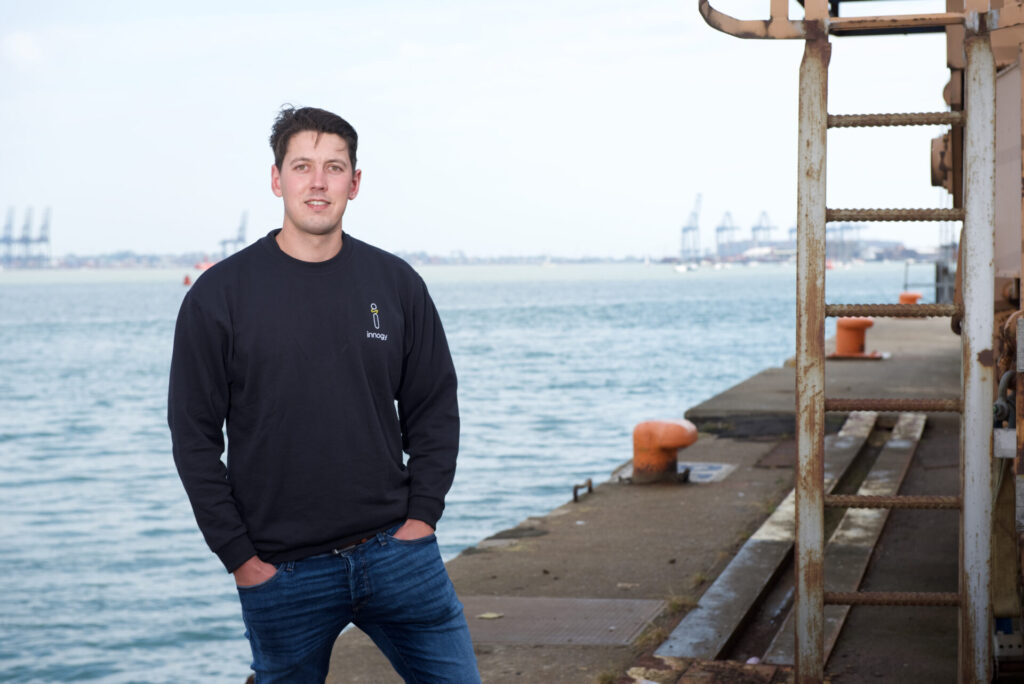
When Luke Strudley was approaching the end of his military career, he wanted to learn more about environmental issues and started working on the NEBOSH qualifications.
He said: “It was because of the Environmental Certificate that I realised the renewables sector was where I really wanted to be. Something my NEBOSH tutor told us really struck a chord. He said that to protect the planet, people needed to ‘act locally, think globally’. It’s that idea that if everyone contributes in their own small way, then collectively we could avoid environmental catastrophe.”
New career path
Luke was able to use his NEBOSH qualifications to help him start on his new career path and is now an Offshore Wind Turbine Technician with RWE Renewables.
For more information on the qualifications, visit Qualifications – NEBOSH.
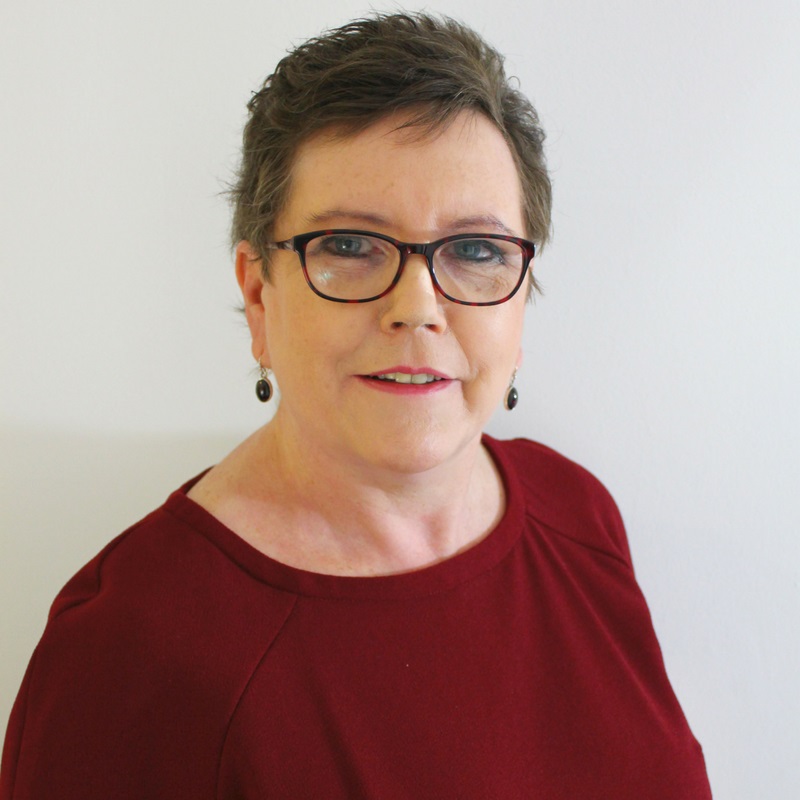
What is your role within the SCQFP?
I am the Chief Executive Officer and was the first person appointed when the organisation was established in 2007.
What do you enjoy most about your role?
I enjoy the diversity of the work. We work with all sectors of education and training as well as with employers and CLD, so the conversations are always different and this provides us with opportunities to constantly think about how to engage with our different audiences. The second thing is to work with a great team of professional, dedicated and creative people who are as committed to supporting lifelong learning as I am.
Tell us a bit about your career to date
I trained as a teacher and qualified when vacancies were scarce, so moved instead into being a Training Officer with a Youth Unemployment Scheme for 6 years. After that I went to work for SCOTVEC and then SQA and was there for around 16 years, latterly responsible for SQA’s implementation of the SCQF. I then went out on secondment from there to be Head of Policy for Scotland for the Sector Skills Development Agency which established the network of Sector Skills Councils and then came to SCQF Partnership.
Tell us something interesting about yourself?
I can draw a pig using letters of the alphabet!
Introduction
In April 2018, Kilmarnock and James Hamilton Academies merged which brought about the need and desire to review current and best practice in both schools. It was also a good opportunity to refresh the curriculum offer available to our young people. Using labour market information, alongside projected and actual leaver data, we knew that we needed to offer alternative opportunities to support all our young people into positive destinations.
We worked closely with our partners including Ayrshire College, DYW Ayrshire, East Ayrshire Council and Prince’s Trust to devise new vocational pathways.
Our aims:
- Courses should reflect labour market information.
- Qualifications should be valued by local and national employers.
- There should be a focus on progression and skills development.
- Young people should become more employable.
- Young people should secure positive destinations.
We currently have four pathways running which cover Hospitality, Early Education & Childcare, Sport & Fitness and Cycle Maintenance. Within each pathway, there are a number of other awards such as Steps to Work, Events Management and Employability, to name a few.
Courses begin with taster sessions in S2 and S3, followed by courses at SCQF levels 4-7 in the Senior Phase, with progression on offer each year.
Pupils gain industry-recognised qualifications, which help them go onto full-time college or university courses, as well as full-time employment.
Early Education & Childcare Pathway
 Good practice has been our one-year level 6 Foundation Apprenticeship in Social Services (Children & Young People), including a work placement supported by East Ayrshire Council. Every pupil who completed this course last session is currently in a positive destination, following either level 7 HNC at College or attending University to do Primary Teaching.

“I chose the Foundation Apprenticeship as I really want to work with children. I did the level 4 course in S4 then went to Ayrshire College to do level 5 as part of the school-college offer. I really enjoyed the FA as I got the chance to learn from assessors who also work in ECCs and who have current knowledge and experience. I have gained a place on the level 7 HNC at College and I am looking forward to starting.”
Foundation Apprentice (2020-21)
Sport & Fitness
This session, we have started up a level 7 HNC in Sport & Fitness, supported by Ayrshire College. We have fifteen pupils doing this course, which leads onto level 8 HND or second year on some university courses.

“I decided to take the HNC because of the opportunities that it can offer me when I leave school. I did Higher PE last year and did well. I’m enjoying getting to know the college lecturers and learning at a more advanced level although I know I have the support of the school if I need it. By doing this course, I can move onto college or university and go into coaching or P.E. teaching. I’ve not decided yet but this will allow me to keep my options open.”
HNC Student 2021
SCQF Ambassadors

Our SCQF Ambassadors are trained each year and they play a key part in ensuring the validity of these courses is clear. They speak to pupils and parents about our whole-school offer and ensure they flag up the levels of each course, highlighting progression pathways.
Ambassadors show how meaningful these courses are and we often have young people speaking to parents and pupils about their own experiences to highlight the positive impact they have had.
The Results
We are now three years into our journey and progression has been quick yet steady thanks to the ongoing support of our partners. Our leavers’ destinations have improved each year and we have seen a huge improvement not only in pupil attainment but also in pupil confidence, which has flourished due to them having a real sense of achievement and pride in their work. We have achieved Bronze level SCQF School Ambassador status and hope to meet the criteria for Silver level later this year.
For more information on Kilmarnock Academy visit the website.
Download a pdf version of this blog
Launched in 2015, the SCQF School Ambassador programme offers secondary schools the opportunity to learn more about the benefits of the SCQF and the wider ways in which it supports learners. These include recognising wider achievement, developing Senior Phase learning pathways and demonstrating equality between vocational and academic qualifications.
The SCQF Partnership introduced the tiered recognition element of the programme in August 2020 to make sure that all the amazing work on enhancing learning pathways being done in secondary schools across Scotland is recognised, highlighted and celebrated.
There are now 3 levels (Bronze, Silver and Gold) in the process, with schools required to upload evidence to demonstrate how they are meeting the criteria of each level.
Larbert High School was confirmed as the very first Gold level SCQF School Ambassador earlier this year. Jon Reid, Rector at Larbert said:
“We’ve been on a mission at Larbert High School over the last few years to ensure that our Senior Phase curriculum has lots of different pathways that can lead to the same positive destination. We’ve worked with our staff, young people and parents to dispel the myth that Highers are the be-all and end-all of secondary schools, and as a result we have more young people than ever before following more modern, new and contemporary pathways.”
The only Silver Ambassador to date is Stirling High School and Ambassador pupils and Depute Head, Alan Hamilton, are keen to progress to Gold. Alan said,
“The tiered framework provided our Pupil Ambassadors with a clear focus for getting the most out of the SCQF. It allowed them to plan and take ownership of their plans. As a result, the SCQF is embedded across the school and they have clear ideas for their next steps.”
Bronze level schools are located across Scotland and these are currently:
• Castlebrae Community High School, Edinburgh
• Cults Academy, Aberdeen
• Drummond Community High School, Edinburgh
• Kilmarnock Academy
• Monifieth High School
• Newbattle High School, Dalkeith
• St. Matthew’s Academy, North Ayrshire
• West Lothian Skills Centre
Although the schools are all very different, the one thing they have in common is the desire to improve the learning opportunities for, and life chances of, Scotland’s young people.
James McPartlin, Pupil Support Leader at Castlebrae CHS said:
“In June 2021 the school achieved SCQF Ambassador Bronze status. I trained my Leadership level 5/6 class up as SCQF school ambassadors. We had recently completed course choices and were able to use the course choice sheet to identify what courses and levels we were already offering. We realised as a school we already met some criteria at all levels. One of the main tasks was creating a pathways display board. This is now displayed in Guidance. The leadership class are now pursuing level 6 leadership and have 1 period dedicated to working on SCQF Silver level.”
SCQFP Development Officer, Donnie Wood, is keen to engage with schools and work with teachers and pupils to create interesting and inclusive learning pathways.
“We’ve seen huge demand from schools to become involved in the School Ambassador programme over the last month or so, as more and more schools look to utilise the full range of qualifications that sit on the SCQF. Schools can use the SCQF School Ambassador programme to look at developing these learner pathways for pupils and, at the same time, use our resources to help engage parents and pupils to fully understand the Framework.”
The SCQF School Ambassador Programme is free to join and open to any secondary school in Scotland.
If you would like your school to get involved, contact Donnie or get more information.
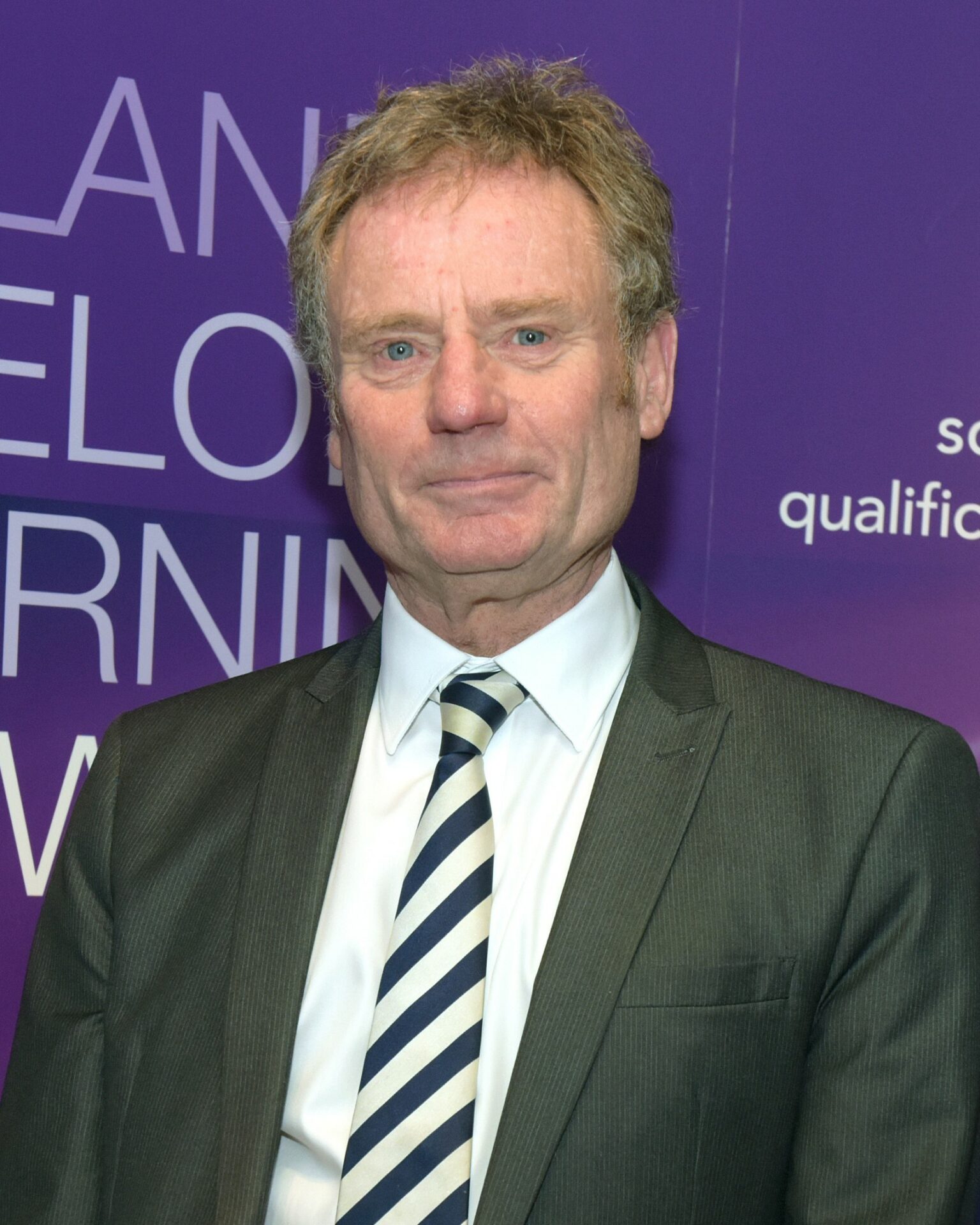
To celebrate 20 years of the SCQF our current Chair of the Board, Rob Wallen, reflects on how the Scottish Credit and Qualifications Framework has been an essential tool in allowing educational change to take place in Scotland, facilitating lifelong learning and providing equality between academic and vocational qualifications.
During my career in education, as a teacher and as a manager, I have worked in four education systems – in Egypt, in China, In England and in Scotland – each of which was different from the others and had its strengths.
One particular strength of the Scottish education system in the 21st Century has been the increasingly high level of integration that has been achieved – integration between secondary, further and higher education, and integration between “academic” and “vocational” types of learning.
The situation in which your educational future – and employment prospects – were set in stone before you had reached your teens has increasingly been replaced with one where opportunities exist throughout life, and avenues exist to allow smooth transition between institutions, between “levels” of education and between vocational and academic qualifications.
For the past 20 years the Scottish Credit and Qualifications Framework has been an essential tool in allowing this change to take place in Scotland. It provides an objective, calibrated, quality-assured way of calculating and recording the complexity and breadth – the level and credit value – of different types of learning and training undertaken in different settings and institutions.
The Framework grew out of work that had been undertaken earlier to develop specific links between sectors of education – such as the SWAP programme to develop entry routes to universities for people who did not have Highers. But it was developed with a much more comprehensive integration in mind, showing how each type of learning can be “compared” and linked into effective pathways.
And it was developed by a partnership of institutions that represented all sections of the Scottish education system – Universities Scotland, the Quality Assurance Agency Scotland, the Scottish Qualifications Authority, and the College Development Network – with input from bodies that represent industry-specific training (such as the Scottish Training Federation) as well as Scottish Government – and as such it has unquestioned credibility and coherence.
The resulting Framework has stood the test of time and has developed in terms of the number and variety of qualifications that are included on it. There are now over 11,800 qualifications on the SCQF and around 1,100 of these are owned by public, private and third sector organisations such as the NHS, B-DACS and Young Enterprise Scotland. There are programmes on the SCQF that recognise the wider achievements of young people as well as many professional and vocational qualifications which support sectors such as the emergency services, management and leadership, oil and gas and construction.
It has provided the underpinning for many important developments – such as calibrating the educational achievement of asylum seekers against Scottish standards and the skills of forces veterans against civilian qualifications – so that they can find appropriate employment and maximise their contribution to Scottish society. The SCQF is regarded as a world-leading model that other nations aspire to emulate.
It is, when all is said, a fantastic resource that belongs to the people of Scotland and provides them with a highly effective way of realising the ambition to reduce educational and economic inequality and to realise the potential of all of its citizens.
The SCQF Partnership has released its Annual Impact Report for 2020-21.
The report sets the scene by detailing the vision, mission and functions of the SCQF Partnership, and once again takes the form of infographics to provide stakeholders with an at-a-glance summary of the team’s impact and successes over the year.
The report has an introduction by Jamie Hepburn, Minister for Higher Education and Further Education, Youth Employment and Training, and key activities undertaken included:
- new Chair appointed for the SCQF Quality Committee
- new Credit Rating Body approved – ASET International Oil & Gas Training Academy
- development of a resource to support apprentices made redundant due to the pandemic
- completion of a research project examining the impact of the Malta Qualifications Framework
- the very first online SCQF Week
- launch of SCQF School Ambassador recognition programme
Read the Report
College Development Network (CDN) have published a new research report, ‘Co-Creating the Learner Journey: School-College Partnerships and Effective Skills Pathways’.
Prepared for the Scottish Government’s Curriculum and Assessment Board, the report defines a School-College Partnership as any learning activity for young people aged 3-18 delivered by a college in collaboration with a school – with a focus on skills for life and work.
Significantly, the report shows that between 2016-17 and 2019-20 School-College Partnership enrolments rose from 53,000 to almost 73,000. The new research reveals that if the upward trend continues, once we have recovered from the pandemic, it is anticipated that 12% of all school pupils in Scotland will engage in study with a college.
The research, which contains 11 case studies, goes on to identify ten key characteristics of successful School-College Partnerships. It also makes nine recommendations, including the need for an annual report to allow meaningful and consistent comparison across school/college provision.
Jim Metcalfe, Chief Executive of CDN said:
‘I am delighted that CDN’s Research and Enhancement Centre has collaborated on the development of such an important piece of work for the college sector, and Scotland’s wider education landscape. The report’s findings and recommendations underline the critical work that colleges across the country are engaged in everyday with their schools and local communities.’
Dr Ken Thomson OBE, Chair of the School-College Partnership Report Steering Group and Principal of Forth Valley College said:
‘I’m delighted to have been involved in this critical research which provides a fascinating insight into school-college partnerships and their critical impact on our younger generations. It explores the ways in which schools, colleges, local authorities and employers are working together to create seamless learner journeys and ensuring our young people develop skills for life and work. Importantly, it also provides recommendations to ensure continued success and demonstrates how school-college partnerships can support other national developments and priorities.’
Minister for Higher and Further Education Jamie Hepburn said:
‘I welcome the publication of this key report, which highlights the important role of School-College Partnerships in giving young people the opportunity for sector and industry insight when still at school.
‘This in turn helps our young people to make better informed choices in their learning journey and drives more talent into growth areas and sectors where there are recognised skills shortages.’
The full report may be read and downloaded at www.cdn.ac.uk/school-college-partnership-report-co-creating-learner-journey/
The Young STEM Leader Programme is an exciting opportunity for young people in Scotland to discover, create, inspire and lead in STEM. Derived from the Scottish Government’s Education and Training Strategy for STEM (2017), the programme is led by SSERC in partnership with a wide range of STEM focused organisations in Scotland.
The key aim of the programme is to facilitate the development of peer-to-peer STEM role models, inspiring more young people to develop an interest in STEM. As part of the award, young people will create and plan STEM activities for others, build their leadership, communication and employability skills, and help to build STEM capital within their learning community.
A Young STEM Leader from a youth group delivering centre said about delivering activities: “It was sometimes scary [but] I learned to be patient and calm”.
The award is offered in two versions:
- The non-formal programme at Curriculum for Excellence Second, Third and Fourth Levels (YSL2, YSL3 and YSL4). These awards are typically delivered in primary schools, the BGE phase of secondary schools and in youth work settings.
- The formal programme at SCQF Levels 4, 5 and 6 (YSL4, YSL5 and YSL6). These awards are typically delivered in the senior phase of secondary school, youth work settings, colleges and in some apprenticeship programmes.
The free programme is offered to all young people in Scotland who are supported by a Trained Tutor Assessor – an educator who has undertaken the necessary training by SSERC. To date, over 3000 young people have engaged with the programme in every Local Authority Area in Scotland.
| Award SCQF Level Credit points | ||
| YSL4 | 4 | 3 |
| YSL5 | 5 | 3 |
| YSL6 | 6 | 4 |
There are clear benefits to offering the programme as an SCQF credit rated award – from increasing participation in delivering centres to recognising the achievements of the young people involved.
A Tutor Assessor said: “It’s been a headache securing staffing to enable students to visit primary schools in years gone by, but now there’s a recognised qualification for it, the school is more likely to put it on the timetable.”
To get involved with the Young STEM Leader Programme, visit www.youngstemleader.scot