

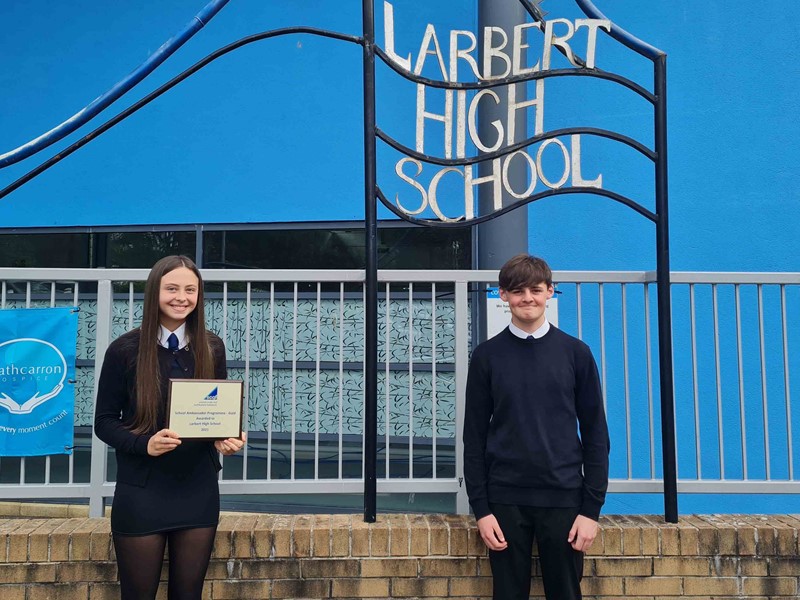
Larbert High School has been confirmed as the very first Gold level SCQF School Ambassador. Launched in 2015, the School Ambassador programme offers secondary schools the opportunity to learn more about the benefits of the SCQF and the wider ways in which it supports learners such as recognising wider achievement, developing Senior Phase learning pathways and demonstrating equality between vocational and academic qualifications.
The SCQF Partnership launched the tiered recognition element of the SCQF School Ambassador programme last August to make sure that all the amazing work on enhancing learning pathways being done in secondary schools across Scotland is recognised, highlighted and celebrated.
There are now 3 levels (Bronze, Silver and Gold) in the process, with schools required to upload evidence to demonstrate how they are meeting the criteria of each level.
To recognise the fantastic achievement, Larbert High School has received a gold plaque which will be displayed in the school’s reception area.
Karen Cullen, DHT at the school, said: “Larbert High immediately saw the opportunities the SCQF Ambassador programme could bring for young people. We knew that we had to help develop the knowledge and understanding of pupils, parents and staff to really see a difference in outcomes for students. We did this by transforming the language we used by incorporating SCQF levels in everything that we do. Our website, parents’ evenings, curriculum information sessions were approached with the idea that it was an opportunity to allow stakeholders a chance to see how this framework could benefit all. As a result, over the past few years our educational language, mind-set and learner pathways have transformed and in turn has transformed the learner journey of our students. Being the first school in Scotland to achieve Gold level status is just the cherry on top.”
Jon Reid, Rector at Larbert added: “We’ve been on a mission at Larbert High School over the last few years to ensure that our Senior Phase curriculum has lots of different pathways that can lead to the same positive destination. We’ve worked with our staff, young people and parents to dispel the myth that Highers are the be-all and end-all of secondary schools, and as a result we have more young people than ever before following more modern, new and contemporary pathways. This has pushed their skills to a higher level than ever before and will ensure that they have the ‘edge’ when they are ready to leave school entering into what is a highly competitive young workforce.”
SCQF Partnership Development Officer, Donnie Wood, who manages the programme, said: “We introduced our SCQF School Ambassador recognition initiative to allow schools to showcase and demonstrate the great work they are involved in and it was no surprise that Larbert led the way. In order to achieve Gold status, a school has to evidence a huge commitment to the Ambassador programme, raising awareness of the SCQF to pupils and parents in addition to developing links with their college, local businesses and neighbouring schools. The commitment from the staff and pupil ambassadors at Larbert has shown just why the SCQF School Ambassador programme is essential for schools across the country.”
The SCQF School Ambassador Programme is free to join and open to any secondary school in Scotland.
If you would like your school to get involved, find out more or contact Donnie.

Tell us a bit about your career to date
I am a fully registered teacher for both Primary and Secondary education, with substantial experience in educational outreach and development. Working at Glasgow Caledonian University, I led a team who supported and encouraged over 400 schools across 11 Scottish local authorities to achieve their Eco Schools Green Flag award. I also developed and implemented a sustainable, environmental change and educational outreach programme across Wiltshire while working with the Wiltshire Wildlife Trust.
Whilst living in England, I also worked on a government funded pilot project, hosted by the Royal Society for the Prevention of Accidents, where we identified and developed strategic projects to increase the capacity for children and young people to learn to assess risk through experiential learning. More recently, I have worked with Poppyscotland on the design and realisation of their mobile museum and learning space, Bud, which tours Scotland visiting schools and community events, exploring the history of Remembrance and starting conversations about its meaning in contemporary Scottish Society, and with Barnardo’s, in various primary schools across Glasgow, working to fully embed Social and Emotional Learning within their curriculum, ethos and values, with the aim of reducing the attainment gap and building strong mental health.
What is your role within the SCQFP?
As a Development Officer within the SCQF Partnership I will be responsible for employer engagement, identifying, developing and maintaining new opportunities and partnerships, and supporting the SCQFP Forum to use and engage with the SCQF.
Tell us something interesting about yourself
At the start of my career, I was one of only 8 female technical teachers in Scotland. I had to have a rethink, however, as I am allergic to metal and sawdust!
Follow Nicola on Twitter @Nicola_SCQF
The Foundation for Social Improvement (FSI) is a registered charity, established in 2007 to provide high quality training and support for small charities. We currently support over 8000 small charities throughout the UK by offering free or heavily subsidised learning opportunities. By helping to increase the impact and sustainability of small charities, the FSI benefits hundreds of thousands of vulnerable people and communities needing support across areas including health, social care, education and the environment.
In 2017, the FSI approached the SQA to develop a suite of fundraising qualifications specifically for the Small Charity Sector. We now deliver a Diploma and Certificate in Fundraising Practice, both at SCQF Level 8 (RQF Level 5), and an Introduction to Fundraising Practice at SCQF Level 6 (RQF Level 3).
Whether a well-established charity or a small grassroots community group, the need for expertise in fundraising has never been greater than in the current climate. Funding from local, regional and central government sources has been dramatically cut and there is increasing competition from all sources. Therefore, these qualifications were developed to ensure that charities were ready to meet the increasing demand for skilled and experienced fundraisers in our sector.
Our SQA ‘Star’ Award-winning qualifications have helped many charities looking to diversify their income in this ever competitive fundraising environment, with dozens of individuals and charities around the country using these qualifications to develop their skills, knowledge and confidence in fundraising to support both their organisations and their career progression. The SCQF credit rating gives them, and their employers, confidence that the qualification sits within a broader qualifications framework and has robust quality assurance to underpin it.
Pam, Head of Fundraising and Communications, spoke about her experience of studying with the FSI:
“I am studying for the Diploma in Fundraising to gain a qualification that will arm me with the tools to help sustain our charity for the future and provide new and innovative ways of working… The trainers are engaging and inclusive and you get out what you put into the training. I am really excited about working with the FSI!”
Rosie, Charity Manager, added:
“I chose the FSI because the fact that the qualification could be tailored to me really suited what I was looking for. Whilst the core modules of the FSI Diploma could be applied to all types of fundraising, I’ll be able to choose additional modules that best suit my interests and chosen specialism.”
Anthony, Fundraiser, said:
“My first unit was on Fundraising Strategy. This has helped me to re-evaluate our fundraising strategy, using the information I have learned. The assignments also involved some competitor analysis. This has been invaluable as it has helped me to understand the potential areas of growth in our fundraising strategy.”
If you are interested in studying with the FSI, have a look at our website.
Download a pdf version of this blog

We have developed a new leaflet going back to basics to help everyone, from learners to education providers, employers and parents/carers, understand the SCQF.
The leaflet talks about the SCQF in very general terms and covers the benefits of the SCQF for a range of audiences, the credit rating process and also signposts readers to further information on SCQF news & blogs, resources and workshops.
The guide has been crystal marked by the Plain English Campaign; the organisation’s seal of approval for a document’s clarity.
It’s available to download at the moment, although it is likely that we will print the leaflet for use at live events when we are able to attend such a thing in the hopefully near future!
Click the image to download your copy
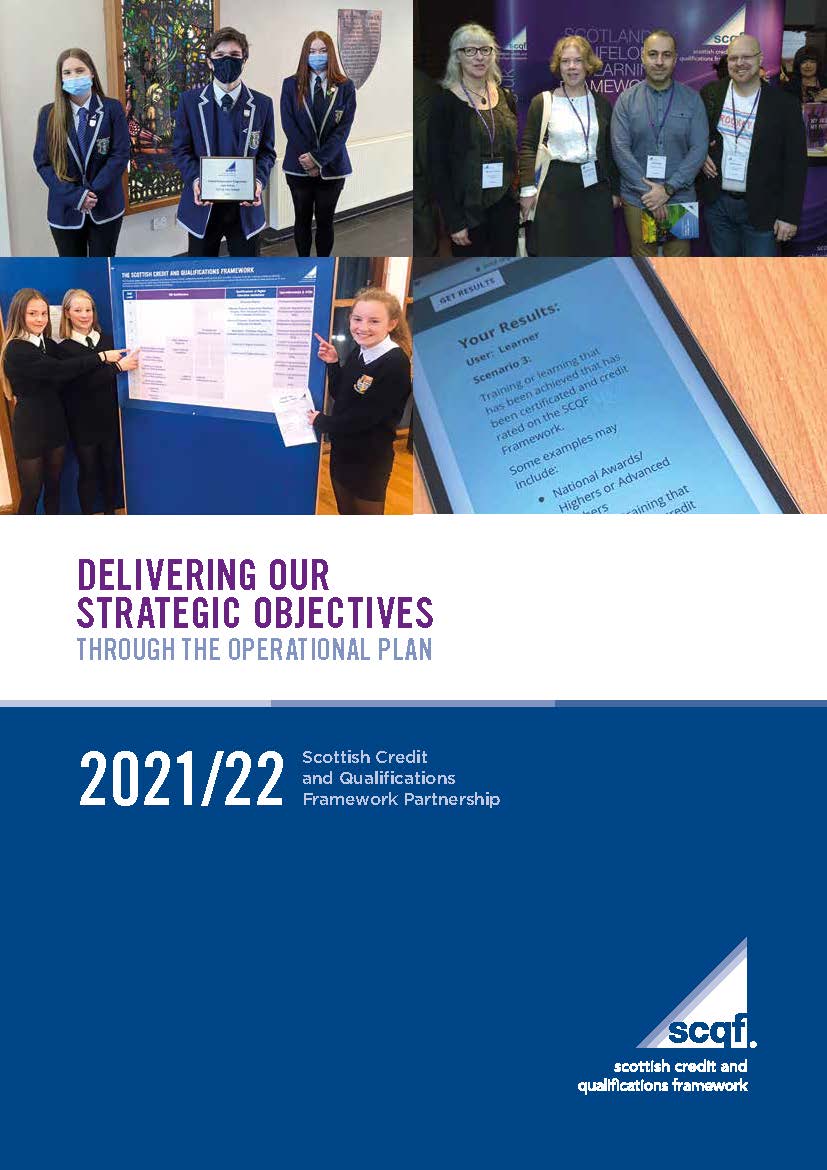
We have now published our Operational Plan for 2021-22.
The Plan describes the activities that we will undertake to achieve our objectives for the year. It also breaks down the impact of these activities and highlights how we will measure success.
It outlines the benefits of using the SCQF for a variety of audiences and features details of the work we do:
• with Credit Rating Bodies, including colleges and universities;
• with secondary schools, including the SCQF School Ambassador programme;
• with employers, refugees and veterans;
• to support the learning journey for learners of all ages and circumstances;
• in the development of tools to support lifelong learning, such as the RPL Tool and SCQF Database;
• with international partners and other National Qualifications Framework bodies.
 What is NNAS?
 What is NNAS?
The National Navigation Award Scheme (NNAS) is a Scottish charity which began in 1995.
Navigation is a life skill and the scheme is relevant to anyone interested in being in the outdoors and using a map to find their way. It is suitable for age groups 12 and upwards and around 50,000 people of all ages have gained an NNAS award over the years.
Levels
There are 3 levels: Bronze, Silver & Gold Navigator Awards at SCQF levels 4/5/6 respectively. Each level requires 12 hours’ contact time which can be delivered over two days or spread over a much longer period, perhaps as part of another programme such as the Duke of Edinburgh’s Award (DofE) Scheme. The Bronze NNAS content exactly matches the Bronze DofE, Silver NNAS meets the needs of Silver and most Gold DofE expeditions, with Gold covering the skills of remote mountain navigation in poor weather.
Map Reading in the class room is often numeracy based static exercises with little real life relevance or consequences, the teaching methodology dates back to the 1930s for military purposes.
Skills
Navigation for work or recreation requires simultaneous interpretation of the map and ground whilst on the move. Fundamentally navigation is a decision making process which has consequences: it requires planning and problem-solving skills, therefore, confidence plays a big part. Confidence in an unfamiliar environment and confidence in one’s navigation and decision making skills. NNAS’s strap line is “navigate with confidence”.
NNAS has mandatory training for all tutors delivering the syllabus, and each level is carefully designed to build confidence by following the natural human cognitive navigation and wayfinding development. The natural progressions of exploration are to initially follow paths and tracks (Bronze), progressing to taking short cuts across country between paths or going a short way off a path to a view point (Silver), to navigation off paths in remote wild country (Gold).
Navigation is a practical outdoor activity, it helps people engage with the environment and enjoy the many benefits that offers. Not being able to use a map can be a barrier in later life to accessing and valuing the outdoor environment.
Relevance
It is relevant to anyone considering employment in countryside management, tourism and adventure education and can engage the less academically inclined. Being able to use a map and navigate enables a level of independence in the outdoor workplace. The programme also offers a small step in bridging the attainment gap within schools.
Feedback from a Bronze run by Natural England:
“The course was accessible, engaging and challenging in parts and I have to be honest it wasn’t until we got out in the field (on the first trail walk exercise) that I realised how rusty I was. I am glad I did the Bronze before diving into Silver, absolutely. Over the duration of the course, the framework and progression of tasks worked really well in terms of my learning and development. It was clear that the tasks had been planned thoroughly, and provided the opportunity to demonstrate my development, whilst being assessed in the field and back in the classroom.”
For more information on NNAS and the Awards available visit https://nnas.org.uk/
Download a PDF version of this blog
Stirling High signed up for the SCQF Partnership School Ambassador Programme in early 2019 following an Insight meeting with Lewis and the Senior Leadership Team.
The SCQF Partnership visited and presented to our middle and senior leadership teams and shared the benefits and opportunities of the SCQF.
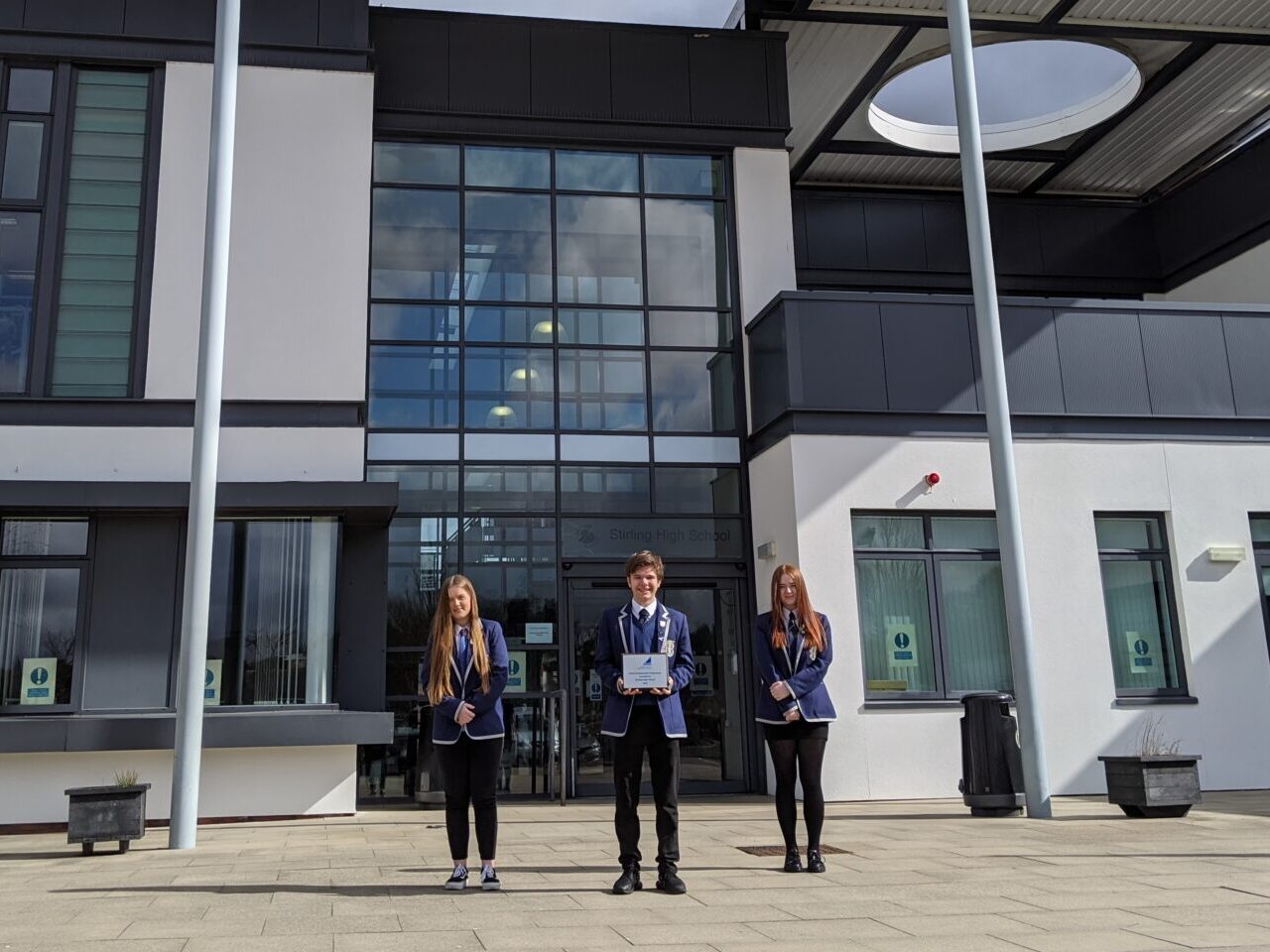
Stirling High is a growing school – our S1 intake increases year on year and an increasing number of seniors stay to complete all 6 years. For this reason, we knew we needed to improve our senior phase offer to make it relevant to all young people.
Joining the SCQF School Ambassador programme was the catalyst for looking outwards to other schools. This, alongside the SCQF Register, has transformed the senior phase offering in recent years.
Spreading the SCQF word
In 2019, armed with our new knowledge, we started to talk up the benefits of the SCQF with young people, parents and staff. Principal teachers led discussions with their teams and our first Pupil Ambassadors spoke to parents and peers about the Framework.
Over time, the culture in the school changed – we used the language of the SCQF in our interactions and made simple changes to the course choice information to provide parity between the existing National, Higher and Advanced Higher qualifications, and the new National Progression Awards (NPAs) and Foundation Apprenticeships (FAs) that were being introduced.
In 2020, the school appointed five new Pupil Ambassadors to lead the charge. The team produced resources for the school website and made effective use of the school’s social media platforms to spread the message.
Lily, one of the S6 Pupil Ambassadors, said: “Being an SCQF Ambassador has been a great opportunity to learn about different educational pathways and promote them to pupils, parents, carers and employers. I wish to pursue a career in palliative care nursing and I believe my time as an Ambassador has helped me develop my teamwork and communication skills which I will be able to carry throughout my future.”
Silver Award
The school was recently awarded Silver Ambassador status.
Alan Hamilton, Depute Head Teacher, said: “The tiered framework provided our Pupil Ambassadors with a clear focus for getting the most out of the SCQF. It allowed them to plan and take ownership of their plans. As a result, the SCQF is embedded across the school and they have clear ideas for their next steps.”
As well as developing a plan for raising awareness of the SCQF with peers, staff, parents and carers, the Ambassadors are working towards their SCQF level 6 leadership award.
SCQF impact
The biggest impact of the SCQF programme in Stirling High can be seen in the changes to our curriculum offer. A total of 52 learners currently benefit from a range of FAs at SCQF levels 5 and 6, in addition to the 12 different NPAs on offer. Young people also benefit from the school’s strong partnership with Forth Valley College.
Liam, an S5 Ambassador, said: “I have loved learning about the SCQF and sharing my knowledge with others. As we are drawing near the end of the year many of the S5 pupils are beginning to think more about their future careers. Our plans to develop and share learner pathways will help all pupils make the most of the opportunities the school offers.”
Going for Gold
The team were recently presented with the Silver Ambassador status for their work in developing and promoting the Framework and already have an action plan for Gold.
They are developing learner pathway exemplars and will use what they have learned this year to feed into next year’s pupil led improvement plan.
Useful links
Course choice form: Course Choice Form S5 into S6
Best practice presentation: SCQF Best Practice Stirling High

The Chartered Banker Institute (the Institute) is a professional body, authorised by the UK Privy Council to award the designation ‘Chartered Banker’. Many of the Institute’s qualifications sit within the Scottish Credit and Qualifications Framework (SCQF), and whilst the SCQF is not a regulatory body, it has a role to ensure that the quality and integrity of the qualifications within the Framework are maintained. The Institute achieves this by being an SCQFP Approved Credit Rating Body (CRB).
The Institute recognises that knowledge and skills can be attained from a broad range of learning. The Institute is therefore committed to ensuring that, where appropriate, knowledge and skills which are gained via the certificated programmes of other recognised awarding bodies can be given credit towards our own professional qualification programmes through our RPL policy.
The Institute is happy to consider requests for RPL, where the previous qualifications are specific and relevant to the Institute’s qualifications, and there is at least an 80% match to the Institute’s qualification learning outcomes.
The award of credit for RPL in respect of the Institute’s professional qualifications can be considered where applications are supported by certificated learning, which must also be ‘attested/certified’ by an individual of professional standing.
The Institute’s RPL policy ensures that applications are treated equitably, consistently, timeously, and transparently.
Assessing requests for RPL can be a labour-intensive process, which needs to be balanced against the benefit for the learner: for example, no repeat of learning, a shorter path to a qualification and less cost.
Applications are normally considered, and a response provided, within 10 working days, as long as all the requested information is present and the ‘bona fides’ of the qualification and awarding institution can be confirmed.
An overseas applicant, working in a non-financial services environment, who was considering a career within financial services, and successfully gained credit through RPL for an Institute qualification, said: “My utmost gratitude for your time thoroughly evaluating my application and recognising my previous studies.”
Once RPL credit has been awarded, it can be used in two main ways: to provide a specific amount of credit at a specified SCQF level which can enable a student to gain advanced entry to a Chartered Banker Institute qualification or to gain a module exemption in respect of one or more specific Chartered Banker Institute qualification modules.
The Institute receives approximately 80 requests in a year for RPL, plus there may be enquiries that do not result in a formal RPL request. Requests are received from a variety of individuals from the UK and overseas. Most come from those already working within the financial services sector, but some for example, come from academics wishing to expand their portfolio of qualifications.
The Institute approves approximately 10% of RPL applications once they have been thoroughly reviewed and the attested evidence verified.
Applications are sometimes received from individuals who have many years’ experience in the financial sector and want to achieve Chartered Banker status. These applicants may be asked to consider the Chartered Banker by Experience route referred to at the end of this paper. It should be acknowledged that there is a very strict eligibility criteria.
Our general policies in relation to RPL include, but are not limited to:
The minimum and maximum SCQF credit points are 10 and 30, and prior learning must be at least broadly comparable to SCQF level 8.
Qualifications cannot be attained solely based on RPL credit. At least one module must be completed in respect of any qualification.
The Institute also recognises other selected professional body qualifications, on the basis that there must be at least an 80% match with the learning outcomes of the Institute qualification module.
Some Higher Education qualifications are recognised by the Institute in relation to prior learning. Conditions such as currency and the standard 80% match apply and the learning outcomes and qualification assessment method being similar in standard, scope, and rigour to an Institute module.
More information on Recognised Prior Learning (RPL) can be found on the Chartered Banker Institute website.
Finally, experienced bankers, for example those with more than 10 years of business experience, which must include 5 years of relevant banking and financial services experience, are able to obtain Chartered Banker by Experience (CBBE). This is an accelerated, flexible and rigorous route to achieve Chartered Banker status, through recognition of their expertise, experience, and contribution to banking. More details