

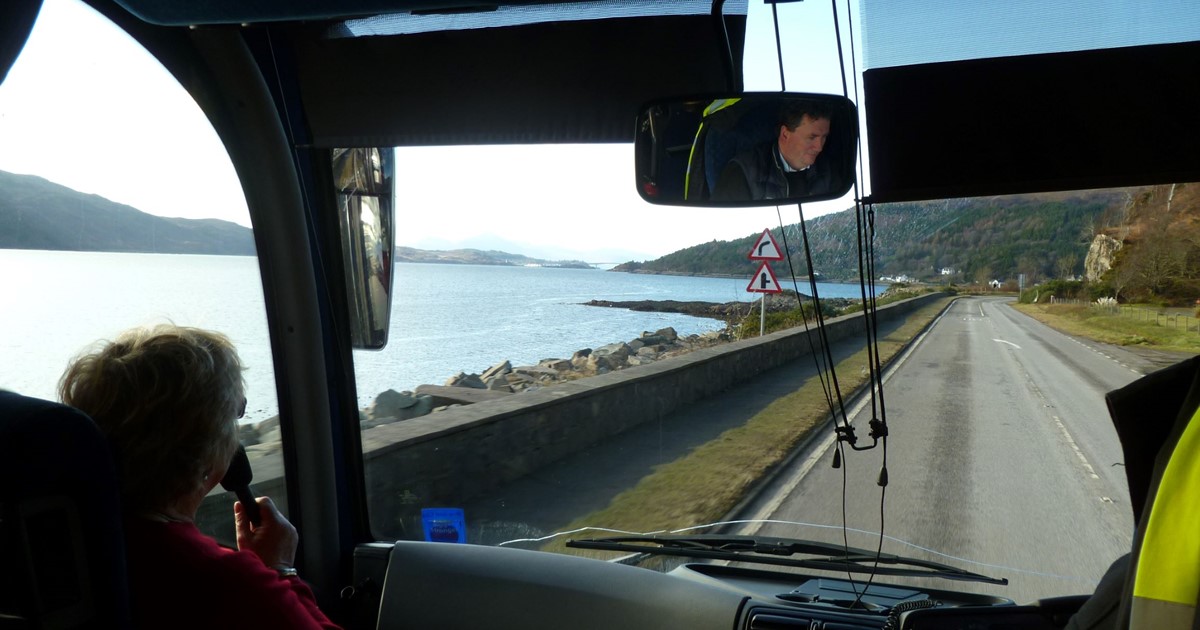
This blog was written in 2019 and refers to Cert HE Tourist Guiding (North Highlands) qualification run by the Institute for Northern Studies at that time. That course has now been completed, but a new course is under development by the Institute.
Is that on the SCQF…? is a series of blogs, where we look at some of the more unusual programmes that are on the SCQF. Read on to find out more about the North Highlands Tourist Guiding course by Lynn Campbell, Programme Leader at the Institute for Northern Studies at UHI.
For the last four years, the course Cert HE North Highlands Tourist Guiding at SCQF level 7 has been run by the Institute for Northern Studies at Orkney College/University of the Highlands and Islands (UHI). Why, you might ask, is a department based in Orkney running a course centred on the North Highlands? Well, it’s because for the last ten-plus years, we have been engaged in running the tourist guide training for the Orkney guides.
In Orkney we have offered simply the STGA (Scottish Tourist Guides Association) Green Badge qualification. The Green Badge is seen as a mark of quality within the tourism industry. Orkney – the UK’s cruise ship destination capital (164 ships in 2019) – was voted Top Cruise Destination for Western Europe and the UK for the third time in 2019, and also received the accolade as the top Northern Europe cruise destination from passengers aboard Viking Cruises, from a total of 46 competing ports. Orkney uses almost exclusively STGA Green Badge trained guides, and INS has been responsible for running this course for a number of years.
We built upon the skills gained in our Orkney training course, and developed a brand new course in 2014 covering the North Highlands of Scotland, which included some business and tourism skills, offering an undergraduate qualification on top of the STGA qualification – a Cert HE North Highlands Tourist Guiding. The course underwent revalidation in January 2019, and now consists of three modules which run between September – May of each year. The final guiding exam is carried out by the STGA itself, so there is an additional charge to students for this examination.
Covering a geographic area larger than Belgium, this does provide us with a few challenges. As we cannot cover the whole of the Highlands, we concentrate on Inverness and its surrounding area, and on one particular route through the centre of the Highlands. This offers students the opportunity to guide across a large variety of environments, and builds their skills over time. The highest performing tourism site across the Highlands is Urquhart Castle, which forms a large part of our training. Once you’ve been trained at Urquhart Castle, you should be ready to tackle most guiding situations.
Students have weekly lectures from UHI staff throughout the academic year; it is only after Christmas that the practical tourist guide training kicks in. The amount of work involved in the course can never be underestimated, but students agree that by the end of the course it has all been worth it. I rather think it’s a little like giving birth. Mothers don’t remember the pain of birth when they have their brand new shiny baby in their arms!
Tourism is one of Scotland’s most important industries, and it creates wealth and jobs, which build upon the nation’s strong international reputation. During 2017, the Highlands saw over 534,000 international visitors, totalling a spend of around £194 million. The Highlands are seeing a boost in cruise ship visits too. With six ports within the Highlands area, in 2019 the Port of Cromarty Firth (Invergordon) brought around 49,000 cruise ship passengers to the Highlands, an increase of over 50% of the figure from the full 12 months of 2016. In total, 180,000 passengers are forecast to arrive at the port in 2019, on 109 cruise ships.
As the course has gathered momentum, we have received more and more applications, but there is a limit on numbers. This is to ensure that students gain the maximum benefit from the practical training, which is undertaken between January – May, in all weathers. One of the guiding mantras is “Guiding is Fun” which sometimes you have to be reminded of as the hail stones bounce off your head… In the middle of Culloden Battlefield… In February…
The key – I find – to good cheer, is regular tea breaks 🙂
Stay in touch with the Institute via its website www.ins.uhi.ac.uk, where details of new courses are published.
Download a pdf version of this blog
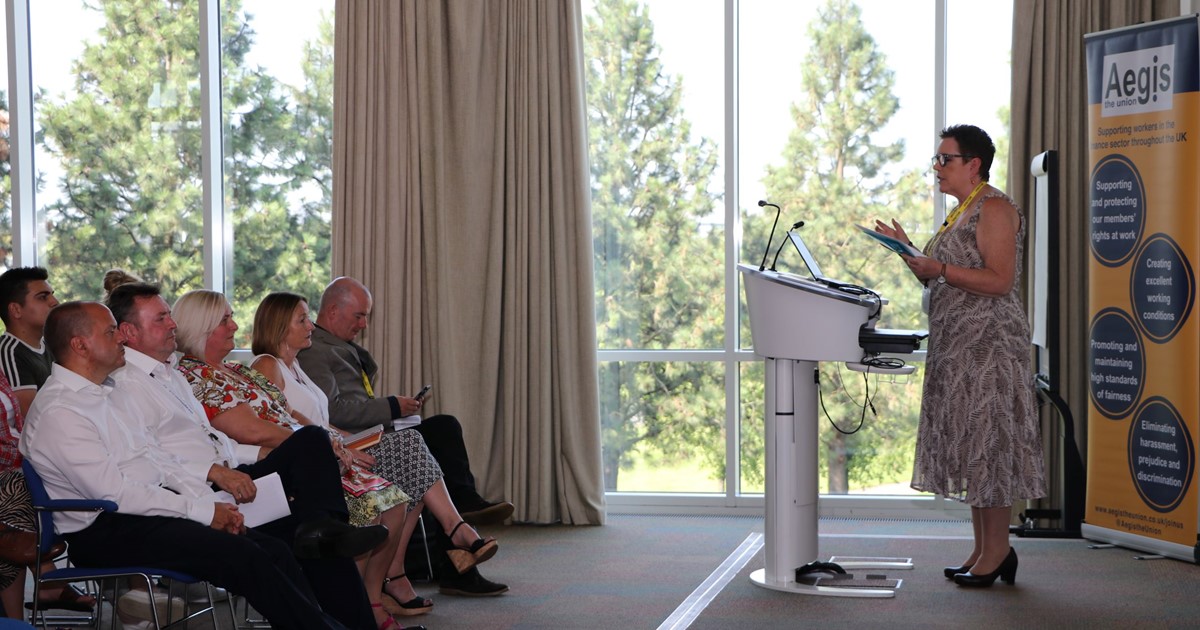
On Thursday 25th July, Aegon employees were recognised for completing the Digital Solution Platform Induction Programme and received the Aegon certificate of Professional Practice in Platform Operations. The event was attended by representatives from Aegis the Union and the SCQF Partnership.
The induction programme, run in partnership with financial services union Aegis with support from Scottish Union Learning, is delivered to all new employees working in Aegon’s Digital Solutions Platform Centre. The programme is designed to teach employees about the wider pensions market as well as Aegon’s propositions and also provide training in the key competencies needed for their specific job role in platform operations.
After a number of years working closely alongside the SCQF Partnership and Edinburgh Napier University, the course has been successfully credit rated at level 8 on the SCQF framework. This means all employees undertaking the course have the opportunity to gain this qualification.
It is one of the first times a financial services company has had its induction course recognised on the SCQF.
Commenting on the event Gill Scott, HR Director at Aegon, said: “It is important to recognise the achievement of employees starting out at Aegon as they gather skills and knowledge during their induction programme and events like this are a great way of showcasing this. We have been working hard to develop the programme and are delighted to be amongst the first financial service companies to have its induction course formally recognised on the Scottish Credit and Qualifications Framework.”
Aileen Ponton, Chief Executive of the SCQF Partnership, commented: “We were really pleased to be able to work with Aegon on the recognition of their Platform Induction programme and their commitment to this shows how much they value recognition of learning for their staff and embrace the SCQF. We see this as the beginning of a close working relationship. Our thanks also go to colleagues from Aegis and Scottish Union Learn for their support with the project.”
Brian Linn, General Secretary at Aegis the Union, comments: “Aegis Union Learning are proud to have helped Aegon’s training programme receive national recognition. We are delighted that so many of our members are benefiting from having their level of knowledge, skills and understanding formally endorsed. This is a wonderful example of how trade unions and employers can work together.”
Further information
Samuel Woods
Aegon UK
Tel: 0131 549 3987
Is that on the SCQF…? is a series of blogs, where we look at some of the more unusual programmes that are on the SCQF. Read on to find out more about the Zoo Animal Behaviour and Welfare programme by Alex Heron, Digital Content Assistant at Dundee and Angus College.
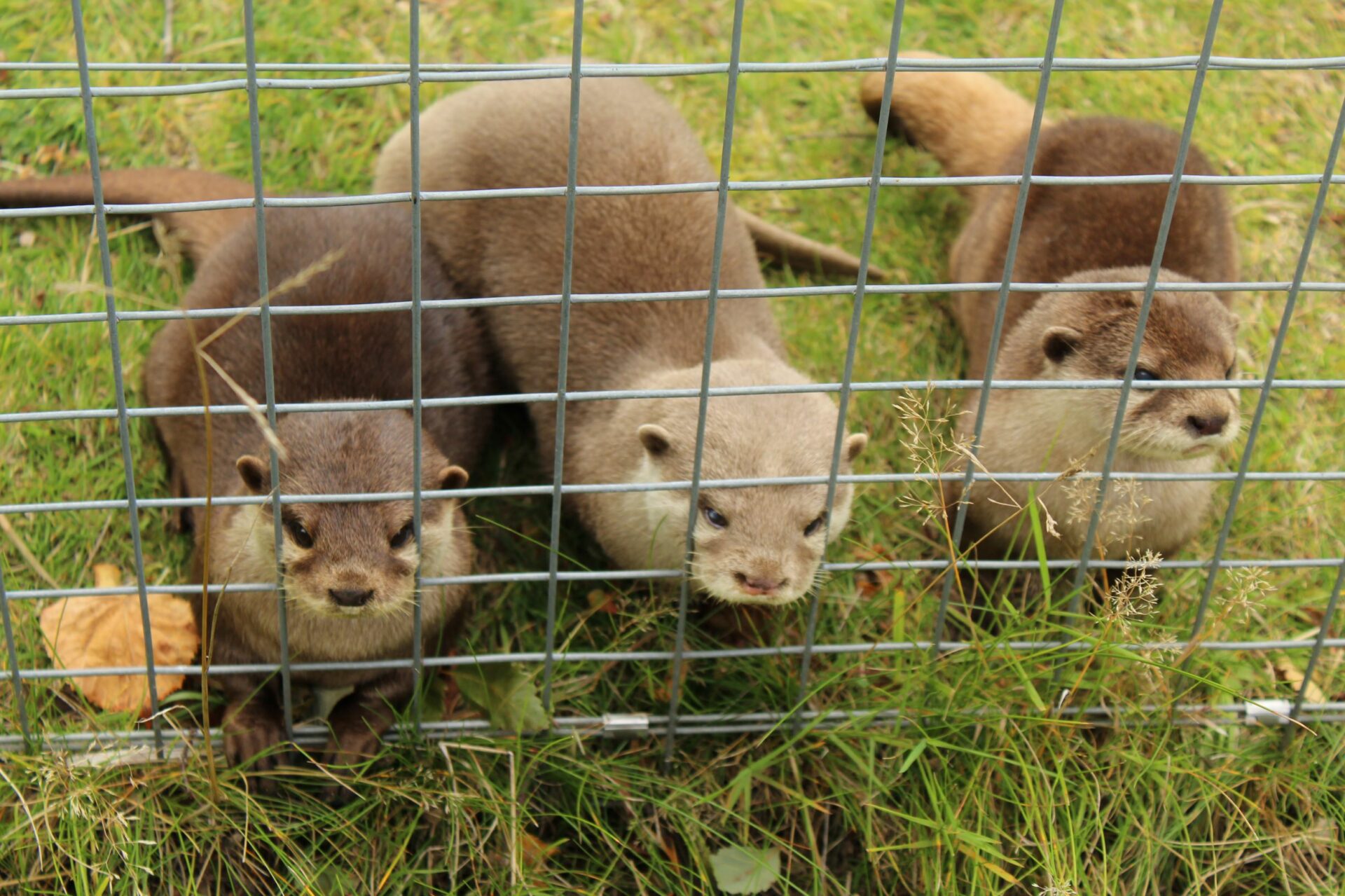
Are you looking to work on the wild side? Dundee and Angus College is offering a one of a kind Zoo Animal Behaviour and Welfare course at SCQF Level 6 which teaches young people the basics of zoo animal care as well as providing them with a core set of transferable skills that are valuable throughout the animal care sector and beyond.
The course – which is the first of its kind in the country – was brought about last year as the college’s Animal Care team noticed that there was a substantial gap in courses at SCQF level 6. They also found that a large number of applicants were interested in working with zoos or with exotic animals. Realising that they could design a course which met the needs of these potential students within the SCQF framework, they reached out to the Camperdown Wildlife Centre (the area’s local zoo) and worked in collaboration with them to develop the course we see today.
The course is centred around a piece of project based learning where students must design an enrichment activity for a zoo animal of their choice whilst documenting the design process and the impact the activity has on the animal’s welfare in the form of a short documentary.
Speaking about the course, Animal Care course leader, Chris Ditchburn, highlights how essential the SCQF framework is to the course’s success: “For us it was very important to have the award validated and aligned with the SCQF because it gives credibility to the course, gives learners a recognised qualification which can be compared to those offered elsewhere and provides a clear progression route through the qualifications we offer. We include the NPA in Zoo Animal Behaviour and Welfare as part of a course offering with the same name which includes other SCQF Level 6 units in Academic Skills, Problem Solving and Digital Media; these flag the transferable skills our learners will develop along the way to achieving their qualification.”
The qualification is perfect for anyone who: has completed an NC but isn’t ready to progress to HNC, is looking to get a foot in the door with a zoo career, wants to understand the role of zoos in society and of course anyone who has a keen interest in Animal Welfare and Animal Behaviour.
Visit the Dundee and Angus College website for more information on the course and how to apply
Download a pdf version of this blog
Is that on the SCQF…? is a series of blogs, where we look at some of the more unusual programmes that are on the SCQF. Read on to find out more about the Gateway to Engineering programme by Natalie Phillips, Education, Business & Community Growth Project Manager at Clyde Gateway.
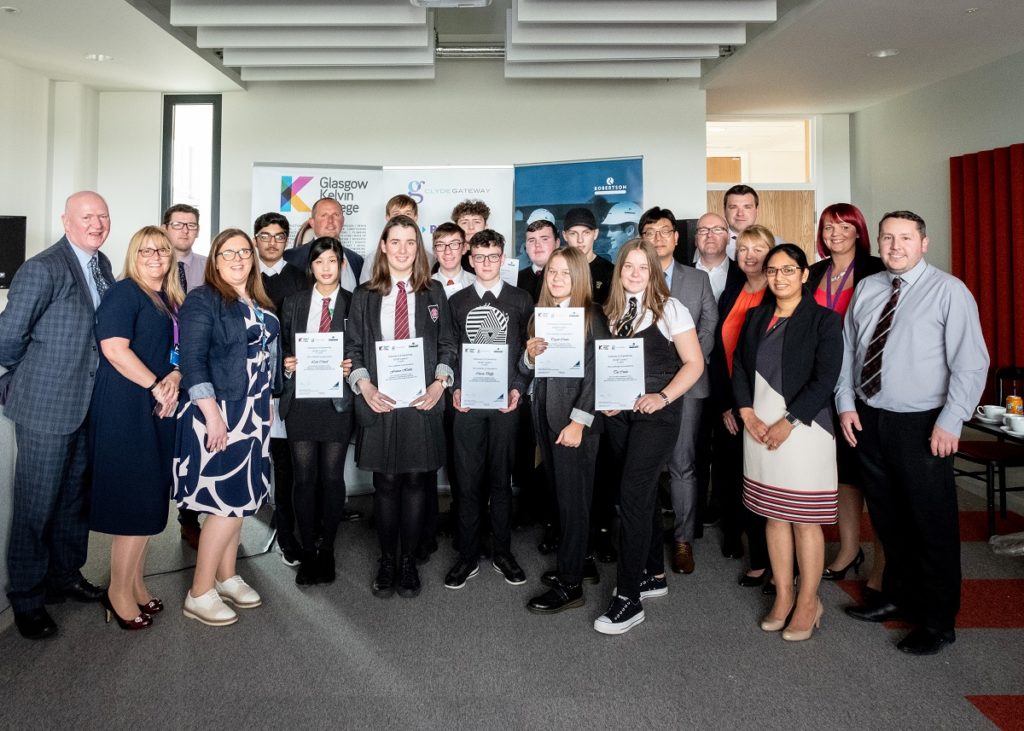
School pupils in the Clyde Gateway area hoping to get ahead with a career in engineering can now achieve a recognised qualification by participating in the Gateway to Engineering programme.
The programme, at SCQF level 5 with five credit points, provides a general introduction to basic engineering principles and concepts to support learners at a pre-foundation apprenticeship level. It is suitable for school-based learners interested in a career in engineering and looking to progress from a pre-foundation level to the Foundation Apprenticeship in Engineering at SCQF Level 6.
The annual 10-week Gateway to Engineering programme offering pupils academic and practical insight into the application of engineering is run in collaboration between Clyde Gateway, construction company Robertson, Glasgow Kelvin College and the University of the West of Scotland (UWS).
The unique approach of our co-delivery model enables us to be mutually supportive of both the Developing the Young Workforce (DYW) and STEM strategies, focused on exploring the world of work through Clyde Gateway live regeneration site visits, alongside addressing the need for all young people in the community to have the STEM skills they need to thrive in all workplaces.
The programme, delivered by Glasgow Kelvin College, explores the basic principles and concepts of engineering creatively through a series of practical fun tasks. Pupils have a learner folio which explains each task and where assessment is embedded into the programme design. There is a combination of individual and group assessment tasks and learners will tell you that the best aspect of the programme is when they get to test the rocket car!
Clyde Gateway and Robertson Construction operate a stringent selection process to enrol pupils into the programme. They also provide high quality training which ensures pupils experience real onsite practical engineering training; take part in site visits; health and safety; job applications; mock interviews and the opportunity to progress into apprenticeship programmes or other relevant progression routes.
UWS staff provide a tour of the campus and an introduction to civil engineering.
Marie Woods, Senior Curriculum Manager – Credit Rating at Glasgow Kelvin College, comments: “Having the programme credit rated raises its profile and gives it a national identity and universal recognition on the SCQF. Pupils can identify with the programme status – SCQF Level 5 with 5 credits. The Gateway to Engineering programme has a value to pupils, parents and partner providers and this is especially important when attracting pupils to enrol. The SCQF level and accumulated credits make the programme an attractive choice within the school curriculum. Pupils are supported and encouraged by all partners throughout the programme and this culminates in an annual award ceremony where representatives from all partner providers, parents and distinguished guests are invited.”
Pupils will tell you that whilst the programme is fun, the learning allows them to think realistically about their preferred options within engineering as they can describe their own skillset and match this to engineering options e.g. Mechanical; Civil; Environmental.
16 year-old Tia Coutts from St Mungo’s Academy in Glasgow said: “I enjoyed the Gateway to Engineering programme as I found the practical learning outwith school more relaxed and enjoyable. I now know that I want to do electrical engineering so am looking for apprenticeships (FA/MA) or a college course. The highlight of the programme for me was when I realised what I wanted to do as not knowing what or where I wanted to go was stressful.”
The four organisations have also put a collective funding bid to Education Scotland as a partnership for Enhancing Professional Learning in STEM. We seek to support a minimum of 100 teachers/early years educators by offering a range of CPD opportunities in STEM-related learning, using live Clyde Gateway regeneration project/s, fully supported by HE, FE and industry partners to build capacity and resource to meet labour market needs. This will be run in conjunction with the existing SCQF level 5 Gateway to Engineering whereby we seek to take more pupils through the process this year.
Read the press release on the latest group to graduate from the programme
We have just published our Strategic Plan for 2019-22.
The Plan describes the SCQFP’s vision, mission and values, how the SCQF links to Government policy, our key drivers and strategic priorities for the next three years.
The Plan will be circulated to partners and stakeholders by email in the coming days, so please keep an eye on your inbox and contact us if you have any questions.
 In order to provide up to date information on the SCQF, build capacity, encourage networking and partnerships and utilise the SCQF fully, we offer a range of products, services, and resources.
Many of these are free as these are part of our ongoing commitment to embedding the SCQF as fully as possible across all sectors. However, we also offer a more tailored or bespoke service which is charged on a cost recovery basis.
Our workshops to support our My Skills, My Future products are costed to cover the materials as well as the training.
Download our guide for further information.
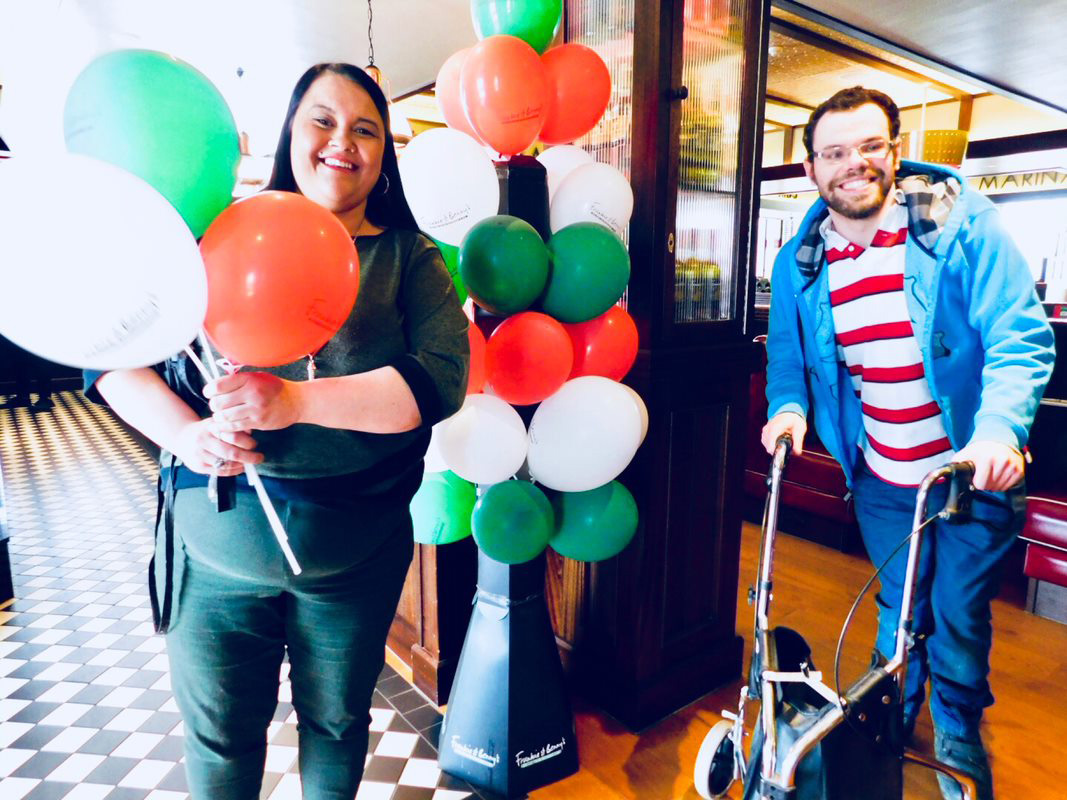
Is that on the SCQF…? is a series of blogs, where we look at some of the more unusual programmes that are on the SCQF. Read on to find out more about the Community Action and Leadership Awards (CALA) by Gail Philips, Engagement and Development Officer at Lead Scotland.
Ever wanted to see a change in your community but don’t know how to go about making it happen? Lead Scotland has developed their Community Action and Leadership Award (CALA) in response to just that scenario. Their accredited and inclusive CALA course aims to empower people to become more active citizens in their own communities.
And there has never been a better time for the people of Scotland to be able to influence change by having a say in decisions which affect them. Since the opening of the Scottish Parliament, the Community Empowerment Act, the accessibility of the internet and growing social media platforms people, rightly so, expect to be consulted and involved in shaping local, regional and national decisions.
The conversation is positive and the direction of travel towards increased involvement is heartening, but disabled people, carers and those affected by disadvantage are still under-represented in decision making forums across Scotland. Many people have great ideas about things they’d like to change but often don’t have the confidence, skills or support to try to change them. Our SCQF levels 3 and 5 Community Action and Leadership (CALA) Awards bridge that gap.
Eighty disabled people contributed ideas and thinking to shape the Award, creating a course which is accessible, accredited and person centred and delivered in a small group with the right support available at all times. Learners choose projects which match their passion and motivation which in turn leads to increased confidence to act, like the group of school pupils who successfully influenced their school to start stocking fair trade products or the group of community learners who petitioned a bus company to stop a service being cut because they realised how many people would have been disadvantaged within the local community.
Feedback on completion of the course is very positive with one learner commenting, “The course built my confidence. I wasn’t doing anything before because I didn’t think I had anything to offer anyone.”
Every learner is individually encouraged to build their confidence to influence change and make a positive difference to their community and deepen their understanding of the needs of community members with a range of impairments. The CALA course enables learners to understand themselves, their rights and responsibilities in order to create a fairer, more representative Scotland.
The CALA at SCQF level 3 has 18 credit points and the CALA at SCQF level 5 has 16 credit points. For more information on the Awards, have a look at the SCQF database.
Lead Scotland, is a voluntary organisation set up to empower disabled young people and adults and carers across Scotland to access learning opportunities. For more information on the services available visit the Lead Scotland website.
Download a pdf version of this blog
The Scottish Credit and Qualifications Framework Partnership (SCQFP) has published a report which updates the referencing of the Scottish Credit and Qualifications Framework (SCQF) to the European Qualifications Framework (EQF). This report was presented to and formally accepted by the European Qualification Framework Advisory Group at its meeting in Brussels in December 2018.
The EQF acts as a translation device to make national qualifications more readable across Europe, promoting workers’ and learners’ mobility between countries and facilitating their lifelong learning.
The EQF aims to relate different countries’ national qualifications systems to a common European reference framework. Individuals and employers will be able to use the EQF to better understand and compare the qualifications levels of different countries and different education and training systems.
The SCQF was first referenced to the EQF in 2009. This referencing was published in 2010 as part of a report on the referencing of the National Qualifications Frameworks (NQFs) of the four UK countries to the EQF. In the intervening nine years since publication, the SCQF has developed considerably, with the revision of SCQF Level Descriptors, the redefinition of SCQF Quality Principles and a considerable expansion in the range and number of qualifications on the Framework.
As a result of these developments, and the changes within Scottish Education over the same period, it was agreed between the SCQF Partnership and the Scottish Government to revisit the referencing undertaken in 2010 to test its ongoing relevance.
The 2019 Report provides a revised and updated analysis of the SCQF/EQF referencing as well as presenting the most up-to-date information on the SCQF to European colleagues and partners. The original 2010 level to level mapping between the two frameworks was judged to be unchanged and remains applicable in 2019.
The referencing process has also enabled the SCQF Partnership to showcase its many achievements since the 2010 referencing report was issued. The impact assessment commissioned in 2016 highlighted the growing reach of the SCQF, both in terms of the increasing numbers of qualifications listed in the SCQF register, and in terms of the awareness and use of the Framework by different stakeholder groups.
The impact assessment provided evidence of a growing influence of the SCQF, both nationally and internationally, and this is presented in this report.
The drafting of the report has been managed by the SCQFP, and overseen by a Steering Group composed of senior representatives of organisations covering all of the education, training and lifelong learning sectors in Scotland, plus four national and international experts and three executive officers from the SCQF Partnership Executive Team.