

In collaboration with the Bahrain Education & Training Quality Authority (BQA), the SCQF Partnership has published the Referencing Report of the Scottish Credit and Qualifications Framework (SCQF) and the National Qualifications Framework of Bahrain (NQF).
The goal of all exercises that reference one qualifications framework (QF) to another is enhanced trust for the users of qualifications who may be internationally mobile or those that use qualifications for international recruitment. In a referencing process, trust comes from a clear and authoritative explanation of how qualifications levels in one jurisdiction relate to those in another jurisdiction and this detailed and robust report has been endorsed fully in both countries.
The SCQFP started discussions with colleagues in Bahrain in 2010 when work was at a very early stage of developing a National Qualifications Framework for Bahrain. In November 2010 a formal Memorandum of Understanding (MoU) with the Bahrain Qualifications Framework Project Steering Committee was signed.
As part of the MoU, the SCQFP agreed to provide advice and comment to the BQF Steering Committee on aspects of framework development and governance and provide final comment and opinion on the way forward for the Bahrain NQF. This was the start of eight years of close collaboration with regular contact and discussion on key areas and general aspects of Framework development.
In 2015 we updated and signed a new MoU between the SCQFP and BQA. As part of that MoU we agreed to consider the benefits of formally referencing our two Frameworks. In autumn 2017 the SCQFP and BQA agreed to undertake this work to support the mobility and recognition of both students and employees.
Scotland has experience of referencing their Framework to the EQF and also to another regional Framework and used this experience to agree a process with Bahrain.
Chief Executive of the BQA, Dr. Jawaher Shaheen Al Mudhahki said: “I am delighted that the BQA has formally referenced the National Qualification Framework (NQF) to the SCQF. Our fruitful relationship with the SCQFP goes back to 2010 at the early stages of Bahrain NQF development. In 2015, a Memorandum of Understanding (MoU) was signed between the SCQFP and BQA and agreed to look into the formal referencing of our frameworks and hence we achieved this target. We anticipate that referencing with a reputable framework like the SCQF will lead to more international recognition of Bahrain framework, qualifications and students. We also are looking forward to enhancing our cooperation in the near future with the SCQFP.”
Aileen Ponton, CEO of the SCQF Partnership, added, “There is now a greater awareness of the need for qualifications systems to have high international credibility, as governments accept that qualifications play a part in facilitating competitiveness and economic growth. At the same time international companies and organisations are increasingly asking for transparency of national systems so that transnational business can be facilitated through the recruitment of employees with the requisite qualifications. We see this report as part of this wider picture which will add to the international comparability of qualifications and systems.”
The report has been shared with stakeholders in both countries to ensure the process is robust and the outcome is validated. The final report is available to download.
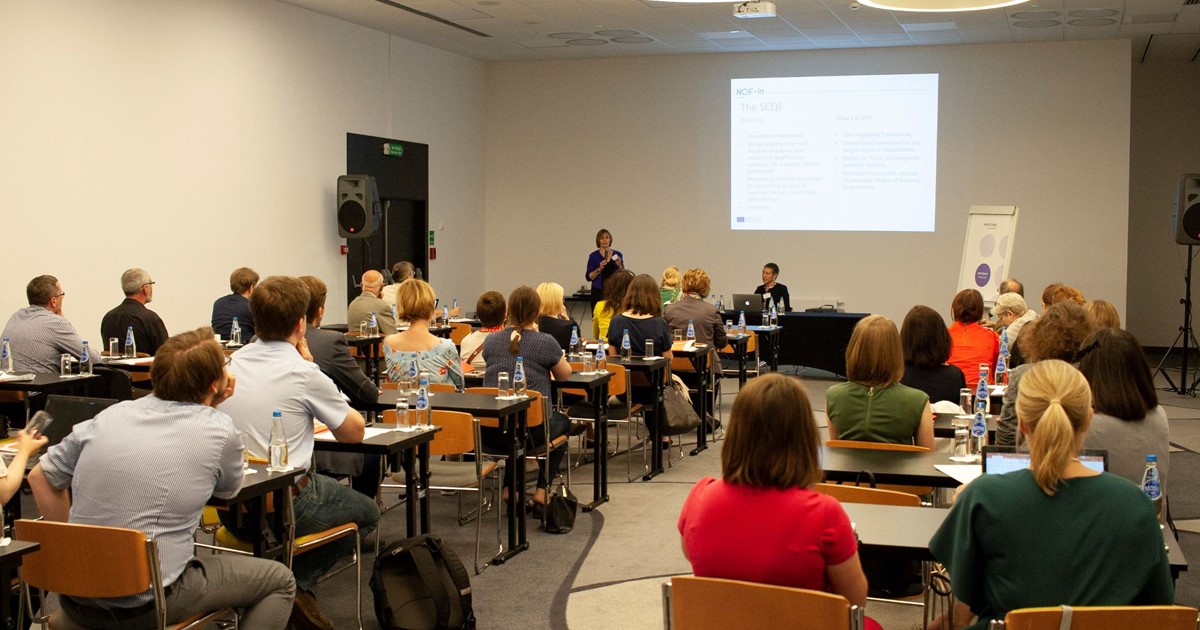
The NQF-in project held a final conference in Warsaw, Poland on 5-6 June. Its focus was developing models of the inclusion of non-formal sector qualifications in national qualifications frameworks – the experiences of European countries.
Sheila Dunn, Head of Quality and International Development, and Kevin McShane, Development Officer, represented the SCQF Partnership and presented the Scotland Country Report in relation to the proposed models.
Sheila Dunn said: ‘The conference was well attended and it was a great opportunity to hear about NQFs and non-formal learning in other countries. The project team hope that both the country reports and the models will be useful for those working with and developing national qualification frameworks.’
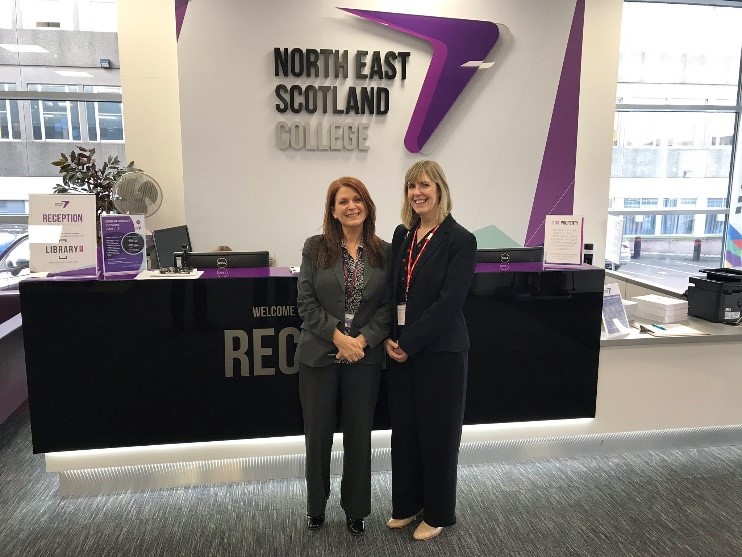
North East Scotland College, City of Glasgow College and Forth Valley College have become the first SCQF College Ambassadors following a pilot programme.
The College Ambassador Programme aims to encourage engagement with the SCQF in a range of different ways, to raise awareness and understanding of the Framework among a wider audience, enabling college staff to cascade their knowledge of the benefits of the Framework and credit rating across the college with the full support of the SCQF Partnership Executive Team.
It is anticipated that the programme will maximise the impact of the Framework, ensuring that it is perceived as a vital tool for progression; facilitating Senior Phase learning pathways and supporting the aims of the Developing the Young Workforce agenda. It will also ensure that the benefits of the Framework are being communicated to staff and learners right across the college landscape.
All three colleges received their Ambassador plaque and badges from SCQF Development Officer Anthony O’Reilly at the end of May and representatives from each college spoke about their positive experience of the programme at the recent College Expo which took place at Queen Margaret University, Edinburgh on 6 & 7 June and highlighted the different ways in which each college uses the SCQF.
The audience heard how the colleges are using SCQF in curriculum development and assessment planning, for widening access and articulation and credit rating for third parties, partners and for in house designed programmes.
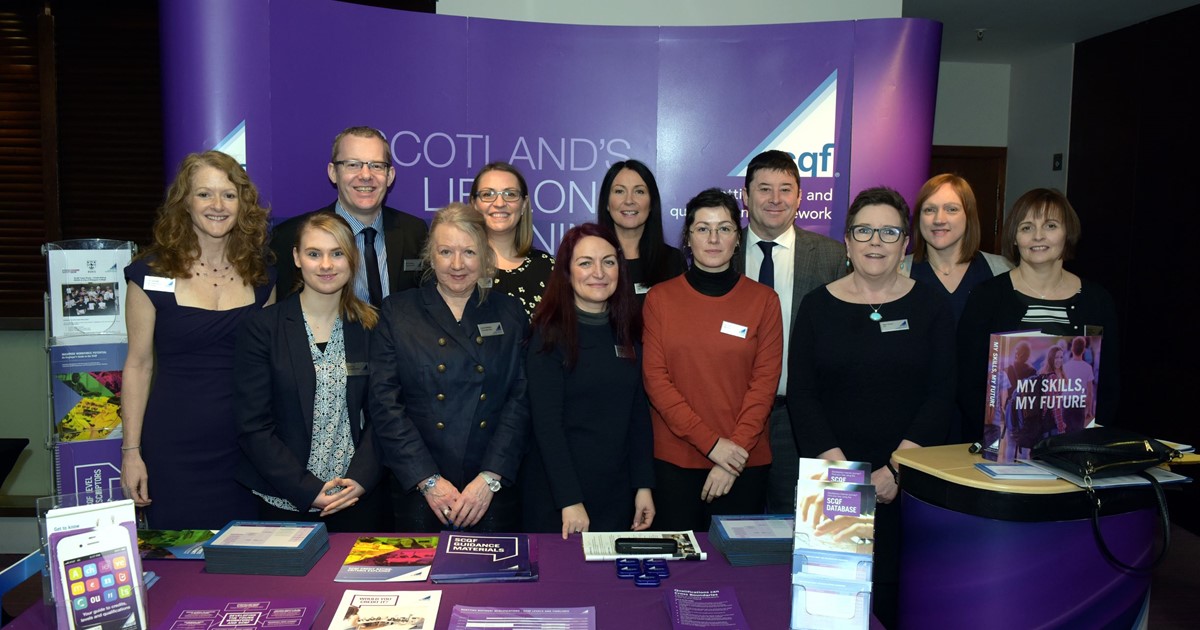
On Thursday 22 February 2018, 230 participants from 142 organisations from 13 countries gathered in Glasgow for SCQF: Linking the Learning Journey; a conference which aimed to showcase all aspects of the Framework, demonstrating its breadth and flexibility as a tool to facilitate lifelong learning in Scotland. It also focused on how the SCQF supports Scottish Government policy such as The Learner Journey, Developing the Young Workforce (DYW) and the Commission on Widening Access.
The conference, hosted by Paul McKelvie OBE, former Scotland Commissioner to the UK Commission for Employment and Skills, brought together a wide range of SCQF stakeholders from sectors as diverse as schools, colleges, universities, Credit Rating Bodies, employers, local authorities, parents, private training providers, Community Learning and Development, international framework owners and, very importantly, learners, for whom the SCQF was originally envisioned.
The conference showcased the range of uses of the SCQF and featured a variety of inspirational speakers such as Audrey Cumberford, Principal and Chief Executive of West College Scotland, Grahame Smith, General Secretary of the Scottish Trades Union Congress, Professor Sir Peter Scott, Scotland’s Commissioner for Fair Access and Darren McGarvey aka Loki the Scottish Rapper, with John Swinney MSP, Deputy First Minister and Cabinet Secretary for Education and Skills, providing the keynote address.
During his speech, Mr Swinney acknowledged the importance of the SCQF to Scottish Government policy saying that, “The Framework is central to our approach to education.”
He also told the conference that, “The SCQF enables us to tabulate the learner journey, allowing young people to navigate their way through the education system.” He added, “The SCQF is an absolutely dependable single reference point for everyone, no matter where they are from.”
Mr Swinney also presented prizes to representatives from two secondary schools, Clydebank High School and Bearsden Academy – the winners of a competition organised by the SCQF Partnership for SCQF School Ambassadors.
One of the highlights of the day was a presentation from two lifelong learners who have both used the SCQF in their learning journeys.
Jon Wallace, now a nurse in the Orthopaedics Department at Glasgow Royal Infirmary, completed the SQCF level 6 Access to Nursing Scottish Wider Access Programme, which helped him on his way to fulfilling his dream of becoming a nurse.
Lisa Thomson, currently in the Honours year of her SCQF level 10 International Business and Human Resources degree at Glasgow Caledonian University used SCQF credit transfer from her HND to secure entry into year 3 of the degree.
Delegates also had the opportunity to participate in two workshops at the event with contributions from facilitators such as Clydebank High School, City of Glasgow College, Education Scotland, University of Glasgow and Scottish Government.
The event was sponsored by valued SCQF stakeholder organisations:
City & Guilds, the General Teaching Council for Scotland (GTCS), Scottish Qualifications Authority (SQA), the Scottish Social Services Council (SSSC), the Scottish Training Federation (STF) Skills Development Scotland (SDS) and YouthLink Scotland.
TES Scotland is media sponsor for the event.
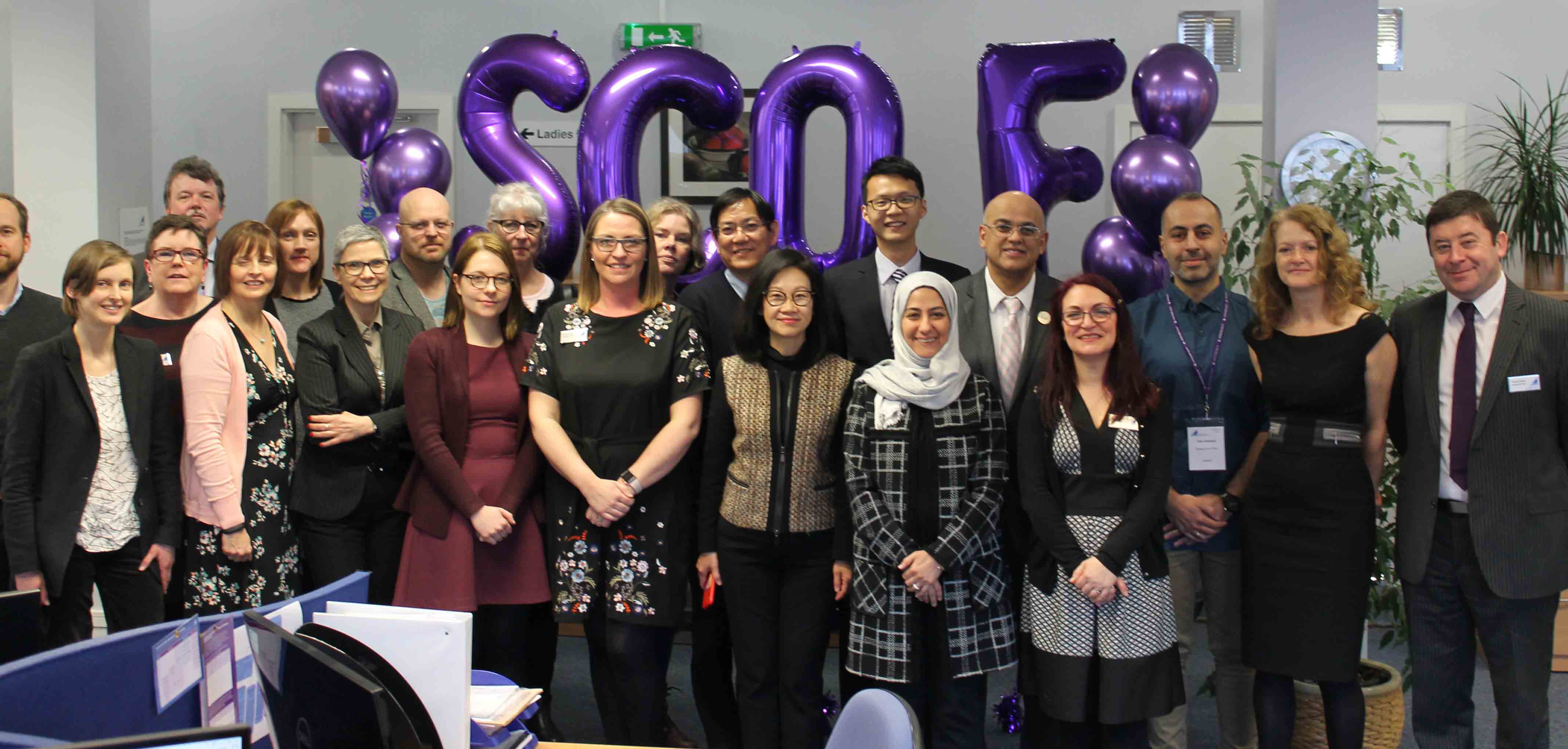
As part of the SCQF: Linking the Learning Journey conference, the SCQF Partnership team offered international delegates the opportunity to attend a study visit taking place today, 23rd February, at the SCQFP premises.
The study day allowed the delegates from as far afield as Bahrain, Sweden, Belgium, Estonia, Lithuania and Hong Kong to engage in more detailed dialogue around the implementation and varied use of the Framework.
The day included:
• Technical information on the structure, systems and quality assurance around the Framework
• The opportunity to hear directly from SCQF Credit Rating Bodies about working with the Framework
• Information around the research programme conducted by the SCQF Partnership and the recent review on impact of the SCQF in Scotland
• The chance to talk directly with Officers working at the SCQF Partnership.
Find out more about our bespoke services and study visit options
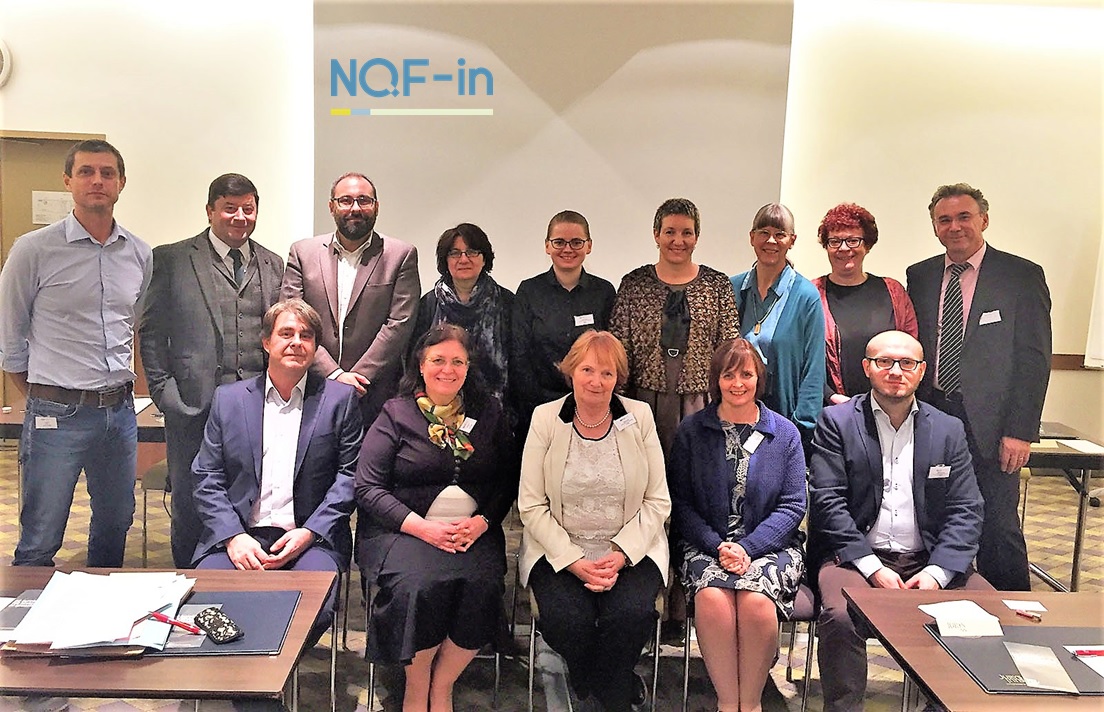
Sheila Dunn, Head of Quality and International Engagement and Anthony O’Reilly, Development Officer at SCQF Partnership recently attended the NQF-in Project’s conference on: “Including non-formal sector qualifications in the national qualifications framework – the experiences and solutions of 7 European countries” at the Jurys Inn Hotel in Prague, Czech Republic on November 9, 2017.
Over 85 participants were warmly greeted by Ms. Irena Palánová, Head of International Cooperation Department, National Institute for Education (Czech Republic) and Ms. Kláŕa Bezděková, Head of the Adult Education Department at the Czech Republic’s Ministry of Education, Youth and Sports, who were introduced by Jan Brůha, from the National Institute for Education and NQF-In Project partner.
Horacy Dębowski, NQF-In Project Expert from Poland, provided a general overview of the project, as well as a presentation on the conceptual and terminology problems that may arise when working on issues pertaining to NQFs and qualifications.
After these introductory presentations, project partners presented on the solutions in their countries: Czech Republic, Scotland, France, Croatia, Ireland, Hungary and Poland. Each presentation covered such topics as:
- terminology used,
- historical context of NQF implementation,
- procedures of including non-formal sector qualifications in the NQF,
- legal status of qualifications included in the NQF,
- fees for inclusion,
- challenges and directions of development.
The final session was a panel discussion, held with representatives of all the countries involved in the project. Each of the panellists was asked to respond to two questions:
- Which topics, solutions, ideas shown in the country presentations were the most interesting, inspiring?
- Which of the presented solutions on including non-formal sector qualifications in the NQF have a universal character and can be used in other countries?
Lively discussions ensued between the panellists and participants, who were invited to share their perspectives and comments on the questions posed and remarks of the panellists.
Quality assurance was raised as an important issue – will it be a very procedural process or more flexible to respond more quickly to dynamically changing labour markets.
The issue of the ownership of qualifications was also raised, especially in terms of the different approaches in various countries – public vs. private ownership and the impact this may have on NQFs and qualifications systems.
Participants were graciously thanked for their attendance and active involvement in the discussions at the end of the event by Jan Brůha and Horacy Dębowski.
An announcement was made about a follow-up conference on models of including non-formal sector qualifications in the NQF, to be held in Warsaw, Poland in early June 2018.
Each country report can be accessed on the NQF-In Project website at
http://www.nqf-in.eu/index.php/publications/nqf-in-reports-and-papers
Conference presentations can be downloaded from
http://www.nqf-in.eu/index.php/news-and-events/47-prague-conference

The meeting’s aim was to discuss the country reports, models of including non-formal education qualifications to National Qualifications Framework, as well as to plan the project conference in Prague scheduled for November 2017.
Representatives of all seven project Partners participated in the meeting. The meeting was opened by Mr. Alberto Lopez, Director of Céreq.
He welcomed all project partners and expressed his appreciation for the importance of the work that has been done so far within the NQF-in project. Then Horacy Dębowski from IBE warmly welcomed all present and explained the aims of the meeting.
The main part of the meeting was a discussion on the country reports, as well as the organisational and financial models for including qualifications in NQFs. Country reports provide relevant information about the rationale of the qualifications system in each country, procedures and the institutional set-up in the particular system.
The main topic of the country reports is the approach toward qualifications awarded outside the formal educational system, which are neither provided in school nor regulated by the state. These reports will be a valuable source of information for decision-makers, researchers, stakeholders and all other persons interested in this field.
Horacy Dębowski presented a first approach toward developing the models and their key elements.
The models of the solutions will be a synthesis of information included in the country reports and will refer to, among others:
(a) the types of qualifications that are included in the NQFs
(b) the institutional arrangements – their pros and cons depending on the goals set for the NQF, and the broad institutional context
(c) cost intensity – how cost intensive are the systemic solutions envisaged by the model
(d) recommendations on its financing.
The NQF-IN Project, “Developing organisational and financial models for including non-formal sector qualifications in National Qualifications Frameworks”, is funded by the Erasmus+ Programme of the European Union.
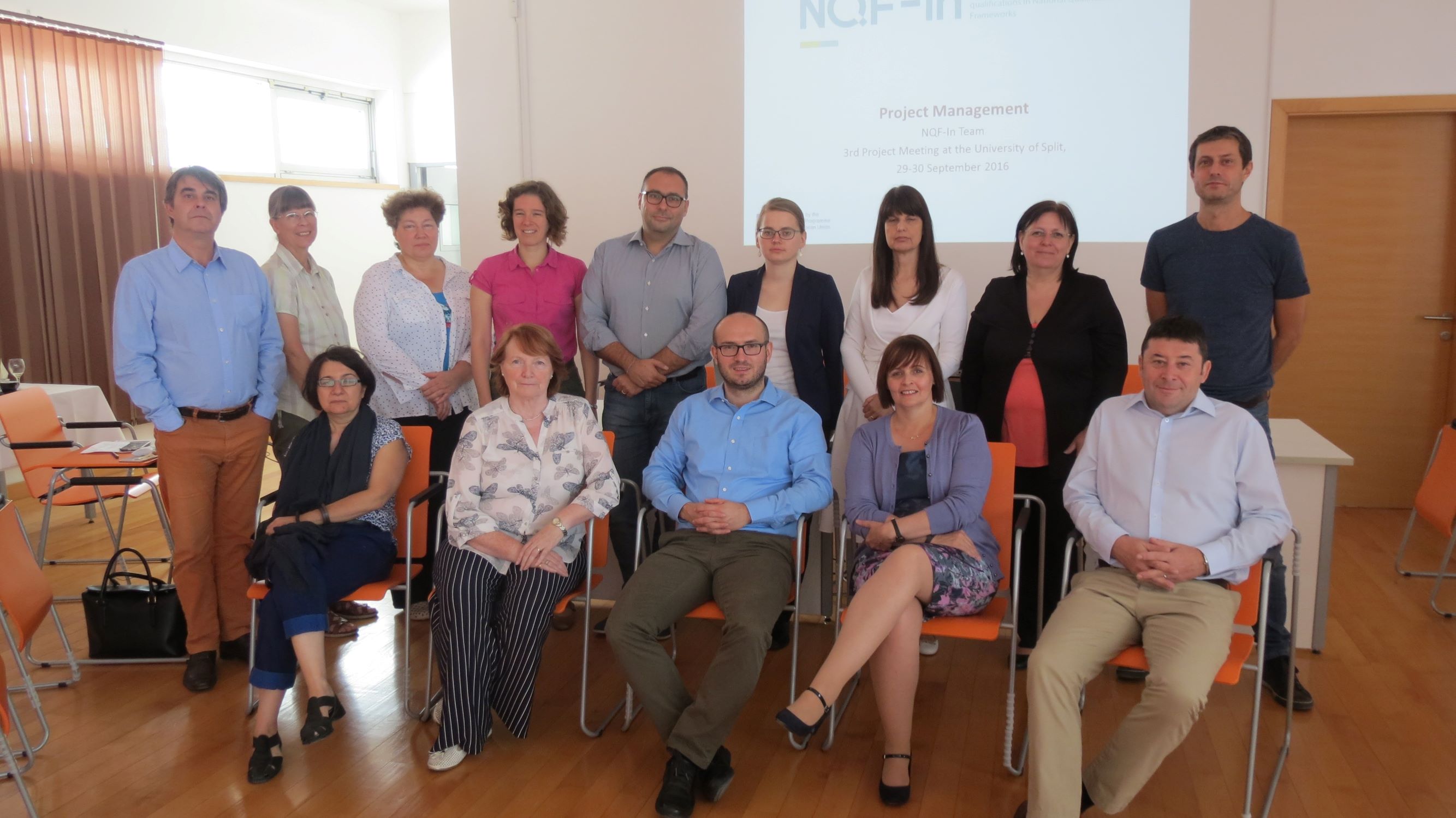
The meeting was devoted to fine-tuning the structure of the country reports that comprise one of the major products of the project.
These reports are being written to present how each country includes qualifications awarded in the non-formal education sector in their qualifications framework.
General models and recommendations of including non-formal education qualifications will be developed by the project based on the information collected from the country reports.
These models will then be disseminated to national governments and EU institutions to help support the process of including non-formal education qualifications that is currently in different stages of implementation in EU Member States.
Country reports were prepared and presented by most of the partners for the purpose of testing the current report template and improving it.
Some of the changes related to the order of the chapters, some chapters were combined, other elements were separated out so that the presentation of the inclusion process and its context is as clear as possible.
Agreement was reached on the title, structure (template) and the addition of one chapter to the report on the premises of the NQF of each country.
We also planned the internal and external review process of the country reports.
A set of questions was developed to be answered by internal reviewers – each project partner will review two country reports prepared by other partners.
External reviewers will also be asked to assess the reports, and a set of questions was also prepared for this purpose.
We agreed to a system for resolving disagreements that may arise during the review process and set up a timetable for this work.
The NQF-IN Project, “Developing organisational and financial models for including non-formal sector qualifications in National Qualifications Frameworks”, is funded by the Erasmus+ Programme of the European Union.