

One of our college Credit Rating Bodies (CRBs) recently got in touch to ask whether they could issue E-Certificates for SCQF credit rated units or programmes, or if they had to stick with paper ones.

It’s a great question, and one that’s probably on the minds of other colleges and SCQFP-approved CRBs too, so we thought we’d share some best practice guidance.
The short answer: Yes, you can issue E-Certificates
The SCQF Quality Assurance Model doesn’t require certificates to be paper-based. What matters is the content, not the format. Principle 10 of the SCQF Handbook specifies what information must appear on certificates, but it doesn’t dictate whether they need to be physical documents.
This means you’re free to transition to E-Certificates for any programme or part of a programme that has been credit rated for the SCQF.
Learning from those who’ve already made the switch
To help inform our guidance, we spoke to our colleagues at OPITO, who confirmed they’ve successfully switched to E-Certificates for their SCQF credit rated programmes. Their experience — and that of other approved CRBs who’ve made this move — has shaped our recommendations below.
Best practice recommendations for E-Certificates
Format and accessibility
Your E-Certificate should be a secure document format, such as a PDF, that learners can easily download, save and print. This ensures learners have full control over their credentials and can access them whenever needed.
Security features
Following OPITO’s example, we highly recommend incorporating a QR code or similar verification feature that links to a validation tool. This helps ensure authenticity and makes it easy for employers and other institutions to verify credentials.
Mandatory content
Your E-Certificate must include all the required information set out in Principle 10 of the SCQF Handbook:
- The full title of the unit or programme
- Total SCQF credit points
- SCQF level
- SCQF logo
- Your name as the Credit Rating Body
Systems and processes
From our discussions, we gather that the practical challenges of moving to E-Certificates centre on operational readiness rather than compliance. Make sure your student records system can robustly generate, store and provide access to digital certificates. Equally important is ensuring that both staff and learners understand how to access and use these certificates.
Key takeaway
According to feedback, the main challenges in transitioning to E-Certificates relate to system readiness and staff training, not regulatory compliance. With proper planning and the right systems in place, the move to digital certification can be straightforward and beneficial for both your organisation and your learners.
If you have questions about implementing E-Certificates for your SCQF programmes, please don’t hesitate to get in touch at info@scqf.org.uk
Pauline Radcliffe has decided to step down as Chief Executive Officer of the Scottish Credit and Qualifications Framework Partnership (SCQFP) on 31 December, 2025.
Pauline joined the SCQFP in December 2022 and has had a key role leading the organisation through a period of transition, development and new strategic vision. The Board is grateful to Pauline for her service and contribution as CEO of the SCQFP and we wish Pauline well in the next stage of her career.
We will, in due course, appoint a new CEO of the SCQFP. During the period of recruitment, we will seek to have interim executive leadership in place, to support the existing SCQFP leadership team and to ensure that our critical work within the Scottish education and qualifications arena is not disrupted.
The SCQFP team will manage projects, services and deliverables as usual, and if there are any immediate questions, these can be directed to the Chair of the SCQFP Board via chair@scqf.org.uk

The SCQF Partnership is inviting organisations to apply for funding to have their interdisciplinary learning (IDL) programmes or awards credit rated onto the Scottish Credit and Qualifications Framework (SCQF).
This initiative aims to increase the number of high-quality, credit rated courses that support Scotland’s growing emphasis on interdisciplinary learning.
Funding available
Successful applicants will receive an award, split between:
- the programme development and preparation for credit rating
- the costs associated with credit rating and adding the programme to the SCQF Register
Eligibility criteria
Programmes must:
- Fit within the definition of interdisciplinary project-based learning
- Have a strong uptake in terms of learners
- Be aimed mainly (but not solely) at children and young people up to age 18
- Be offered to learners in Scotland
- Would be expected to sit at SCQF level 7 or below
- Carry 12, 18 or 24 SCQF credit points
- Be available for at least three years once credit rated
- Be solely owned by the applying organisation (collaboration is permitted, but one organisation must lead)
In addition to funding, the SCQF Partnership will provide training on the credit rating process, support with programme development, and introductions to Credit Rating Bodies.
Priority themes
While all eligible interdisciplinary learning projects are welcome, the SCQF Partnership is particularly keen to fund those focusing on:
- Social justice
- Political literacy
- Digital literacy
- Creativity
- Entrepreneurship
- Health and wellbeing
What is interdisciplinary learning?
Interdisciplinary learning is a planned approach that integrates different subject areas to explore real-world issues and challenges in meaningful and connected ways. It encourages young people to apply knowledge and skills across disciplines, develop independence, and tackle complex problems through inquiry-led learning models.
How to apply
We recommend having an informal conversation with us before applying to ensure your proposal is eligible and your programme is ready for credit rating. Get in touch by emailing IDLproject@scqf.org.uk
Organisations should complete the application form and submit it via email to the above address by 12 noon on Friday, January 23 2026. All funded projects must be completed by the end of October 2026.
Documents
In our new blog series featuring our Quality Committee (QC) members, we speak to Ewen Hay, Director of Products and Services at OPITO.
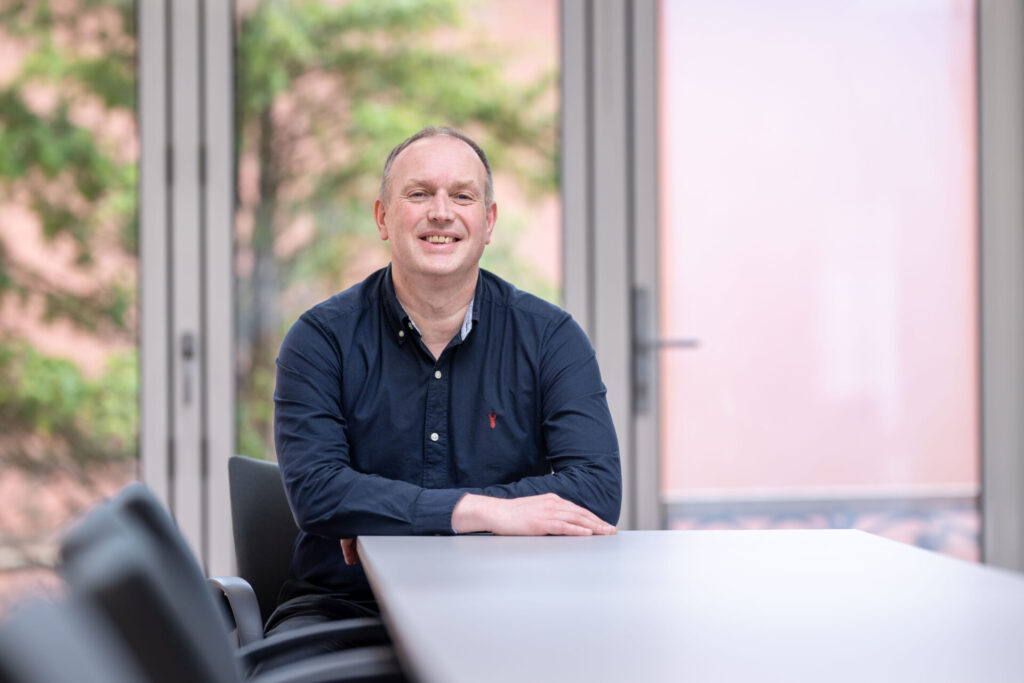
What attracted you to the role of Quality Committee member?
I’ve long been a strong advocate for the SCQF and its role in strengthening and bringing clarity to skills, qualifications and learning across Scotland. When the opportunity to join the Quality Committee arose, I was pleased to accept. Having spent many years working in qualification development and quality assurance, I recognised the value of the SCQF in supporting meaningful recognition of learning. The role offered a chance to contribute to a framework I’ve respected throughout my career.
- How long have you been working with the SCQF Quality Committee?
I’ve been a member of the Committee since 2019 and have had the privilege of working alongside several Chairs and the SCQF Partnership team during that time. The quarterly meetings provide a valuable space for discussion, reflection and shared learning. It’s been a professionally rewarding experience and one I continue to find personally fulfilling.
- How did your work/life experience prepare you for the role?
My career has focused on training and competence, with a particular emphasis on qualifications and quality assurance. I’ve worked with multiple awarding bodies and have been responsible for developing qualifications and maintaining external approvals. This experience has given me a strong foundation for contributing to the Committee’s work, and I continue to learn from the diverse expertise of my fellow members.
- In your opinion, why is the quality assurance aspect of the work that the SCQF Partnership does so crucial?
Quality assurance is essential to the credibility of the SCQF. It ensures that learning, whether formal or informal, is recognised in a consistent and reliable manner. This benefits learners, providers and employers by offering clarity and confidence in the qualifications landscape. The SCQF’s work in this area is central to maintaining trust and promoting lifelong learning across Scotland.
- What is your most interesting quality assurance-related fact?
I believe there is a common misconception that only formal learning holds value. Learning takes many forms, and the SCQF plays a crucial role in recognising achievement across a broad spectrum. This inclusive approach is one of the framework’s greatest strengths.
- Final reflections
I have a great deal of admiration for the work of the SCQF Partnership and the Quality Committee. The dedication and professionalism of those involved is commendable, and I am proud to support their efforts. Ensuring that learners receive appropriate recognition for their achievements is a responsibility I take pride in and I believe the work of the Partnership deserves continued support and wider recognition.
At Acting Coach Scotland (ACS), students take an acting qualification that’s truly unique – it culminates with a performance at the Edinburgh Fringe Festival.

The Professional Diploma in Stage & Screen Performance is at SCQF level 8 with 233–243 credit points — a rare example of a performing arts qualification that combines practical training with a world-famous stage experience.
Hands-on performing arts training
This one-year, full-time diploma in acting prepares students for professional careers on stage and screen. Learners develop acting technique, voice, movement, screen performance and professional preparation skills, all leading to a Fringe production.
Graduates perform in front of agents, casting directors, and industry professionals at the festival, gaining invaluable real-world experience. They also leave with a voice reel, showreel footage, and Spotlight eligibility, essential tools for starting a career in acting.
Who the diploma is for
The programme attracts students from across Scotland, the UK and internationally – from school leavers fast-tracking their training to career changers pursuing a lifelong passion. What unites them is a love of performing and the rare chance to experience the Edinburgh Fringe as part of their qualification.
Why SCQF level 8 matters
Being on the Scottish Credit and Qualifications Framework (SCQF) gives learners a clear understanding of the diploma’s level, workload and quality standards. It also shows that this hands-on, industry-focused acting qualification meets rigorous academic and professional benchmarks.
Learner reflections
One graduate said:
The Diploma gave me the confidence and tools to turn acting from a dream into a profession. The Fringe run was life-changing!
The Professional Diploma in Stage & Screen Performance offers an unconventional, hands-on route into the creative industries – proof that not all paths to success look the same, but the SCQF helps make each one visible.
Useful links
For more information about the qualification, visit the ACS website.
See how this SCQF level 8 qualification compares on our Interactive Framework.
Learn more about school-college partnerships by watching the recording of our School College Partnership Event 2025.
This annual event brings together schools and colleges from across Scotland to showcase how collaboration helps pupils:
- Access a wider range of learning opportunities
- Develop skills for life, learning, and work
- Achieve qualifications across the SCQF that open doors to future pathways
Hear from inspiring educators and partners as they share best practices, success stories, and ideas for strengthening pathways between schools and colleges.
“The future belongs to those who can imagine it, design it, and execute it.”
– World Economic Forum, Future of Jobs Report 2023
At Daydream Believers, we believe creativity is not just for the arts. It is a core skill for every career, and essential for helping young people build a future they can thrive in.
As Careers Week encourages learners to explore their options, we’re proud to offer two qualifications that focus on the skills that matter most.
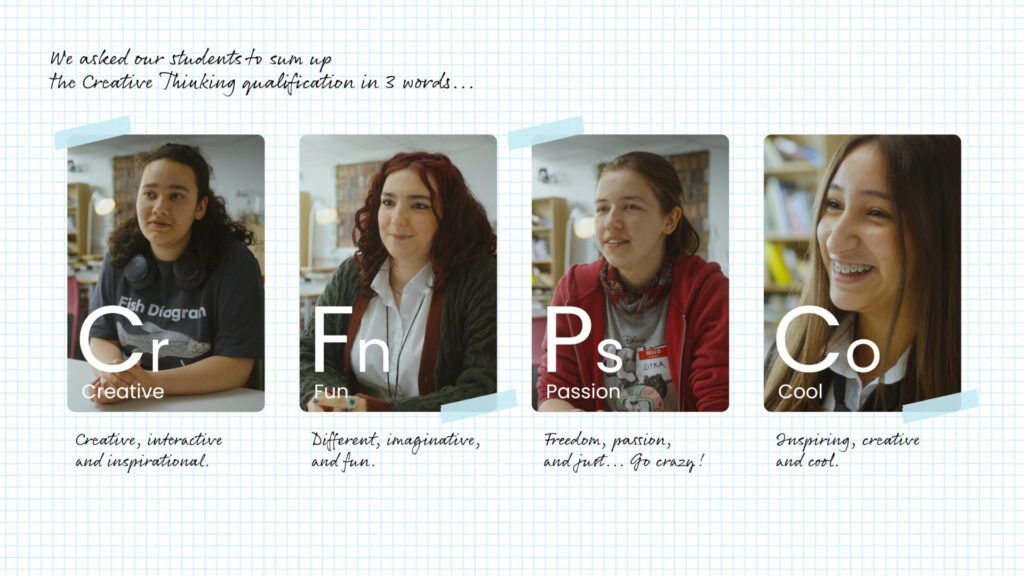
Our SCQF level 5 and level 6 Creative Thinking Qualifications, each worth 24 SCQF credit points, are designed to help learners develop the meta-skills they need for life, learning and work. These include creative and critical thinking, collaboration, communication, reflection and resilience.
Mirroring the workplace
Through real-world challenges like Van of Dreams, Circular Brand and Forestopia, learners are encouraged to research, ideate, prototype, test and present solutions that are bold, relevant and meaningful. These experiences are assessed against five key learning outcomes: Research, Concepts, Fail & Fix, Communicate and Evaluation.
This structure mirrors the creative process used in workplaces across every sector. It helps young people build confidence in their own ideas and learn how to respond to change. These are the skills employers tell us they are looking for, and the same ones identified by the World Economic Forum as essential for the future of work.
Digital tools and emerging AI are embedded throughout our resources, encouraging learners to think with creativity and curiosity in an increasingly digital world.
A new Daydream Believers qualification
We are also excited to be developing a brand new SCQF level 5 and 6 Creative Innovation Qualification, in partnership with Edinburgh Napier University. This qualification will take creative thinking a step further by focusing on enterprise, systems thinking and innovation with impact.
Looking to support your learners with future-ready skills, we invite you to explore what is possible through Creative Thinking.
Let’s help young people imagine the future — and give them the tools to build it.
Useful links
See Daydream Believers in action

In a classroom I visited this week, a teacher played her pupils a short clip from a business interview about artificial intelligence and the future of work.
The executive being interviewed listed creativity, adaptability and communication as the skills that would matter most.
When the clip ended, she asked what the class thought. There was silence. A few said it sounded interesting, but most weren’t sure what he meant. What they didn’t yet realise was that the skills he described were the very ones they were developing every day, they just didn’t have the words for them yet.

Having skills vs recognising skills
That gap between having skills and recognising them matters. Meta-skills, problem-solving, collaboration, communication, resilience are what help people succeed in any career. They’re also difficult to identify, particularly for young people still learning through experience.
At Powering Futures, more than 2,300 pupils across Scotland are taking part this year in our SCQF level 6 qualification, working in teams to solve real-world sustainability and business challenges.
The 2025/26 Challenge Setters include BAE Systems, BAM, Siemens Energy, SSEN Transmission, Seafood Scotland, and the Net Zero Building Consortium a partnership between HCI Skills Gateway, Vital Energi, and the Centre for Net Zero High-Density Buildings.
Why Powering Futures?
This qualification was born from our workplace programmes, which are still delivered in partnership with employers across the UK and remain highly sought after.
We’ve taken that same approach, developing essential skills through live challenges and collaboration and brought it into schools so that every young person has the opportunity to build the capabilities that are critical for their future.
These organisations understand that technical knowledge alone isn’t enough. Scotland needs people who can think, adapt and collaborate – the human skills that technology can’t replace.
Yet our national survey this August found that only seven per cent of pupils could confidently talk about their meta-skills. They might already be using them, but they can’t describe or evidence them. That’s the gap Powering Futures exists to close.
What pupils learn
Through the Challenge, pupils learn how to work in diverse teams, communicate ideas clearly and apply learning to genuine industry problems. They begin to see how the skills they practise in school connect directly to the workplace and that recognition changes everything.

Employers tell us the same thing: they can teach systems and processes, but they need people who can listen, question and keep learning. Those qualities determine who thrives, not just who is hired. Developing them early gives young people a real advantage, helping them step into work or further study with confidence rather than uncertainty.
That’s where the SCQF adds real value. By recognising and crediting these broader capabilities within formal qualifications, it sends a clear message: learning through experience counts. It validates the growth that happens outside exams; the growth that shapes how people perform and progress.
Meta-skills aren’t ‘soft’. They’re durable, practical, and essential. Helping young people see and name them early doesn’t just prepare them for the future, it gives Scotland a stronger, more adaptable workforce today.
Useful links
See Powering Futures in action at St Matthew’s Academy, Saltcoats