

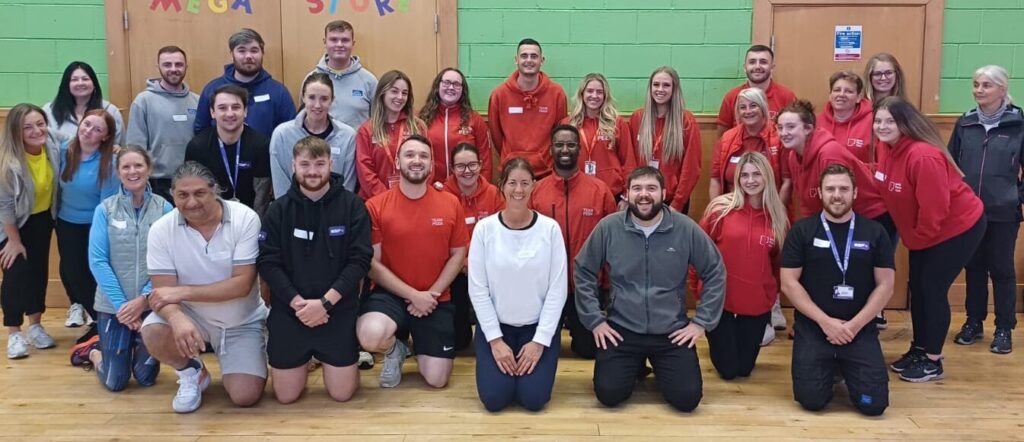
Actify is on a mission to get more children, more active, more often. By combining expert training with powerful digital tools, we have been helping sport, physical activity, and fitness organisations across Scotland make a real difference in their communities since 2018.
With a team that brings together experience in education, sport, play, and digital content, Actify works with over 300 organisations across Scotland. Our mission is simple – get more people, more active, more often.
Active Play Training
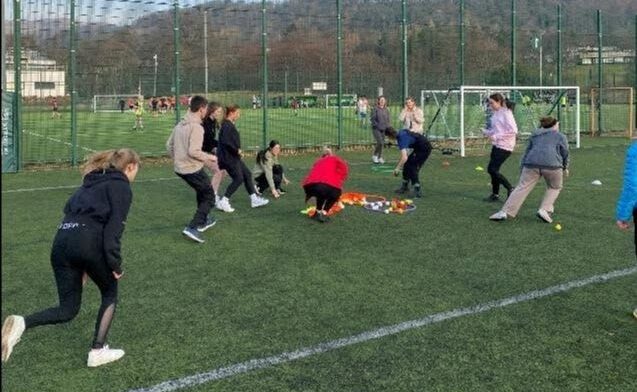
One of our key initiatives is Active Play Training – a programme that empowers adults to increase children’s physical activity levels through outdoor play.
The training is designed for anyone in the children and young people’s workforce – teachers, play leaders, nursery staff, community workers, and parents.
Many of these adults aren’t aware of how much physical activity children need or lack confidence in facilitating it.
Through hands-on, practical learning, Active Play Training builds knowledge, skills and motivation to make active outdoor play fun, inclusive and impactful.
Actify Platform
The programme is delivered through a combination of practical workshops and digital resources on the Actify Platform, which supports blended learning through our Active Play Training Hub. Here, participants access modules, videos, reflective tasks and quizzes – enabling flexible learning regardless of time or location.
The platform also ensures consistency in training and allows us to scale delivery across Scotland.
Our training, credit rated by SQA, offers a structured learning pathway with three levels:
- Level 6 (with 2 credit points) – Facilitator: For those working directly with children, offering tools to introduce fun and inclusive Active Play.
- Level 7 (with 3 credit points) – Leader: Aimed at those delivering regularly in communities, with a focus on overcoming barriers to participation.
- Level 8 (with 1 credit point) – Educator: Empowers individuals to train others, extending the programme’s reach.
Credit rating
SCQF credit rating adds value for learners by formally recognising their achievements and helping to build confidence and qualifications. It also builds capacity within communities to lead and sustain Active Play independently.
The feedback from participants has been overwhelmingly positive.
One early years practitioner shared: “It’s a good balance of information, theory and practical games.”
Another participant described it as: “Fun, interesting, informative and motivating.”
Others highlighted the value of STEPS – a practical method for adapting activities for all children.
With childhood physical activity levels in crisis, Active Play Training is a vital tool to help reverse the trend. Through skilled, confident adults, we can embed Active Play across homes, schools and communities—helping children in Scotland lead healthier, more active lives.
Useful links
For more information on Actify, visit the website.
Learn more about having your learning programme credit rated to the SCQF.
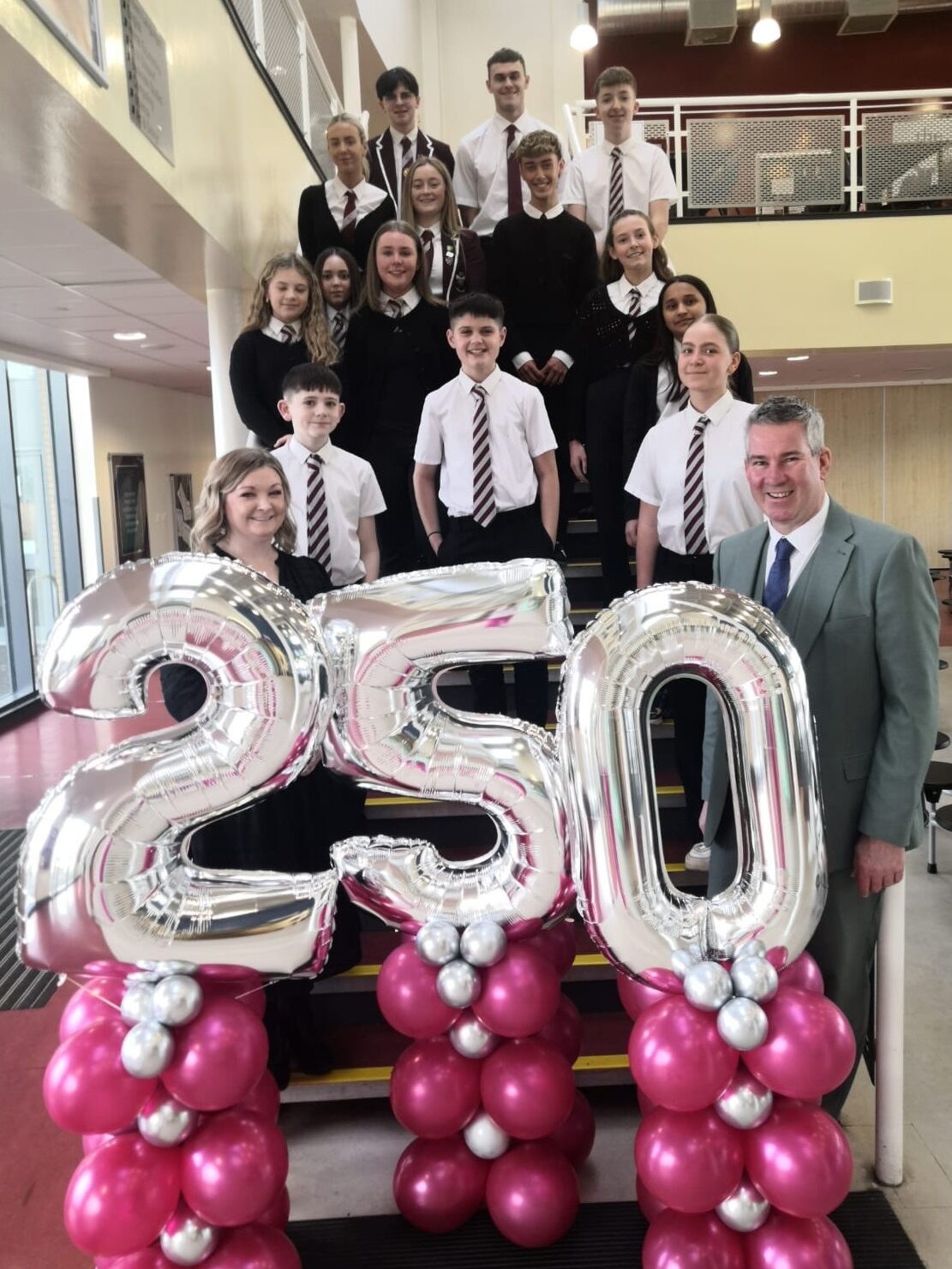
Pupils and staff at Vale of Leven Academy are beaming with pride after it was named the 250th SCQF School Ambassador.
The initiative, designed by the SCQF Partnership for secondary schools, aims to deepen understanding of the qualifications framework and its role in supporting learners across Scotland.
The programme highlights the equal value of vocational and academic qualifications, and encourages schools to create alternative pathways for pupils.
SCQF commitment
The milestone was marked with celebrations at the West Dunbartonshire school, where teachers expressed their delight at being recognised for their commitment to the programme.
Head Teacher at Vale of Leven Academy, in Alexandria, Matthew Boyle, said: “The SCQF Ambassador School Programme is a real opportunity for us to drive forward our school ambition to prepare young people for successful careers.
“Finding a pathway to a great future means finding a qualifications ladder with manageable steps, which engages interest and commitment.
“Schools can sometimes be a little too ‘one size fits all’, and even though we think that we provide curriculum variety, too many young people still find their next steps are driven by the school timetable or by a traditional interpretation of national curriculum guidance.
“If we are to make better use of the resources we have, to match more specialist qualifications to individual interest and personality, then we can reduce wasted time for young people in finding their futures in our school.
“The key to all of this is better understanding of the skills and qualification frameworks available, and more acceptance of the standardised value of these qualifications by students, teachers, families and employers alike.”
Full potential
Councillor Clare Steel, Convener of Educational Services at West Dunbartonshire Council, added: “I am delighted that the Vale of Leven Academy is the 250th school to join the SCQF Partnership’s School Ambassador programme.
“This will support pupils to reach their full potential, and enhance the learning experience and awareness of pathways for our young people.”
Flexible learning
Donnie Wood, SCQF Partnership Learning Pathways Lead, who oversees the programme, said: “Reaching 250 schools is a testament to the hard work and dedication of educators and learners across Scotland.
“The SCQF Ambassador Programme helps schools unlock the full potential of their students by offering flexible and inclusive learning options.
“We’re delighted to welcome Vale of Leven Academy to the programme and look forward to seeing them thrive.”
Join the SCQF School Ambassador Programme for free
The programme is free to join and open to all secondary schools in Scotland. Participating schools can progress through Bronze, Silver, and Gold Ambassador status by meeting specific criteria, allowing them to showcase their commitment to expanding learner pathways.
If your school would like to get involved, contact Donnie Wood at d.wood@scqf.org.uk or visit School Ambassador Programme. You can also explore the School Ambassador Padlet.
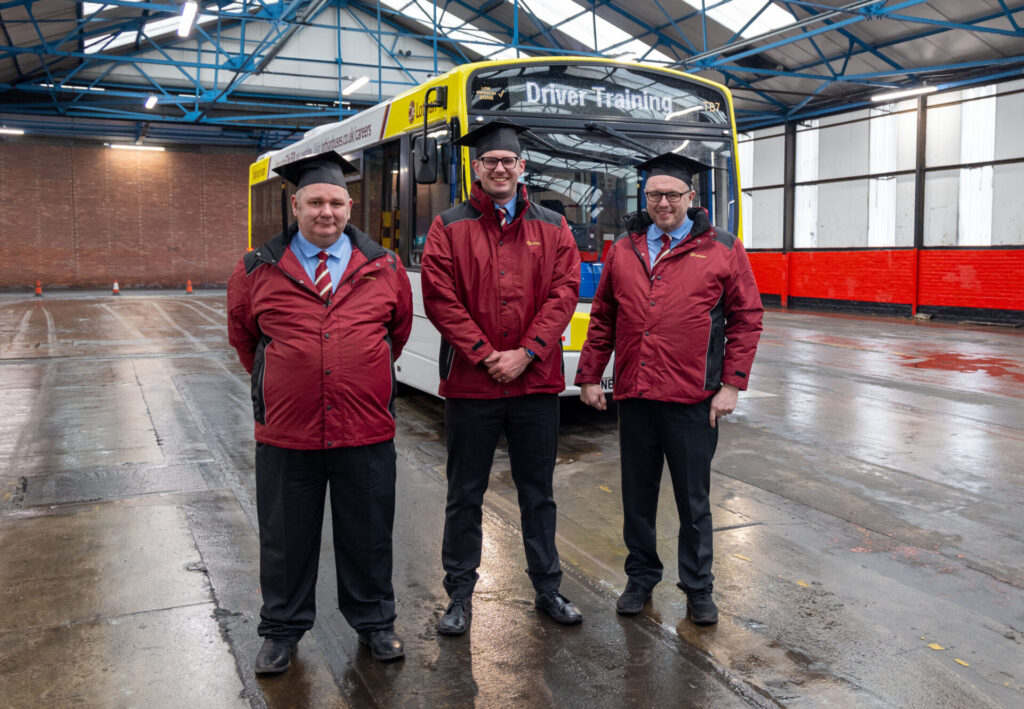
Lothian has become the first Scottish bus operator to provide its new drivers with a qualification on completion of their training.
The training is certified and quality assured by the Scottish Qualifications Authority (SQA).
The transport operator, which services Edinburgh and the Lothians, has an award-winning in-house training school. It successfully trained 450 new bus drivers in 2024.
The school aims to develop new recruits’ knowledge and understanding, and lays the foundations for a long and rewarding career as a Lothian bus driver.
Bus driver qualification at SCQF level 6
With this new accreditation, trainees will not only be fully prepared to get behind the wheel as a safe, competent bus driver, but they will have earned an SCQF level 6 Customised Award for Driver Training with 10 credits. They will also receive a record of achievement for their efforts.
Lothian’s training school teaches new recruits a wide range of skills that go beyond the operation of their vehicle. This includes:
- How to work safely in the bus depot
- Effective communication
- Customer interaction
- How to deal with unusual or emergency situations.
No matter your background or experience, Lothian’s training school will give you all the skills and tools you need to get your new career in gear.
Driver and trainer testimonials
“Lothian’s Training School taught me everything I need to know about what it takes to be a bus driver. The SCQF level 6 qualification is a great way to demonstrate all the hard work that goes into learning a new skill like this.” Andrew Moffatt, trainee driver
“We’re delighted to now be able to offer trainee drivers this customised award which demonstrates the breadth of their learning. It will hopefully inspire others to consider a career in the bus sector as a bus driver.” Willie Hamilton, director of operations at Lothian
Useful links
Learn more about a career as a Lothian bus driver.
Find out more about getting your training programme on the SCQF.
Watch a case study on the benefits of having your training programme credit rated to the SCQF.
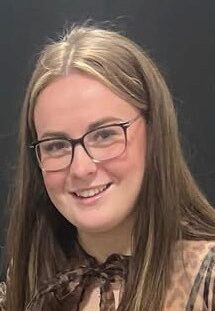
“If anyone out there is thinking about doing an apprenticeship, my advice is to go for it!”
18-year-old Wiktoria Galysa, who lives in Priesthill in the south of Glasgow, tells us about her apprenticeship journey in hairdressing with Harpers Salon, in Barrhead.
A former pupil at St Paul’s High School in Pollok, Wiktoria never really enjoyed school, but always loved playing with hair and being creative.
When teacher Aileen McManus suggested that she sign up for the SCQF level 5 Skills for Work Hairdressing programme in S5, Wiktoria jumped at the chance.
Wiktoria’s apprenticeship journey
The level 5 hairdressing course included hands-on experience one day a week at Harpers Salon.
For Wiktoria, this was an absolute game-changer as it gave her the opportunity to not only learn the theory, but to put it all into practice in a real salon.
This inspired her to pursue a Hairdressing Modern Apprenticeship at SCQF level 6 with Harpers when leaving school, which she feels has many benefits.
Wiktoria said: “I could have chosen to study hairdressing at college, but I picked the Modern Apprenticeship as it provides much more practical experience on the job. Although there is a lot of theory to learn, such as how to work with different hair types, the apprenticeship gives you the opportunity to work on real hair, as opposed to the Sally heads used in college. So it’s a much more authentic experience for such a hands-on job.”
Gaining key skills
She thinks that the most valuable skill she has learned during her Hairdressing Modern Apprenticeship is communication, adding: “Communication is key, both with colleagues and with customers, to understand what the customer is looking for and to make sure that they are delighted with the end result.
“What I enjoy most about my apprenticeship at the salon is making people happy. Clients might come in feeling a bit low, but leave with a big smile on their face. I love seeing that positive transformation!
“If anyone out there is thinking of applying for an apprenticeship, just go for it!”
Employers reap the rewards of apprenticeships
Salon owner, and Wiktoria’s boss, Maxine McFarlane, said: “The Skills for Work programmes offered at schools are essential for Scotland’s youth, providing them with diverse career opportunities, and providing employers with a stronger future workforce.
“Wicktoria is now a vital commodity in our business and without the delivery of our Skills for Work partnership with St Paul’s, she may have slipped through the net. This would have been nothing short of a tragedy for both Harpers and the gem that is Wiktoria, and there must be many more like her out there.
“The hairdressing industry requires both technical and creative skills. Apprenticeships help bridge the gap between theoretical, knowledge and practical expertise, ensuring a workforce that is current with the latest trends.
“MAs also play a crucial role in the hairdressing industry ensuring a steady flow of skilled professionals who can meet the evolving demands of clients.”
Award nomination
Wiktoria has proved she’s a cut above the competition as she has been nominated for the Young Person of the Year at the All About Barrhead Awards.
She will achieve her Hairdressing Modern Apprenticeship qualification in July 2025 and is looking forward to continuing to work hard, with a dream of opening her own salon in the future.
Useful links
Find out more about apprenticeships at https://www.apprenticeships.scot/
Find out more about the range of qualifications now offered at schools, often in partnership with local employers and colleges, by reading our School Ambassador blogs.
Be inspired by our Modern Apprenticeship case studies.
Scotland’s economy is ever changing, and industries need a workforce with the right skills to keep up with new technology and global competition.
Apprenticeships play a big role in making sure people get the training and qualifications they need to gain the skills for a sustainable career.
Apprenticeships and SCQF levels
SCQF levels are embedded into Foundation, Modern and Graduate apprenticeship frameworks, which enables apprentices to gain the right level of competency, ability and skill to do their job. The SCQF levels of apprenticeships range from 5 to 12.
Many Scottish apprenticeships are taken at SCQF level 6 or above, meaning they provide advanced skills and knowledge to meet employer demand.
Over the past five years, the majority of Modern Apprentices have started at higher SCQF levels. In 2022/23, 80.9% of Modern Apprenticeships (MAs) were at SCQF Level 6 or above, increasing to 82.9% in 2023/24.
This steady rise shows a clear focus to give workers the skills they need for Scotland’s growing industries.
Creating more opportunities
Higher level apprenticeships are also helping more people from a range of backgrounds and abilities find high quality opportunities.
By making apprenticeships more inclusive, Scotland is creating a fairer job market and giving more people the chance to succeed.
The latest annual MA statistics showed that 80% of those who had declared as having a disability and 88% of those who declared being from an ethnic minority community have started apprenticeships at SCQF level 6 and over.
More than just a qualification
Scottish apprenticeships don’t just give people technical knowledge, they also help develop important meta-skills, like problem-solving, teamwork, communication and adaptability. These skills are useful in any job and help apprentices move into different roles as their careers progress.
This means that apprentices are not only learning practical skills, but also becoming confident and capable professionals who can adapt to changes in the workplace.
Building a strong future
Through these aspects and more, apprenticeships are helping Scotland build a skilled and adaptable workforce.
Developed to produce the skills needed to support industry, apprenticeships attract businesses to Scotland by ensuring there will be well-trained workers available, making the economy stronger and more competitive.

Apprenticeships are made for business, created in partnership with employers, for employers, making skilled individuals that benefit their businesses.
By providing strong technical training and valuable life skills, apprenticeships prepare people to meet today’s demands and for the jobs of the future.
This investment in skills is making Scotland more competitive and creating better opportunities for everyone.
For more information, visit apprenticeship.scot
Be inspired by our apprenticeship case studies.
View and compare apprenticeship SCQF levels on our Interactive Framework.
“Newbattle made my heart change, made my soul change, made everything inside me light up.”
Suzanne, 35, has faced many challenges in her life. Growing up in the care system, becoming a mum aged 14, managing dyslexia, ADHD, and a physical disability meant education was never easy. But with the support of Newbattle Abbey College (NAC) and by using Scottish Credit and Qualifications Framework (SCQF), Suzanne found her path.
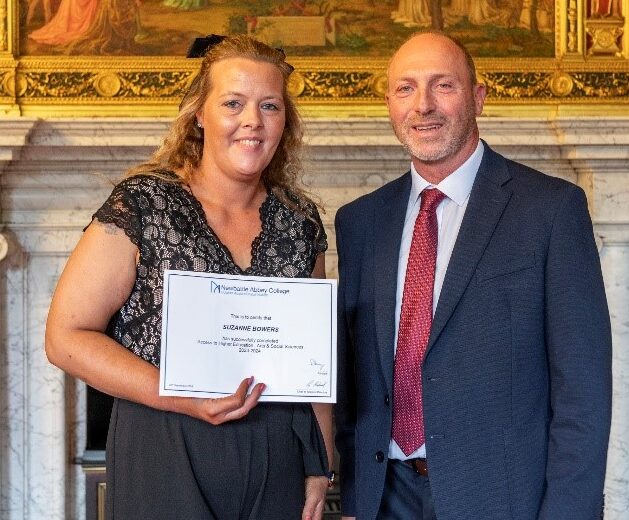
Suzanne’s journey
Suzanne had previously tried to enrol in an SCQF level 7 HNC Working in Communities course, but lacked the necessary qualifications. She also explored youth work, but quickly realised it wasn’t the right fit.
It wasn’t until she reached out to the Hub for Success, an organisation dedicated to supporting care-experienced individuals in higher education, that she was signposted to NAC.
She accepted a place on the SWAP Access to Higher Education course at SCQF level 6. This marked the beginning of Suzanne’s educational transformation.
Support for care-experienced students
At NAC, Suzanne found a strong community of care-experienced students.
She became a proud member of the Care Leavers group, where she found others with similar experiences.
She said: “I am a care leaver, and I am a proud care leaver. I am proud to tell the world where I came from.
“At the group, we all opened up and started speaking about it. Being in a supportive environment meant people were able to be honest.”
Overcoming challenges
Dyslexia had always been a barrier for Suzanne, but at NAC, she was given the help she needed. “Once I got the support, everything changed,” she shared.
Receiving the ADHD diagnosis played a key role in Suzanne’s success as it helped her better understand herself and approach learning with confidence.
Jessie Crawford, from the Hub, explained: “People come to Newbattle without any formal diagnoses, and Newbattle supported Suzanne to get an assessment done.
“This early intervention helped her get the necessary adjustments for university in a timely manner, ensuring a smooth transition.”
Next steps at SCQF level 10
Now, Suzanne is a first-year student at Edinburgh University, studying for an MA in Learning in Communities at SCQF level 10.
Her journey through the SCQF shows how the framework can provide a clear path for learners.
For Suzanne, Newbattle Abbey College has been more than just a stepping stone in her education. It has been a life-changing experience. “I wouldn’t have been able to get to university if it wasn’t for Newbattle. The environment is life-changing and incredible,” she explained.
Suzanne feels equipped to face the challenges ahead, thanks to the skills and support she gained at NAC. “I’ve learned skills to take forward – I can now deal with the challenges that I’m facing at uni.”
‘Everyone can achieve’
For Suzanne, returning to education wasn’t just about overcoming academic challenges. It was about proving to herself and society that care-experienced people can succeed.
She said: “I want to prove to society that everybody can achieve, no matter your background. It doesn’t matter what age you are.
“I want to help other young people. That’s why this case study is important to me. I want to tell the world that if you get the right support, like I did at Newbattle, then care experience shouldn’t be a barrier to anybody.”
What is the SCQF?
The SCQF is the qualifications framework for Scotland. You can use it to compare and understand our country’s wide range of qualifications. If you’re unsure what SCQF level you’re working or studying at, try our Know your SCQF Level tool.
Useful links
- The Scottish Wider Access Programme (SWAP) supports access to higher education for adult learners. The courses are specifically developed for adults who have no or few qualifications and who have been out of education for some time. SWAP access programmes at SCQF level 6 run at colleges across Scotland and are a proven route into hundreds of degree courses at partner universities. Explore what’s available with SWAP.
- Find out more about the courses offered at Newbattle Abbey College.
- The HUB for SUCCESS works alongside people with care experience to get in, stay in and return to college and university.
“I never wanted to go to college. I really didn’t like school, so I didn’t want to do anything like that again.”
For many young people, further education can feel out of reach – especially if school wasn’t a positive experience.
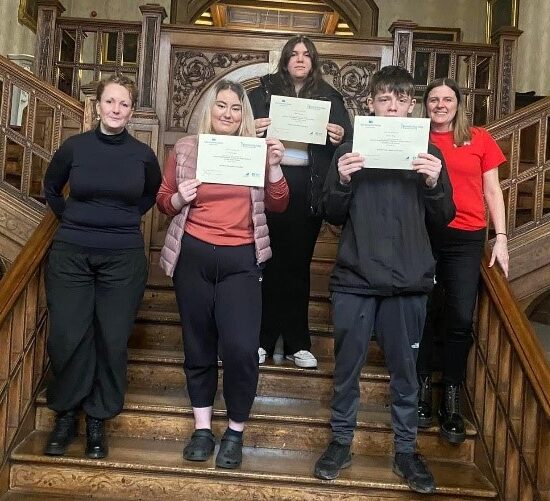
Low confidence, limited life skills, and uncertainty about future careers often create barriers that seem impossible to overcome.
But, thanks to a groundbreaking programme by Newbattle Abbey College (NAC) and Mayfield and Easthouses Youth 2000 Project (Y2K), young people in Midlothian are discovering new pathways into education, training, and employment – many for the first time.
Bridging the gap: From youth work to college
The 12-week programme, called Prep for Next Steps, funded by Midlothian Council and the Scottish Funding Council, is designed for young people aged 16-21 who have left school without a clear next step.
Many participants lacked confidence in their abilities, felt disconnected from education, and never imagined themselves in a college environment.
This initiative changed that by offering a flexible, supportive approach, allowing learners to develop practical life skills while earning SCQF-recognised qualifications that could open doors to higher education, training, and employment.
The two-stage process made the transition into learning accessible and non-intimidating:
✅ Stage 1 – Life Skills at Y2K: Participants gained confidence through practical workshops on budgeting, cooking, CV writing, and interview preparation. The youth work setting helped them develop trust and motivation.
✅ Stage 2 – A qualification at NAC: With ongoing support from Y2K, learners transitioned to NAC, working towards an Adult Achievement Award at an SCQF level suited to them (SCQF Levels 2-6).
By combining youth work support with structured education, the programme introduced college as a safe, achievable, and rewarding experience.
A learner’s journey in Prep for Next Steps
One participant described their unexpected transformation:
“When I started the Prep for Next Steps group, I was really surprised at how much I enjoyed it. I liked that it wasn’t about forcing us to do something we didn’t want to do – it was more about helping us figure out our own goals. I am so much more confident now and go to college at Newbattle Abbey. If I hadn’t had the chance to experience college first with Y2K and Denise (NAC’s lecturer in Adult Learning), I wouldn’t have applied for the course I’m on now.”
For this young person, earning a qualification wasn’t just about education – it was about building self-belief, resilience and motivation.
SCQF pathways: Real success stories
The programme’s impact is life-changing:
📌 75% of participants progressed to NAC’s Preparation for Learning and Work course
📌 Some have since advanced to SCQF Level 6 NC Social Sciences – a huge achievement for those previously disengaged from learning
📌 Participants report improved mental health, diet, better sleep, and stronger social connections
One learner summed it up perfectly:
“It wasn’t just about college though; it was about helping us to become happier and more positive too.”
Why Prep for Next Steps works: A collaborative approach
The success of the programme is rooted in the strong partnership between Y2K and NAC.
By breaking down barriers and prioritising relationship-based learning, they have created a new way to engage young people who never thought education was for them.
Denise McNulty, NAC lecturer in Adult Learning, explained: “Y2K nurtured a deep trust with the young people on the course through their knowledge of the community.
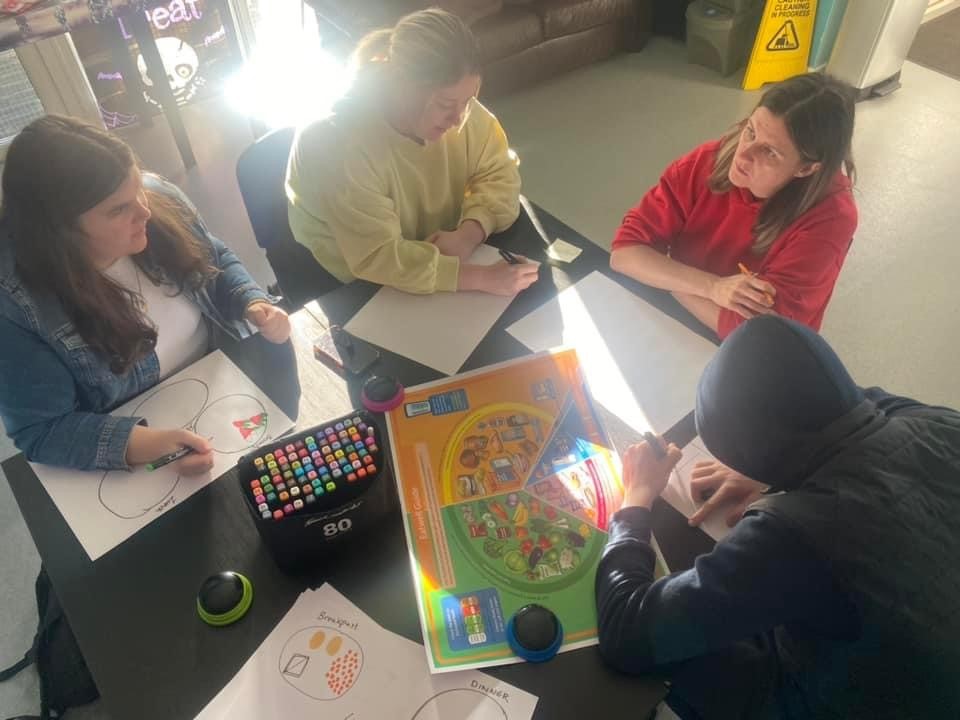
“This trust allowed them to offer tailored support, which has been invaluable – not just for me as a lecturer but, more importantly, for the success of each learner.”
Lynsey Ritchie, Project Manager at Y2K, added: “Working in partnership with Newbattle Abbey College has given young people a distinctive chance to enhance their skills, build confidence, and gain experience of learning in college.
“We have observed the positive effects on participants, who have not only achieved recognised awards but also developed vital life skills.
“Our holistic, person-centred approach has resulted in a sense of comfort and empowerment, enabling young people to recognise their own potential and identify their own personal goals.”
Rather than forcing learners into rigid systems, this person-centred approach has helped young people take control of their future and education.
Expanding opportunities: What’s next?
Due to Prep for Next Step’s success, NAC and Y2K are scaling up their efforts to support even more young people. The next phase will offer:
🚀 Three 12-week programmes per year, giving more learners access to qualifications that are on the SCQF
🎓 Opportunities for progression into further education, apprenticeships, and employment
💡 A flexible, supportive approach to suit individual learner needs
The goal? To transform how disengaged young people see education, ensuring that everyone, regardless of their background, has access to meaningful qualifications and career opportunities.
For young people who once felt lost, this programme proves that with the right support, education is for everyone.
Useful links
For more information about NAC’s Adult Achievement Awards, visit their website.
For more information about Y2K, visit their website.
Find out more about SCQF levels.
Bo’ness Academy is a mid-sized, non-denominational school in the central belt of Scotland. We have a school roll of around 850 pupils and serve Bo’ness and its surrounding villages.

Pupils study six subjects in S4, and five subjects and a Wider Achievement Opportunity in S5. In S6, they can take up a range of opportunities, depending on the individual’s requirements.
The majority of Advanced Higher subjects are offered on consortia arrangements. We also provide numerous extra-curricular activities and opportunities for our young people.
Raising SCQF awareness
Bo’ness Academy took part in SCQF training with Donnie Wood in 2022. Since then, we have worked on embedding Developing the Young Workforce (DYW) into our school culture and began our SCQF journey.
We officially joined the SCQF Ambassador programme in 2024 and achieved our silver SCQF Ambassador Award that same year.
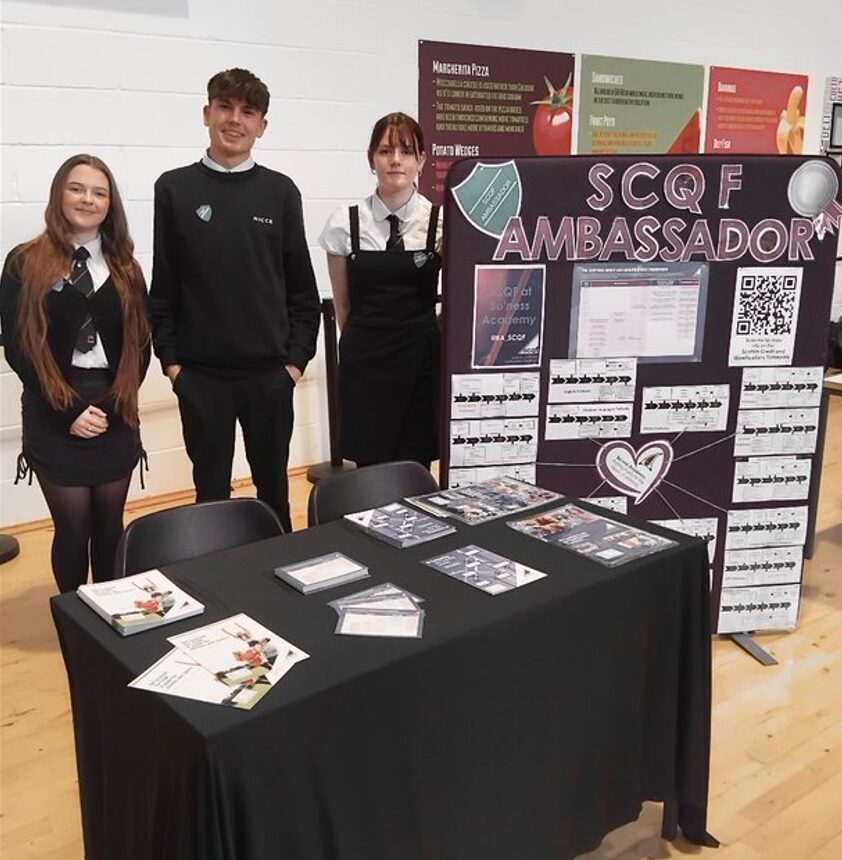
We have 12 SCQF Ambassadors from year groups ranging from S2 to S6. Their role is to promote the SCQF and the variety of qualifications and experiences that we have on offer at Bo’ness Academy.
They will take responsibility for training future Ambassadors to progress the programme going forward.
The Ambassador training took place in September 2024. Our Ambassadors had the opportunity to learn all about the SCQF. They then distributed roles to raise awareness within the school community.
Our plan
The initial plan included:
- Raising pupil awareness by creating videos to share during class, creating an X page and regularly updating our blog
- Increasing parental awareness by having a stall at the careers fair and parents’ evenings, and sharing our blog on X
- Collating curriculum pathways from each department and sharing the experiences on offer by conducting staff and pupil interviews
- Raising staff awareness by conducting informative talks during meetings and contributing to the DYW newsletter
- Engaging staff in the SCQF through questionnaires and reflective exercises
- Embedding SCQF levels language throughout the school by including it in course choices.
Pathways
Bo’ness Academy has had a variety of qualifications available for several years, however, our primary aim was to promote the SCQF levels language within the school.
We also wanted to ensure pupils, parents/carers and staff had a clear understanding of learner pathways and the opportunities available.
Since introducing the programme, we have been enhancing the capacity of staff, students, and parents/carers to understand how the SCQF and a wider range of qualifications can be transformative.
This shift in mind-set has led to the introduction of additional qualifications at SCQF levels 5 and 6, such as the Volunteering and Leadership Awards, CREST Award and STEM Leaders Award, as well as Barista Skills, Level 5 NPA Photography and many more.
Additionally, many students are pursuing NCs, Foundation Apprenticeships, HNCs and Apprenticeships, in partnership with Forth Valley College.
At the core of our School Improvement Plan (in-line with How Good Is Our School 4th edition) is:
- A focus on improving progression pathways to meet the needs of all learners
- To optimise opportunities for attainment
- For all curricular areas to implement and review their SCQF progression pathways plan.
The benefits of changing our curriculum
Every year at Bo’ness Academy, our curriculum is changing and adapting to our pupil needs to ensure we are getting it right for every child.
This year, we have introduced levels 5 and 6 Leadership and Volunteering Awards to all S6s to ensure they have a positive and transformative leadership role during their final year at school.
Through this qualification, seniors have led clubs, fundraising initiatives, study support sessions and teaching sessions within the secondary school and local primary schools. This has significantly improved their confidence and communication skills.
We introduced our Level 4 and 5 Preparation for Employment and National 4 Rural Skills Awards this year which are greatly supporting some of our young people in gaining invaluable life skills.
Our pupils now have the opportunity to progress from a level 5 to a level 7 in art and design, and student feedback has been hugely positive.
Additional wider achievement opportunities include:
- CREST Award
- Young STEM Leader
- John Muir Award
- Duke of Edinburgh
- Youth Philanthropy Initiative
- Dynamic Youth Award
- Saltire Award.
Our staff are keen to provide as many fantastic opportunities to our young people as possible and always willing to adapt to suit changing requirements and needs.
Promoting the SCQF
We have developed a variety of innovative ways to promote the SCQF and its benefits to our school and the wider community, including:
- Ambassadors created several promotional videos detailing what the SCQF is and its benefits, as well as how to access the website and utilise it effectively. These videos were shown whole-school during SCQF Week and subsequent videos were shown during PSE lessons in Careers Week
- We have developed a blog that is shared to pupils and parents/carers through our X account, as well as in our termly DYW newsletter
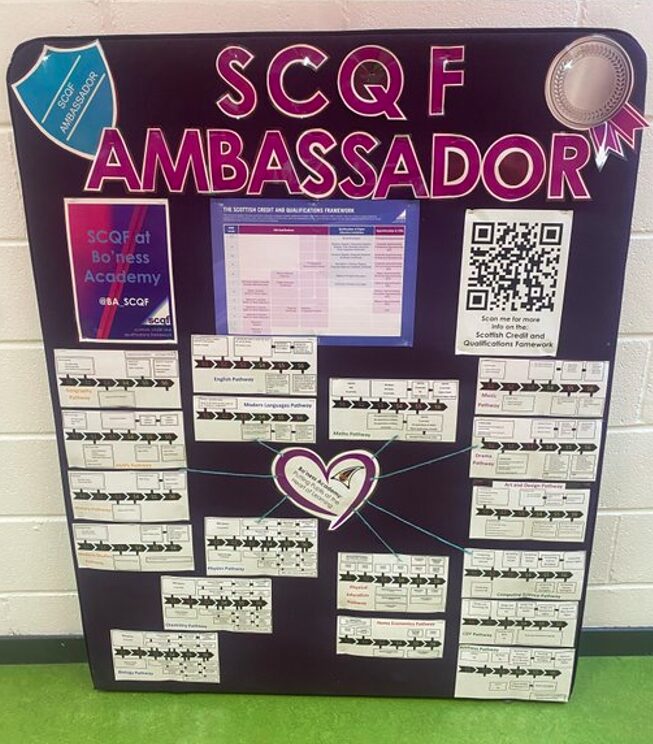
- Creating a display board in the school hub space so that pupils are reminded of the SCQF during their break and lunchtime
- Ambassadors volunteered their time to talk to pupils, parents and carers and distribute SCQF resources at their stall during parents’ evenings and the careers fair
- Conducting interviews with staff and pupils, which have been shared on the blog, about the variety of qualifications on offer and their benefits
- Each faculty has compiled a list of their qualifications and learner pathways at each level and our course choice documentation has embedded levels language. These have been shared on our blogs and to parents/carers
- Ambassadors have been speaking to their peers about the qualifications in the run up to course choice.
- We have a page on our school website about the SCQF and our progress
- Our SCQF lead and DYW depute head have attended various SCQF training sessions to enhance our understanding and provide additional support to the school community.
Next steps
Going forward, we have made plans to collaborate with another high school in the local authority for Ambassadors to work together to create engaging promotional resources and Ambassador training materials.
We also plan to collaborate with the pupils sitting National 4 Rural Skills to plant the seeds that we received from the SCQF after achieving our Silver Award. We will plant them in our garden space alongside our SCQF plaque to showcase how deeply the SCQF is embedded within our school community.
Going for gold
To achieve our Gold SCQF Award, we will:
- Continue to promote the SCQF through more innovative approaches developed by our ambassadors
- Collaborate with Braes High School Ambassadors to create promotional and training resources to be utilised within the local authority
- Work with other schools outwith the authority who have achieved Gold and support other schools on their SCQF journey
- Build more external relationships and provide further opportunities for pupils to gain qualifications with external bodies
- Continue to develop interdisciplinary activities
- Enhance an ethos in which alternative curricular pathways are welcomed and encouraged.
SCQF Ambassadors
Our Ambassadors were selected by their teachers and members of senior management as recognition for their commitment to their education and the school community.
Senior Ambassadors gain a Level 6 leadership award for their efforts and all Ambassadors acquire Saltire Voluntary Hours for their commitment to the role.
One Ambassador said:
“I always felt there was something wrong with me until I was introduced to the NPA 5 photography, level 5 volunteering, level 6 leadership, NPA 6 Professional Theatre and NPA 6 Criminology Course at college. These qualifications were more suited to my learning style and allowed me to achieve. Until I took on this role I didn’t fully understand what ‘levels’ and ‘NPAs’ meant or why they were so important, but I’m so glad that I did because they are the best thing that happened to my educational journey.“
Former pupil Amy said:
I decided to take the Level 5 Barista Skills for Work qualification, which is at the same level as a National 5. The most important skill I learned was problem-solving because, no matter how much we planned for an event, something always came up and we had to learn to think on our feet. All the skills I learned are used daily in what I do now, which is working in customer service at a 4-star hotel. The Barista qualification solidified my ideas of what I wanted to do after school, which was to work at a high-service establishment. I don’t think I would have been considered for the position if I had not done my Barista training.