

Education can change lives. It can help people build skills, gain qualifications and find new opportunities in work and further learning.
But for people growing up in poverty, getting access to these opportunities can be harder. Money worries and other pressures can make it more difficult to take part in education and training.
Challenge Poverty Week, which takes place across Scotland this week, is a chance to talk about poverty and the action being taken to build a fairer Scotland.
Education cannot solve poverty on its own. But learning can help people gain skills, get qualifications and take steps towards a better future.
At the SCQF Partnership, we want people to understand the learning and qualifications they already have. This can help them think about what they might want to do next.
Understanding your qualifications
People learn in many different ways.
You might have studied at school or college, completed an apprenticeship, gained a qualification at work or taken part in training.
But it is not always easy to understand what your qualifications mean or where they could take you.
The Scottish Credit and Qualifications Framework (SCQF) helps people understand the level of qualifications in Scotland.
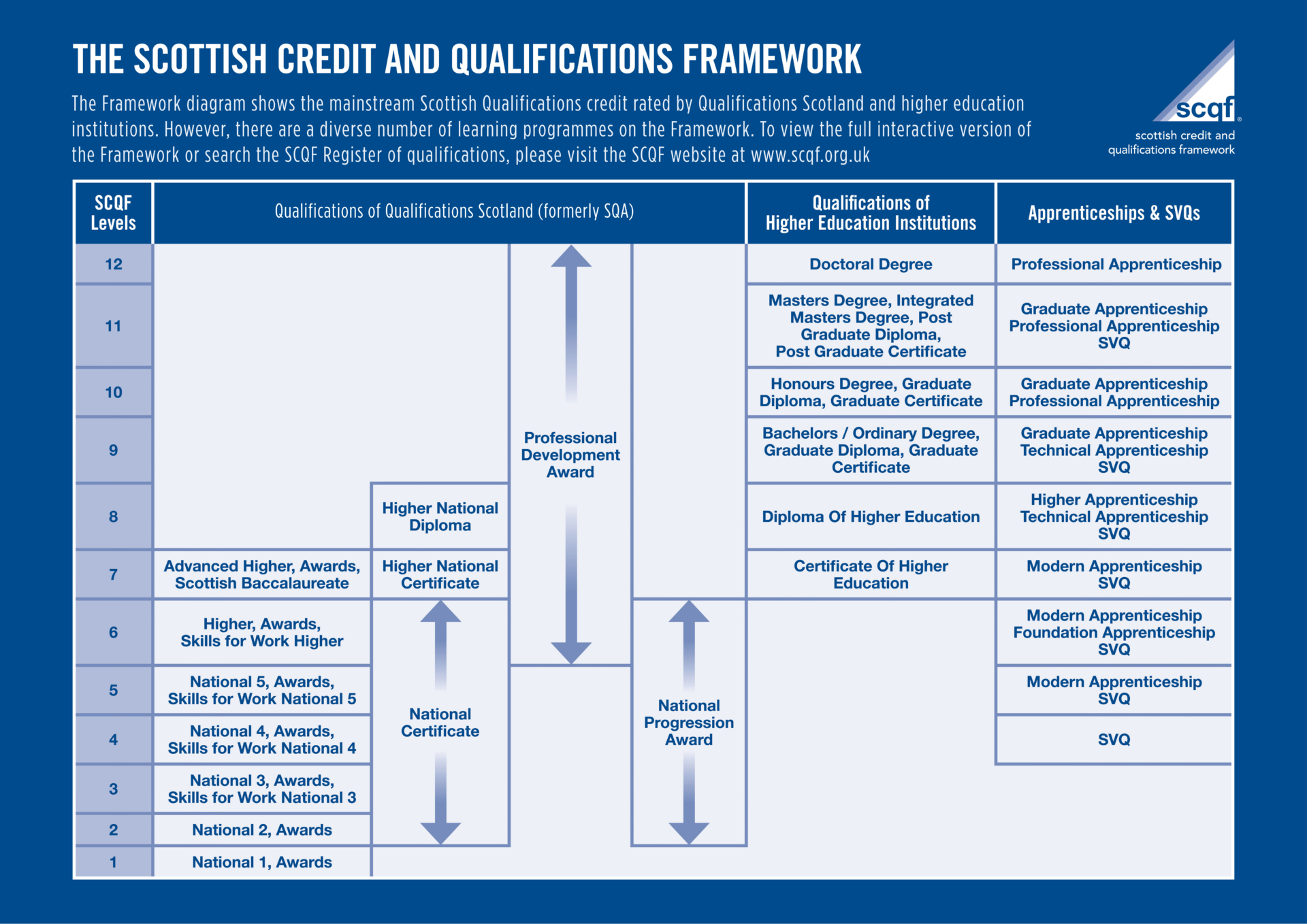
The SCQF has 12 levels, with level 1 being the most basic, while 12 is the most challenging, such as a PhD. A Higher sits at SCQF level 6, while an Honours Degree is at SCQF level 10.
Qualifications at the same SCQF level can be very different, but they involve a similar level of learning.
This can help people understand what they have already achieved and think about their next steps.
For example, someone who has gained a qualification through work may not know where it sits within the wider education system. Knowing its SCQF level can help them understand their qualification and talk to colleges, universities, training providers or employers about what they could do next.
Your learning does not always come with a qualification
Qualifications are only one way of showing what you know and can do.
People learn throughout their lives. You can gain skills through work, volunteering, training and other experiences.
Sometimes this learning is not recognised with a formal qualification.
This is where Recognition of Prior Learning (RPL) can help.
RPL is a process that helps people identify and show what they have already learned through their work, education and life experiences.
This can be useful if you are thinking about going back into education, changing career or gaining a new qualification.
For example, someone who has worked as a shop manager for 10 years may want to study for a degree in business management. Through RPL, they could show the knowledge and skills they have gained through their work. If a university decides that this learning matches parts of the course, the person may be able to again exemption from certain modules, or even start the course in year 2 or 3, rather than repeat learning they already have.
Planning your next steps
Understanding your qualifications and recognising your previous learning can help you see where you are now.
It can also help you think about where you want to go next.
The SCQF gives people a common language to talk about qualifications and learning. It can help people understand the level of their qualifications and have better conversations about their options.
For young people, this can help them understand the different routes they can take into further learning, training or work.
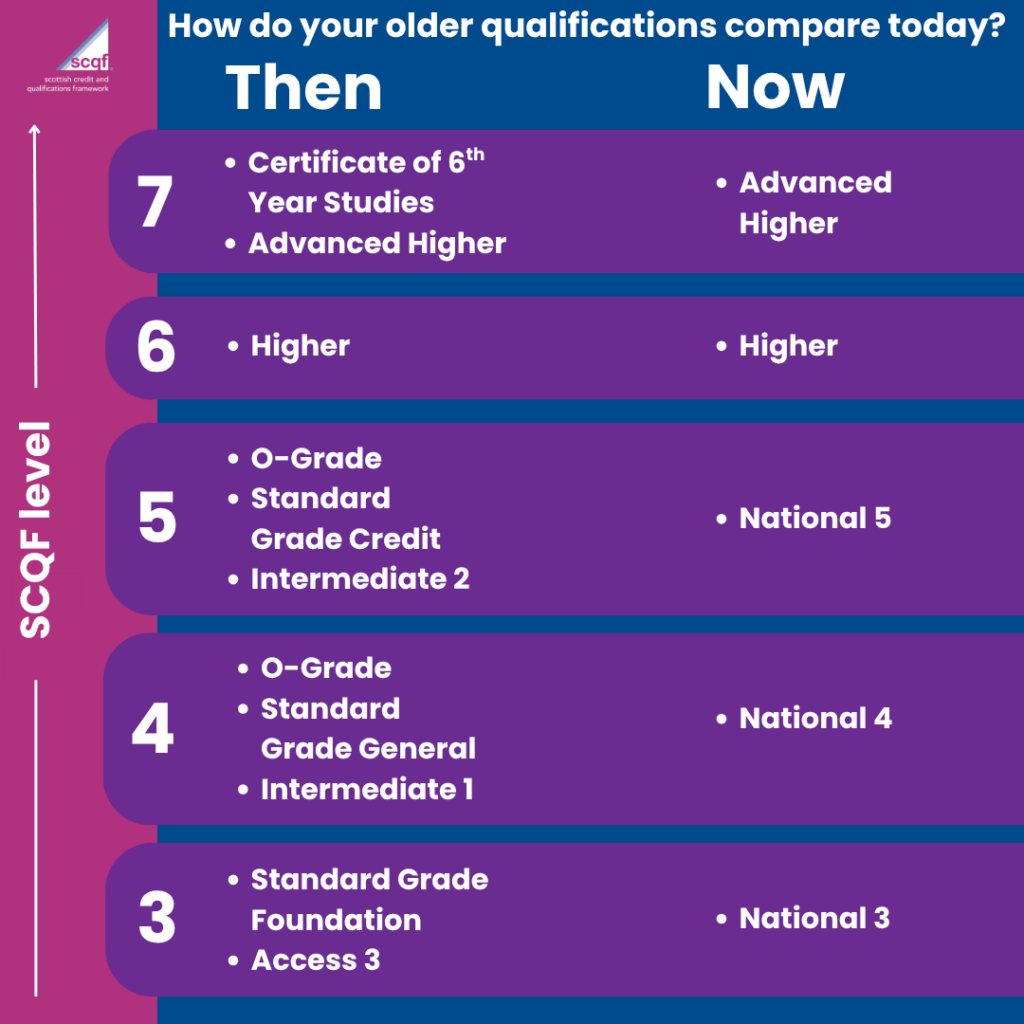
For adults, it can help them make sense of learning they have gained over many years and think about returning to education, changing career or developing new skills. For example, if you have Standard Grades at general level (grades 3 and 4), they are equivalent to a National 4 at SCQF level 4. You might then decide to go to college to complete the next level – a National 5 at SCQF level 5.
There is no single route to success. People learn in different ways and take different paths.
What matters is having the chance to learn, having your learning recognised and having the information you need to make good choices about your future.
Learning can open doors. Understanding what you have already learned can help you decide which door to open next.
Useful links
To learn about how your older qualifications, like Standard Grades and Intermediates, compare to today’s, check out our Old v New Guide.
Explore the support we offer to adults thinking of returning to education.
Find out how Recognition of Prior Learning (RPL) could help you fast-track your learning.