

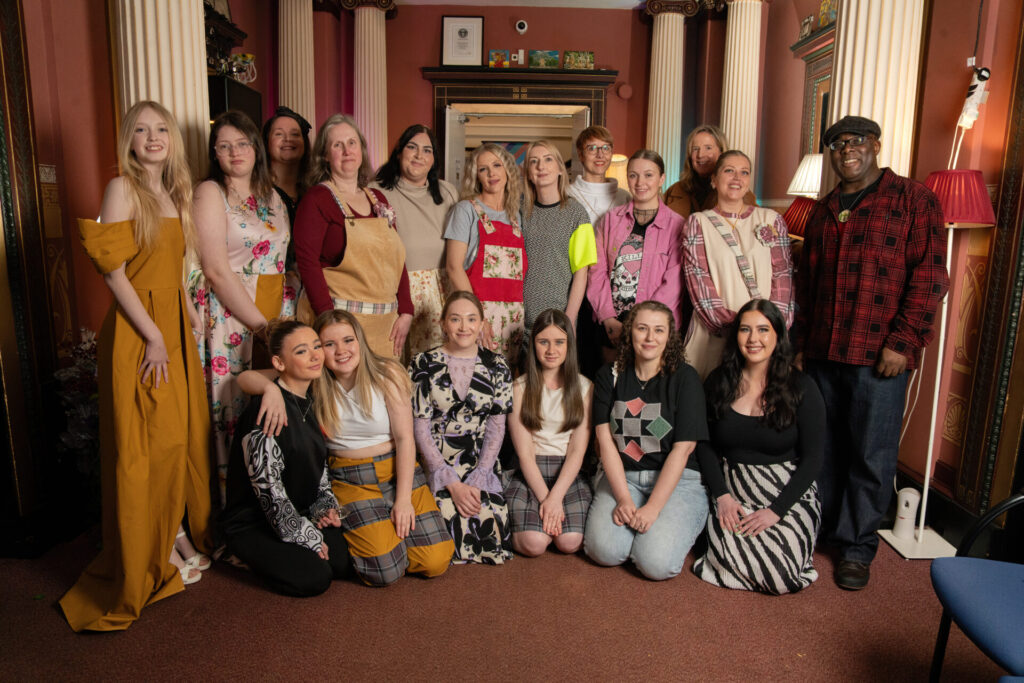
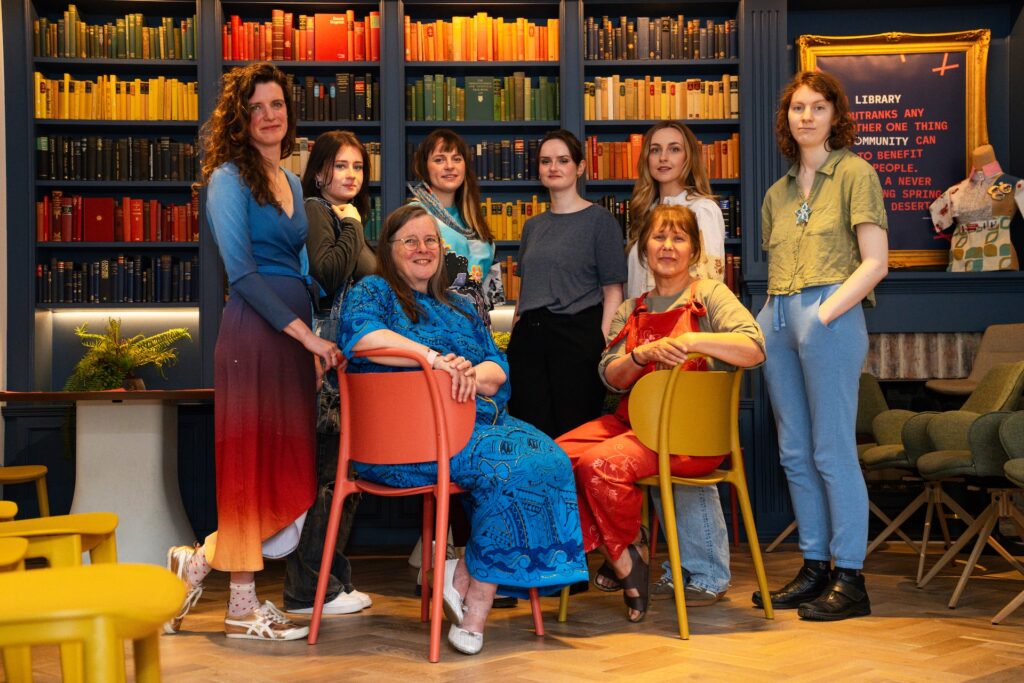
At Front Lounge, creativity meets opportunity through Kindred Clothing, a fashion course at SCQF level 5.
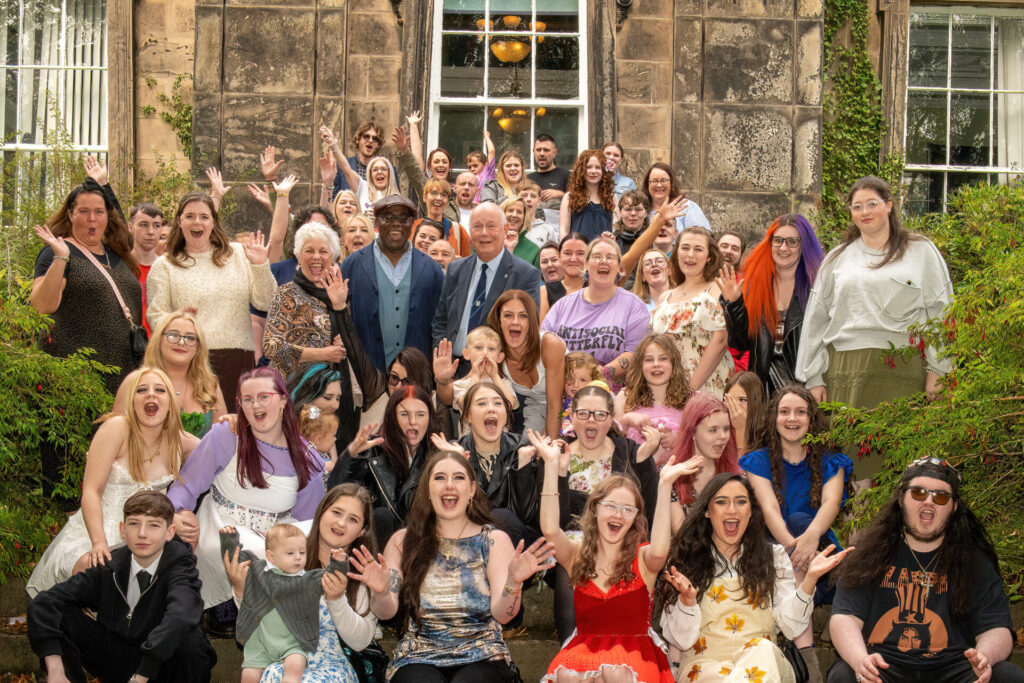
This innovative program helps learners develop essential fashion skills, from sketching and pattern making to sewing garments and capturing them with professional fashion photography.
By combining practical learning with creative storytelling, learners build portfolios that showcase their talent and ambition, opening doors to creative careers in fashion and textiles.
Delivered by industry professionals from the Clothes Making Learning Partnership, Kindred Clothing offers hands-on experience and real-world knowledge, giving learners the confidence and skills needed to succeed in the fashion industry.
Celebrating learners’ achievements and impact
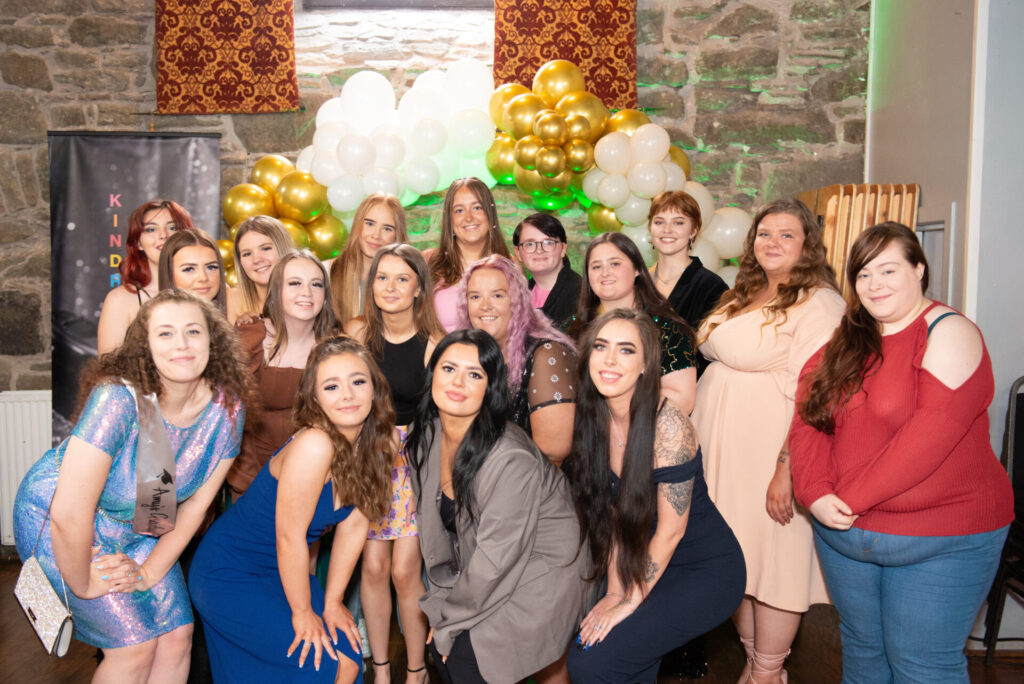
Over the years, Kindred Clothing, based in Dundee, has supported learners to overcome personal, emotional and practical challenges while achieving remarkable outcomes. With a completion rate of 91%, 71 learners have completed the program, ranging in age from 12 to 64. The course also engages young people who struggle to attend school regularly.
Since launching in 2020, Kindred Clothing has expanded beyond Dundee. In Orkney, learners have completed the course both remotely and in-person, with 12 learners projected for 2026.
Inspiring stories from Kindred Clothing
Learners have experienced life-changing transformations:
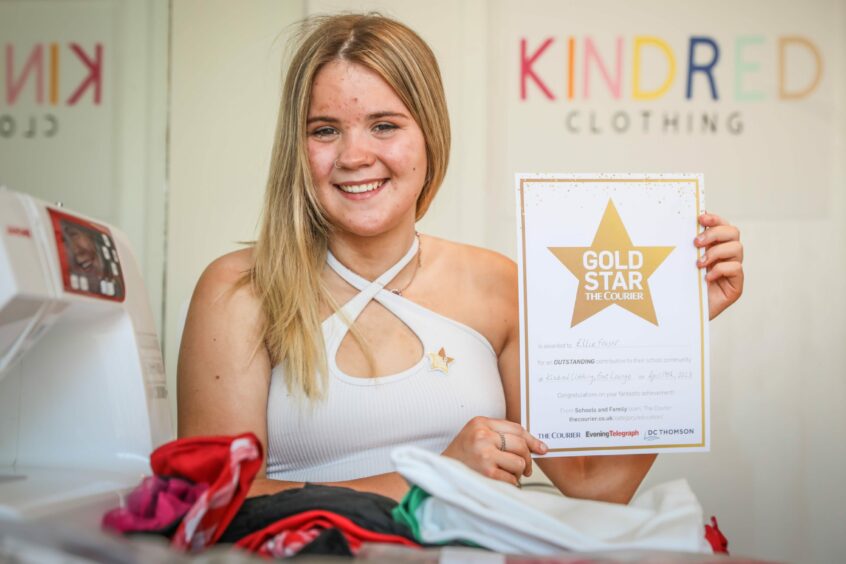
Ellie Fraser was referred to Kindred Clothing at 13 due to anxiety and school challenges. She quickly excelled, demonstrating leadership and earning The Courier Gold Star Award. She said:
The way you are appreciated at Front Lounge, it’s unreal. You get encouragement. It feels good to know that I can actually do something. I’ve got a vision for the future now. I’d like to have my own clothing brand, and I have some ideas for it.
Ellie graduated in August 2023.
Rhianne Grieve, a young mum of two, took four attempts to complete the course. Reflecting on her experience, she said:
The hardest part in my journey has been learning to deal with my mental health. It took me years, but Front Lounge never gave up on me; they picked me up when I was down and pushed me on when I was stuck.
Finally graduating in 2024, she added:
My message for anyone who would like to take part in Kindred Clothing is ABSOLUTELY go for it! I’ve never felt more welcome, never felt so seen and never felt so heard in all my life. I have met many new people and have a lot of amazing friendships that will last a lifetime. Go for it!
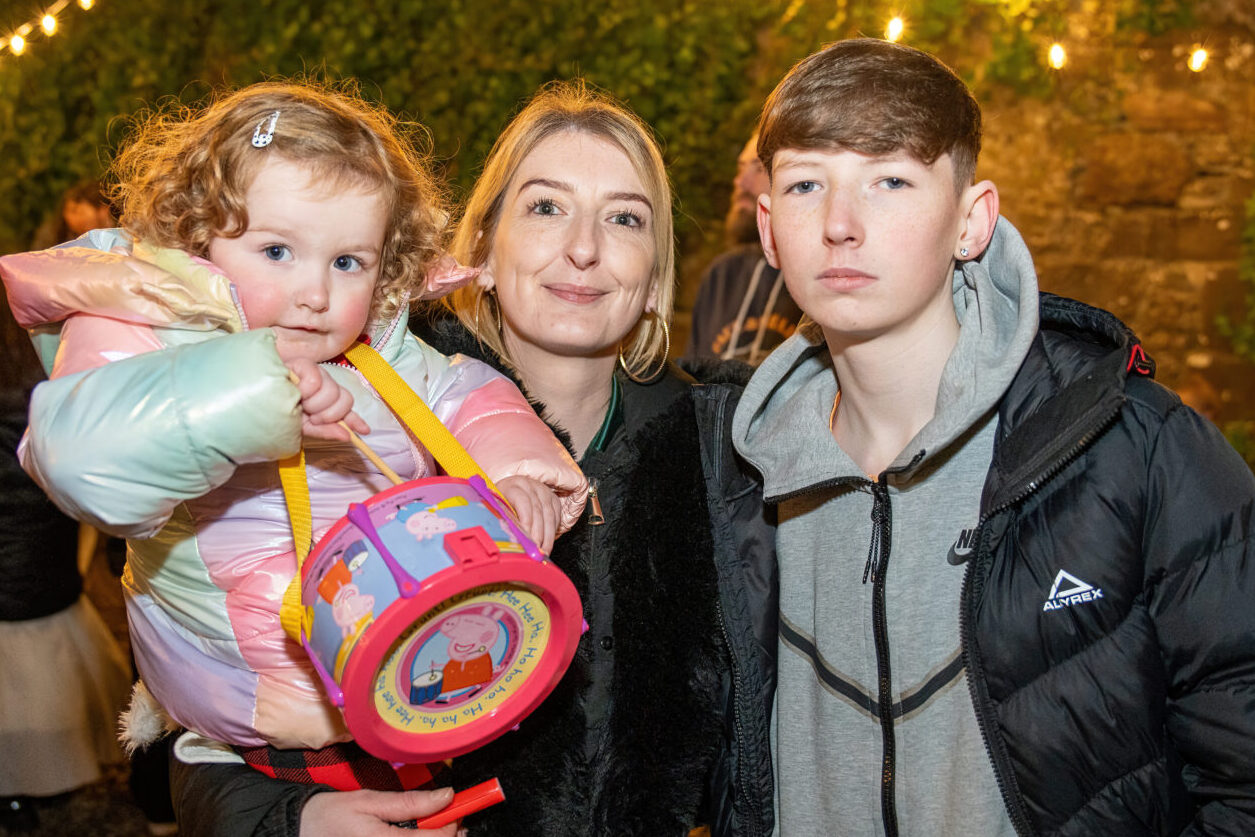
Kindred Clothing has even created intergenerational learning opportunities. Kerry-Lee Lavery, one of three parent-child duos to complete the course, reflected:
I didn’t just learn a new skill and gain a qualification, it helped with my confidence, my health, gave me routine and structure. For the first time in a long time, I was thinking about the future. My son Jay was so proud of me when I graduated, he asked to do the course too. It helped him build confidence, routine and motivation. He’s now attending college, and thinking more about his future.
Jay graduated in September 2025.
Expanding learning opportunities and career pathways
These success stories demonstrate the power of practical learning in a safe, supportive environment. In response to growing demand, Front Lounge became an SQA-approved learning centre in October 2025.
The centre now offers workplace core skills, including numeracy, literacy, ICT, working together, and problem solving -alongside Kindred Clothing. Embedding these core skills enables learners to earn six qualifications from the flagship sewing course, rather than just one.
On October 31, 2025, Front Lounge began delivering the National Certificate in Creative Industries (Fashion and Textiles) at SCQF level 6, providing a progression route for Kindred Clothing graduates. Delivered by industry professionals, the course focuses on producing garments to a saleable standard, equipping learners with the skills to pursue careers in fashion and textiles.
Becky Rawlins, a HNC Fashion Business student at Dundee and Angus College, joined the inaugural HNC cohort. She said:
I’m excited… because I want to develop my technical skills and creative abilities to a professional level. Sewing has always been a passion of mine and I really enjoy making clothes and working with different types of fabrics, and I can’t wait to expand my knowledge of industrial sewing machines.
Front Lounge will also soon deliver Personal Development Awards (SCQF levels 3 to 6), enabling community projects to act as learning platforms in their own right.
For more information about Kindred Clothing, email learn@frontlounge.org, call 01382 220330, or visit www.frontlounge.org.
To see where Front Lounge’s qualifications sit on the SCQF, visit our interactive framework.


As part of Creative Careers Week 2025, we’re celebrating learners who are turning their creativity into successful careers through qualifications featured on the Scottish Credit and Qualifications Framework (SCQF).
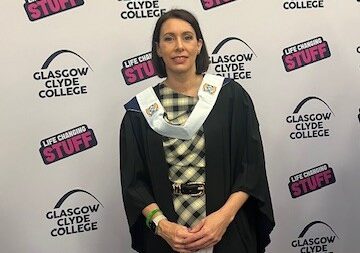
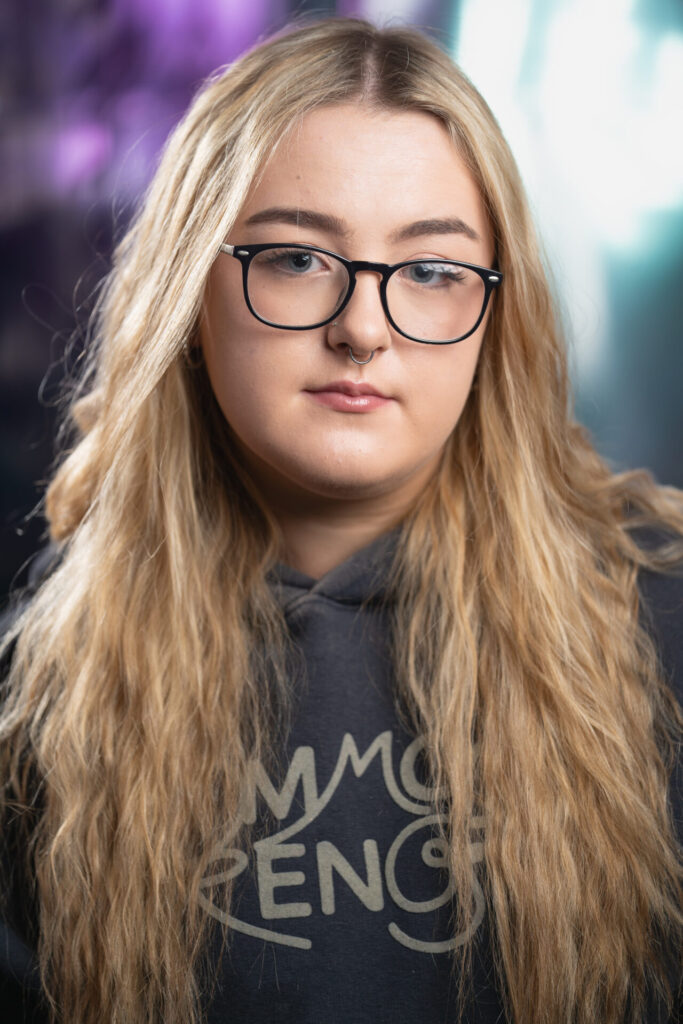
We spoke to salon owner Marie Hall, who completed the Wella Colour Higher Level Diploma with Glasgow Clyde College at SCQF level 9 – a qualification that recognises the artistry, science, and professionalism at the heart of modern hairdressing.
Marie’s story is a powerful example of how lifelong learning and determination can open new doors — proving that creative careers can be both rewarding and respected.
Finding a new path through creativity
“My dream had always been to become a police officer and work with either horses or dogs,” Marie recalls, “but while waiting until I was old enough to apply, I decided to study hairdressing. I’ve always been a creative person, and staying on in sixth form wasn’t the right path for me.”
At just 17, Marie was diagnosed with epilepsy, which made her dream of joining the police impossible. She pursued her hairdressing studies, but then suffered another setback. She explained: “I didn’t immediately enter the profession after a negative experience during my work placement and Saturday job. Having already faced bullying at school, it was disheartening to encounter similar treatment in the salon environment.”
But Marie refused to give up. After working in a charity shop for three months, she realised how much she missed hairdressing and returned to the industry while completing another qualification. She said: “I worked in three different salons. In each position, I was promised ongoing training that never materialised, yet I was often left to manage the business from a young age.”
At 22, she took a leap of faith and opened her own salon – MH Hair – laying the foundation for what would become a long career in the industry.
Lifelong learning through SCQF-recognised qualifications
Education and upskilling have always been central to Marie’s success. After opening her own salon, she completed the Wella Colour Expert programme and advanced Sassoon training, before going on to gain her Assessor’s Award and Education and Training qualification.
When she discovered the Wella Colour Higher Level Diploma, recognised on the SCQF at level 9 – the same level as a degree – it felt like the perfect next step.
“I’ve always believed that learning should never stop, especially in an industry that’s constantly evolving,” Marie said. “This qualification was a game-changer, giving me a unique edge within the profession.
“This qualification demonstrates to clients that you’re trained to the highest professional standard.”
Raising the profile of the hairdressing industry
Marie believes that having degree-level recognition for hairdressing is a vital step forward for the profession.
“For too long, hairdressers have been undervalued,” she said, “but this qualification empowers future stylists to charge what their skills are truly worth. It’s about time this level of recognition was brought to the industry.”
Marie believes the qualification pushed her beyond her limits and gave her a renewed sense of purpose, adding: “I knew it wouldn’t be easy, but I was ready for the challenge and eager to take on the next chapter in my journey. This qualification pushed me beyond my limits and truly stretched my mind.”
A proud moment of recognition
Graduating as part of the very first Wella Colour Higher Level Diploma cohort was a defining moment for Marie.
“Having my family there to watch me graduate was magical,” she says. “Standing beside my fellow students, knowing we were making history together, is something I’ll cherish forever.”
Not long after, Marie received an unexpected and “deeply meaningful” letter from her local MP – sent from the House of Commons – congratulating her on her achievement.
Marie said: “It was a wonderful surprise and a reminder that our work can be both respected and valued, even in ways we don’t always anticipate.”
Inspiring the next generation of creative professionals
Completing the SCQF level 9 diploma has also inspired Marie to share her knowledge and mentor others.
She explained: “As more salons move toward the chair-rental business model, I’ve decided to start an education school to help train and inspire the next generation of hair professionals.”
Words of wisdom for aspiring creatives
Marie lives by a piece of advice she once heard from chef Gordon Ramsay on the High Performance podcast. He was asked about the three non-negotiable behaviours people should adopt, and his response really resonated with Marie.
The first one is you need to be a sponge; the best listening device is you, the second one is to take it professionally, not personally, it’s good to get told off, and the third one is to have a thick skin, you are not going to please everyone in the room.
Gordon Ramsay
Marie said: “If more of us followed this advice, perhaps we would all achieve our own personal goals. Never give up, I’m still achieving because I’m not finished and not where I want to be.”
Looking ahead
After celebrating 25 years in business, Marie continues to learn, grow, and give back.
She explained: “This experience has reinforced something I’ve always believed: hairdressing is so much more than just hair; it’s a skill, a science, creativity, and education all coming together to make a real impact.”
Useful links
See how the level 9 diploma compares to other qualifications on the SCQF interactive framework
If you’re passionate about supporting young people and making a difference in your community, First Steps to Youth Work is the perfect place to begin your journey.
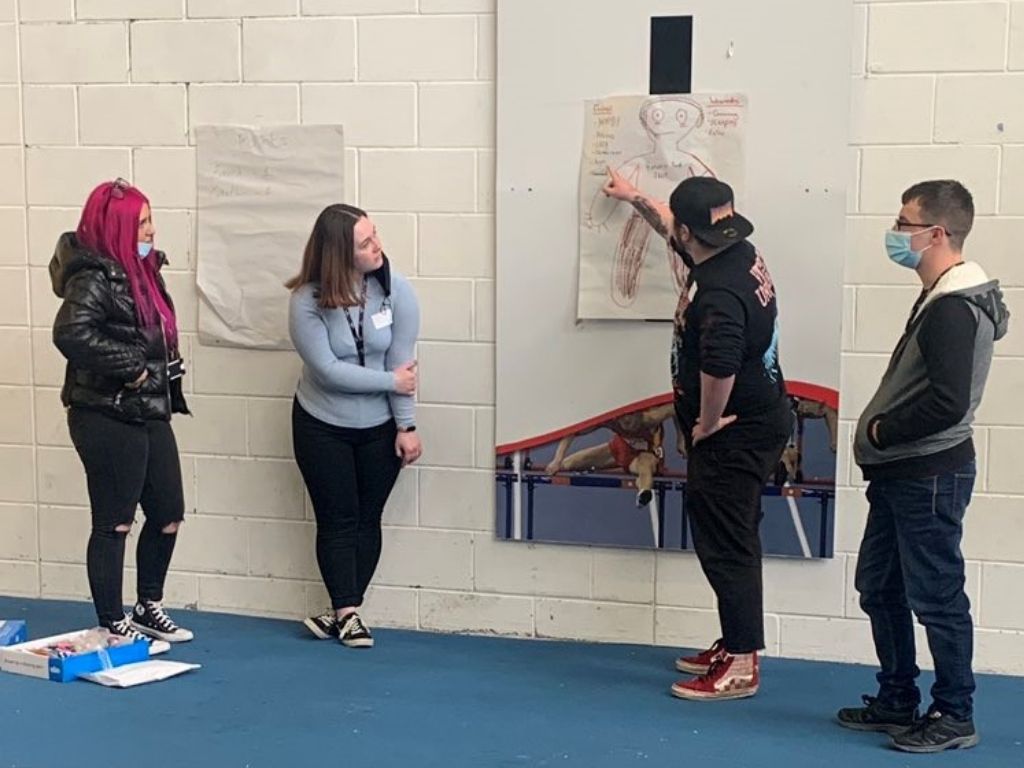
This free youth work training in North Lanarkshire introduces you to the skills, values and knowledge you’ll need to build a rewarding career in youth and community work.
What is the First Steps to Youth Work course?
Developed by Community Learning and Development (CLD) North Lanarkshire, this training helps you gain a recognised qualification while exploring the rewarding world of youth work.
The course sits on the Scottish Credit and Qualifications Framework (SCQF) at Level 4, carrying 2 SCQF credit points. This means your learning is nationally recognised — and can be built on through further study and qualifications.
What you’ll learn on the course
The First Steps to Youth Work course introduces the key principles and practices of youth work in a hands-on, engaging way.
Through interactive sessions, group work, and case studies, you will:
- Explore key developments in youth work in Scotland, including the National Youth Work Outcomes
- Learn about different youth work settings and groups
- Understand the impact of social media in youth work delivery
- Develop awareness of risk assessment and child protection
- Build core communication and teamwork skills essential for working with young people

You will also take part in fun, practical activities that reflect real youth work practice, from icebreakers and group exercises to learning about Maslow’s Hierarchy of Needs, youth worker qualities, and health and safety.
Progression routes and career opportunities
Completing the First Steps to Youth Work training can open up a range of exciting opportunities in the youth and community sector. Many learners go on to:
- Volunteer with local youth work teams
- Progress to the Professional Development Award (PDA) in Youth Work at SCQF level 6
- Study qualifications such as the HNC in Working with Communities at SCQF level 7
- Secure employment in youth work, education or community development
The course is completely free for anyone who lives, works or attends schools or college in North Lanarkshire, making it an accessible first step into a rewarding career helping others. It is also available to volunteers involved in youth work in North Lanarkshire.
Learner success stories
I took part in First Steps training when I started volunteering at a youth club. It was great fun — I learned practical activities and some of the theory related to youth work. As a result, I now volunteer with the Motherwell Youth Work team, have completed the PDA in Introduction to Community Involvement, and I’m hoping to go on to do the HNC in Working with Communities.
– Kai Etherington
“My youth worker suggested I take part in the training. I wasn’t sure what I wanted to do when I left school and thought it would look good on my CV. I really enjoyed the course and met people from different groups and voluntary organisations. I decided I wanted to pursue a career in youth work, and I’m now employed by North Lanarkshire Council’s CLD department as an Assistant Support Worker.”
– Amy Muslek
Useful links
To see how the qualification compares to others, visit our interactive framework.
Learn more about community learning and development in North Lanarkshire.
If you’ve ever dreamed of working with animals and making a real difference in their lives, the Lantra Diploma in Veterinary Care and Animal Welfare at SCQF Level 5 might be exactly what you’re looking for.

Whether you’re just starting out or looking to formalise your experience, this nationally recognised qualification offers a practical, flexible and inspiring route into the world of veterinary support.
This diploma is designed for those who want to work in a supportive role within veterinary care or animal welfare settings. With 65 SCQF credit points, it blends academic learning with hands-on experience, giving you the skills and confidence to thrive in the animal care sector, under the guidance of qualified and experienced professionals.
A career in helping animals
Developed in consultation with experienced industry experts and credit rated by SQA Accreditation, the qualification reflects current standards and expectations. It’s a strong foundation for a fulfilling career helping animals and supporting the people who care for them.
You can choose to focus on small animals or equine, and select between two vocational pathways:
- Veterinary Care Support
- Operational/Reception Duties
This means your learning can evolve with your interests or adapt to the opportunities available during your placement.
Gain valuable experience with animals
The programme combines classroom-based theory with practical tasks and work placements. You’ll spend time in a veterinary practice or animal care setting, gaining valuable experience that boosts your employability and deepens your understanding of animal care protocols.
Assessment is portfolio-based, so you’ll build a body of evidence through videos, documents, presentations and practical demonstrations. There’s also an online multiple-choice exam to round things off, with on-demand resit options available if needed.
Career routes
Those who achieve the Lantra Diploma at SCQF Level 5 are well-prepared for roles such as:
- Veterinary care assistant
- Animal welfare assistant
- Stable hand/assistant
- Kennel or cattery assistant
- Pet retail assistant
- Veterinary receptionist
And if you’re thinking long-term, this diploma can also lead to further training – like progressing onto the Lantra SCQF Level 7 Diploma in Veterinary Nursing.
Whether you’re an animal lover ready to turn your passion into a profession or someone seeking a career change with purpose, this diploma is a brilliant place to begin.
For more information on the qualification, visit Lantra’s website.
To see how this Diploma compares to other qualifications in Scotland, visit our interactive framework.
When six parents from Calton, in Glasgow’s east end, secured jobs with the Civil Service through a new and pioneering recruitment process, it marked more than just successful job placements.
It demonstrated what becomes possible when taking a location-based approach to tackling child poverty, while using the Scottish and Credit Qualifications Framework (SCQF) to empower parents.
The Calton Demonstration of Change is part of Glasgow City Council’s Child Poverty Programme and is led by Clyde Gateway. It is a whole-family model that treats skills development not as an afterthought, but as a key enabler of sustainable employment.
By mapping learning pathways against SCQF levels, the programme is giving families something transformative: visible progress, formal recognition and clear routes to opportunity.
This programme meets Scottish Government’s National Performance Indicators by:
- improving the skills profile of the population;
- reducing underemployment, where a person’s skills are underutilised;
- improving general health and wellbeing;
- improving people’s perception of their neighbourhood; and,
- improving levels of educational attainment.
College partnership
The Calton Demonstration of Change is supported by Glasgow Kelvin College, whose new Parent Pathways Programme is helping to bridge the gap between community learning and formal education. The college’s support for community-based learning is also giving parents recognition for the skills they already hold and confidence to continue their journey into college or employment.
This partnership ensures that local learning leads somewhere tangible, creating momentum, not just participation and showing families that progression can start right where they are.
Employer partnership
One of the most innovative parts of the Calton Demonstration of Change is how it reimagines the recruitment process. The team worked with the Department for Work and Pensions to look at what parents needed before applying for jobs – things like English language support, digital skills and childcare. They also looked at civil service success profile behaviours before recruitment even began.
Together, they created a skills and barriers matrix to plan support and training that fits each parent’s needs.
Parents then took part in pre-entry training focused on confidence, teamwork and workplace skills.
This approach shifts employers from being end-point recruiters to active co-designers of pathways. Milly Donnelly, DWP Manager, said:
Eradicating child poverty requires a joined-up approach that advocates for systemic changes to service design.
The result? Six parents have secured Fraud Officer positions through the government’s Social Mobility Apprenticeship scheme, which offers high-quality, secure employment with genuine career progression.
Earning qualifications for everyday skills
No single project alone can transform Glasgow’s east end.
At St Mungo’s Academy in neighbouring Gallowgate, young people have spent years supporting their families with language interpretation and translation. They are now gaining qualifications through the Community Interpreting programme at SCQF level 5. For many families, recognition of informal learning is a game-changer.
As Ahmed Mumin, New Scots Project Lead from Scottish Sports Futures, which part-funds the programme, explains, this creates tangible progression routes. He said:
Helping young people to qualify as interpreters gives recognition to skills they already use every day. By embedding this within the SCQF, we’re opening doors to further education, employment and community leadership.
By the end of this year, the youngsters will become qualified interpreters, building their own employability prospects, while strengthening family and community resilience. It’s a powerful example of how the SCQF Partnership’s commitment to championing all forms of learning can directly impact social mobility.
More than childcare
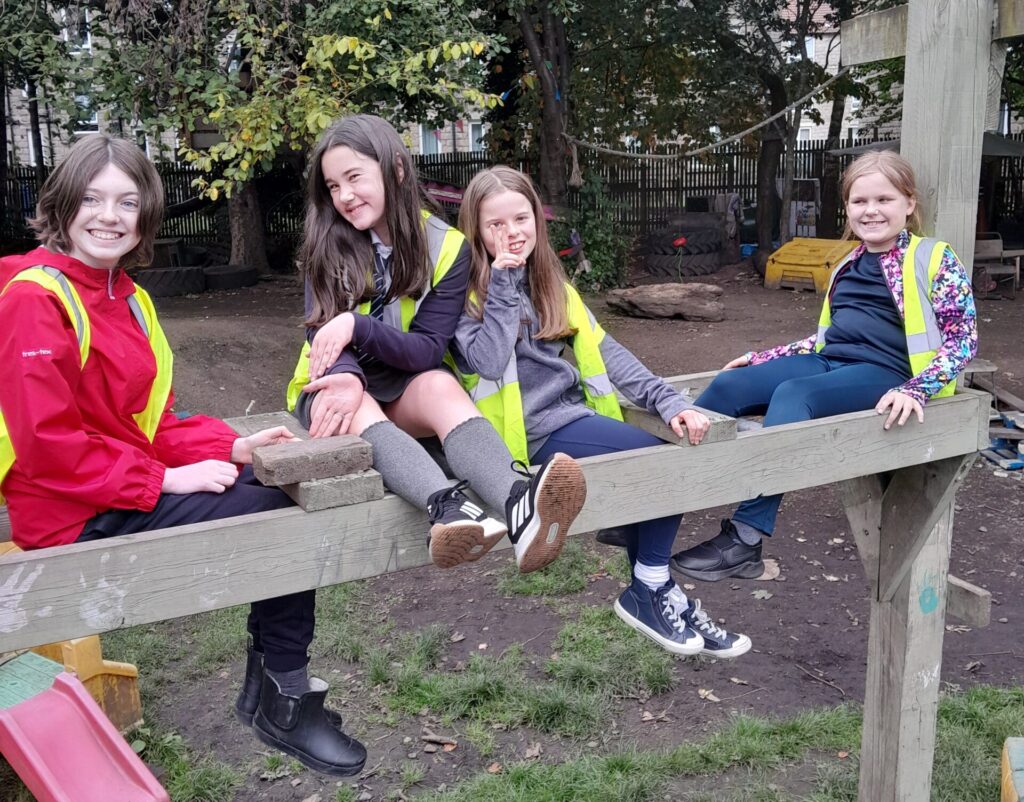
At Baltic Street Adventure Playground in the east end’s Dalmarnock, childcare is about more than looking after children. It’s part of helping parents move forward in life.
The project, which is also supported by Clyde Gateway, gives parents time to work, volunteer, study or start their own business. It also helps some parents train for jobs in childcare – with clear routes mapped against SCQF levels.
This means the programme not only helps parents find time for work or study but also builds a skilled local workforce for the future.
A model for Scotland
Natalie Phillips, Sustainable Communities Development Manager at Clyde Gateway, believes breaking the cycle of child poverty means moving beyond fixing single issues to designing whole pathways. She explained:
That means treating ESOL, childcare and employer partnerships not as add-ons, but as core enablers of opportunity. Families don’t just need services, they need time, recognition and real routes into work. Our role is to prove that systems can flex and be rewired so those routes genuinely exist. That’s what the Calton Demonstration of Change is all about, showing that public services can be redesigned around people’s real lives. That’s the heart of this work, and it’s where we can begin to see what a fairer Scotland can truly look like.
By combining integrated skills approaches with SCQF mapping, families are building skills while seeing small steps transform into visible milestones. It demonstrates how the SCQF can be used to change systems so that opportunity becomes built in, not bolted on.
Calton is showing what’s possible when collaboration gets real, where frameworks like the SCQF become tools for social mobility and the starting point for long-term systemic change for families.
Useful links
For more information on Clyde Gateway, visit its website.
To learn more about SCQF support for adult learners, head to our dedicated support page.
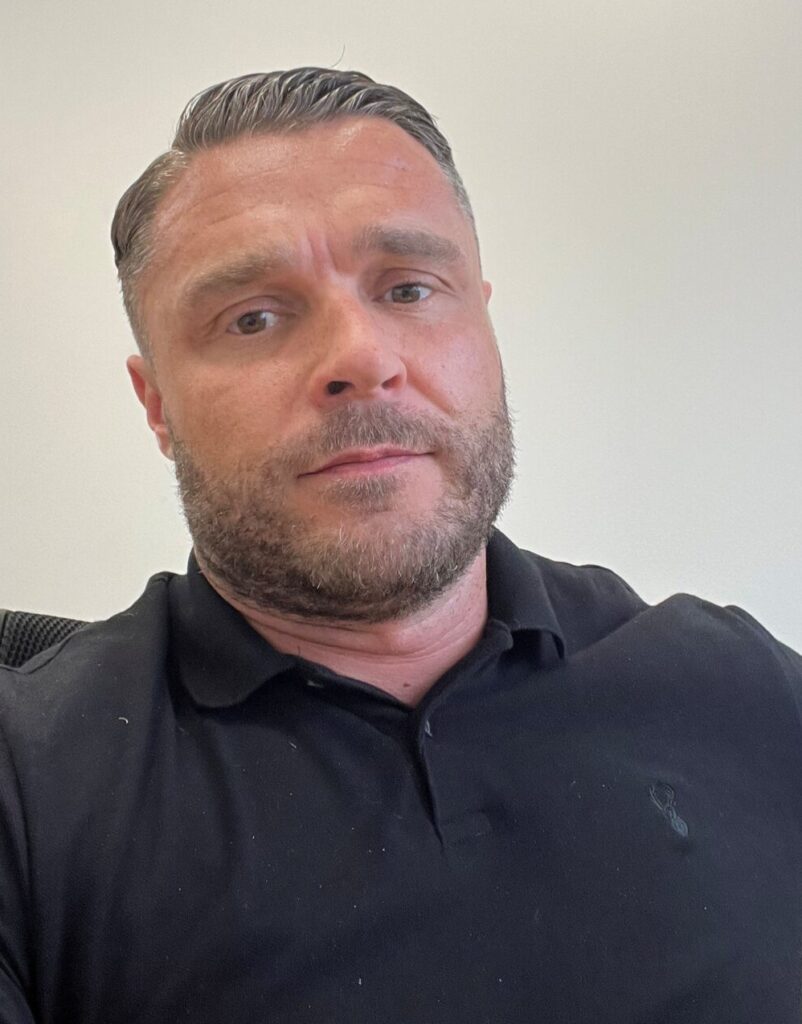
When Lee Coutts left school at 15 without Highers, he couldn’t have imagined he would one day become head teacher at Ullapool High School. His story shows the power of different pathways and the truth behind the SCQF Week 2025 theme: All Learning Counts.
Q: You left school at 15 without Highers — what was going through your mind at that point?
A; When I was 15, all I wanted was to get away from school. I didn’t feel inspired or encouraged there, and I couldn’t see how classroom learning connected to the kind of future I wanted. So I left and took a job in a local warehouse. Looking back, that decision was the start of a different kind of education — I was learning every day through work: responsibility, teamwork, and how to adapt quickly. It showed me early on that learning doesn’t just happen in school, it happens in all sorts of places — and all of it counts.
Q: What inspired you to go back into education and start your journey through college and beyond?
A: The job I left school for quickly made me realise it wasn’t what I wanted to do long-term, and that pushed me to reconsider my options. I’d always had an interest in business, so I decided to explore courses at my local college — Angus College, as it was then — and enrolled on an NC programme before moving onto an HNC.
During that NC year, something shifted. I started thinking more seriously about my future, and for the first time, I felt like my ideas were being taken seriously. A couple of tutors encouraged me to consider teaching, which hadn’t even been on my radar before. Their belief in me made a huge difference — they supported me to gain the English qualification I needed and helped me explore university options.
That guidance led me to choose a combined Business Studies and Professional Education degree at Stirling. It meant I could qualify as a teacher a year quicker than the traditional route, but, more importantly, it marked the point where my real thirst for learning began. I committed myself to lifelong and life-wide learning — an approach I still hold on to today. It’s something I hope people take from my story, including my own pupils now as a head teacher: that every bit of learning counts, no matter when or where it happens, and it can shape your future in ways you might not expect
Q: How did college help open up opportunities for you, and what was the transition to university like without traditional qualifications?
A: College was the turning point where I first felt taken seriously and encouraged to push myself further. My NC and HNC weren’t just qualifications — they gave me the confidence, study skills, and mindset I needed to see myself as someone who could succeed in higher education.
Because I had already studied at SCQF level 7 for a year, the transition to university was actually very smooth. In fact, I often felt better prepared than some of my classmates who had taken the more traditional route. That experience showed me that different pathways can be just as valuable — and that all learning counts, whether it’s through school, college, or life experience.
As a head teacher now, that lesson really shapes how I support my pupils and indeed, staff. I know from personal experience that not everyone thrives on the same path, and I want young people to see that there are many routes to success. What matters most is recognising the value in every bit of learning along the way.
Q: Were there particular challenges along the way that stand out, and how did you overcome them?
A: There were definitely challenges along the way. Leaving school without Highers meant I sometimes questioned whether I really belonged in further or higher education. Moving away from home to start university added another layer of responsibility — I was suddenly supporting myself financially and managing a new environment, all while keeping up with my studies.
Balancing work, living independently, and academic demands wasn’t easy. I also had to complete the extra English qualification I needed before starting university, which meant a lot of extra effort.
What helped me overcome these hurdles was the support I received from tutors and the confidence I gained step by step. Every qualification I completed, every skill I learned, and every challenge I navigated reinforced that learning comes in many forms — not just exams, but life experiences too.
That’s a lesson I now pass on to my pupils: challenges are part of the journey, and every bit of learning counts, no matter where it comes from.
Q: What motivated you to go on to complete a Masters and then a Doctorate in Education?
A: After being awarded a First Class Degree and a Distinction in Teaching, I caught the learning bug — I realised I genuinely loved learning and knew I wanted to keep studying. That curiosity and drive led me to complete a Postgraduate Certificate in Leadership, which I was able to transfer into a Masters in Education. From there, I went on to complete a Doctorate in Education.
But I didn’t stop there. I used some of the credits from those studies to complete a Postgraduate Diploma in Business Administration, and I’m now working on a Postgraduate Certificate in Specialist Qualification for Headship. For me, learning isn’t just about qualifications — it’s about constantly growing, expanding what I can offer to my pupils, and modelling the idea that education can be a lifelong adventure.
I hope my journey shows others that it’s never too late to follow your curiosity and that all learning counts, whether it comes through formal qualifications, work experience, or life itself.
Q: Can you describe the career path that led you from teacher to headteacher, and the experiences that helped most along the way?
A; I started my first teaching post at 21 at Grangemouth High School. A few years in, I spotted a lecturing post at a Glasgow college. It immediately appealed to me — I’d had such positive experiences with college myself, and it felt like a natural next step. I stayed there for 10 years, taking on several promotions along the way.
After completing my Doctorate, an opportunity arose at Strathclyde to support student teachers and practising teachers with their professional development. I led the school experience for all secondary students and became Associate Director of postgraduate research in education. Those three years gave me insight into leadership, mentoring, and the bigger picture of education.
From there, I moved into an Assistant Principal role at West College Scotland, overseeing around 300 staff and £21million of activity. By the time I was 40, I knew it was time to return to school — this time as a head teacher. It might seem unusual, leaving a senior college leadership role to go back to a school setting, but for me it made perfect sense. I wanted to reconnect with learners directly, to see the impact of leadership in the classroom, and to apply the lessons I’d learned over the years in a setting where I could make a real difference in young people’s lives.
I also wanted to model lifelong learning in a very tangible way and show pupils that success doesn’t follow a single path. I recognised that I would need to demonstrate how my leadership skills were transferable, and fortunately Highland Council took a chance on me. That decision has allowed me to bring together everything I’ve learned — from teaching to leading large teams — in a role where I can inspire and support both staff and learners.
Every stage of my journey taught me something valuable — from teaching in classrooms to leading teams and supporting teachers — and reinforced that all learning counts. It also showed me that people need to take chances on others, to think outside the box, and to recognise that non-traditional routes can be just as valuable as conventional ones. That perspective now shapes the way I lead Ullapool High School and the opportunities I try to create for my pupils: there isn’t a single path to success, and every learning experience can make a difference
Q: How does your own non-traditional journey influence the way you support and encourage pupils at Ullapool High?
A: My own non-traditional journey has a huge influence on how I support and encourage pupils at Ullapool High. I know firsthand that success doesn’t only come from following the conventional path — sometimes it comes from unexpected opportunities, determination, and learning in all sorts of ways.
I try to create a culture where pupils understand that every bit of learning counts, whether it happens in the classroom, through work experience, or in life outside school. I share my own story to show them that it’s okay to take different routes, to make mistakes, and to keep learning.
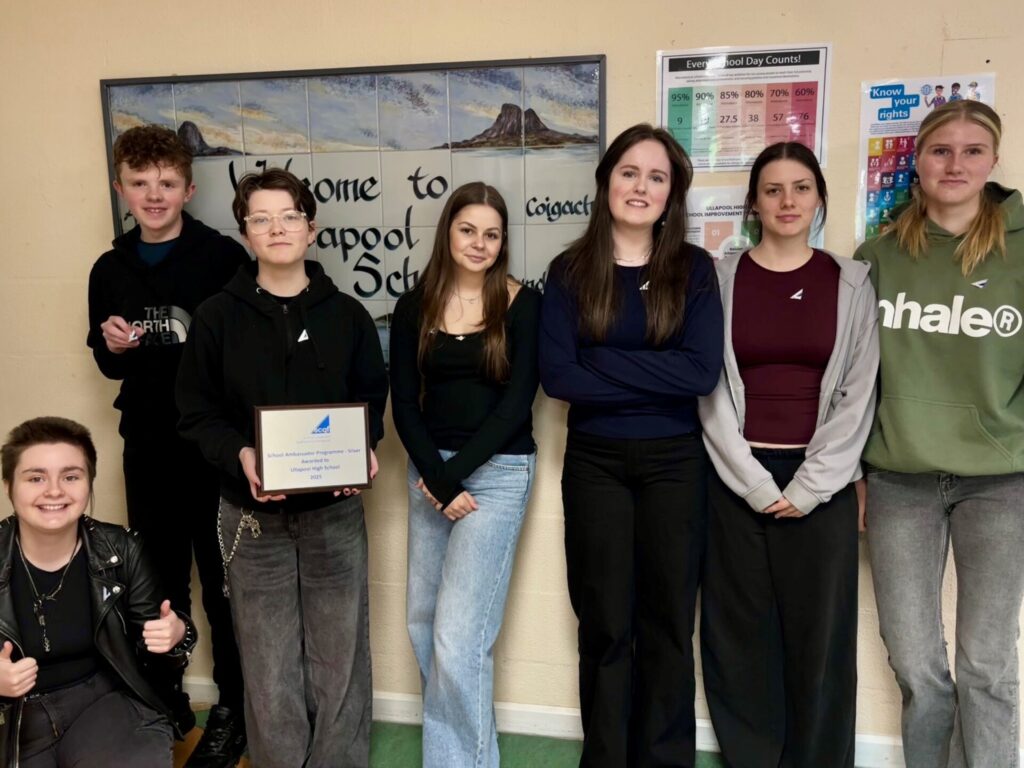
It also reminds me to take chances on young people, just as others did for me. I want every pupil to feel that their potential is recognised and that they have the support to explore new pathways, build confidence, and achieve their ambitions — no matter what route they take.
A: If you could give one piece of advice to your younger self — or to pupils today — what would it be?
A: Trust yourself and your own path — it doesn’t have to look like everyone else’s. Don’t let one ‘no’ put you off; be creative, explore other routes, and keep learning wherever you can. Every experience counts, and every step brings you closer to your goals.
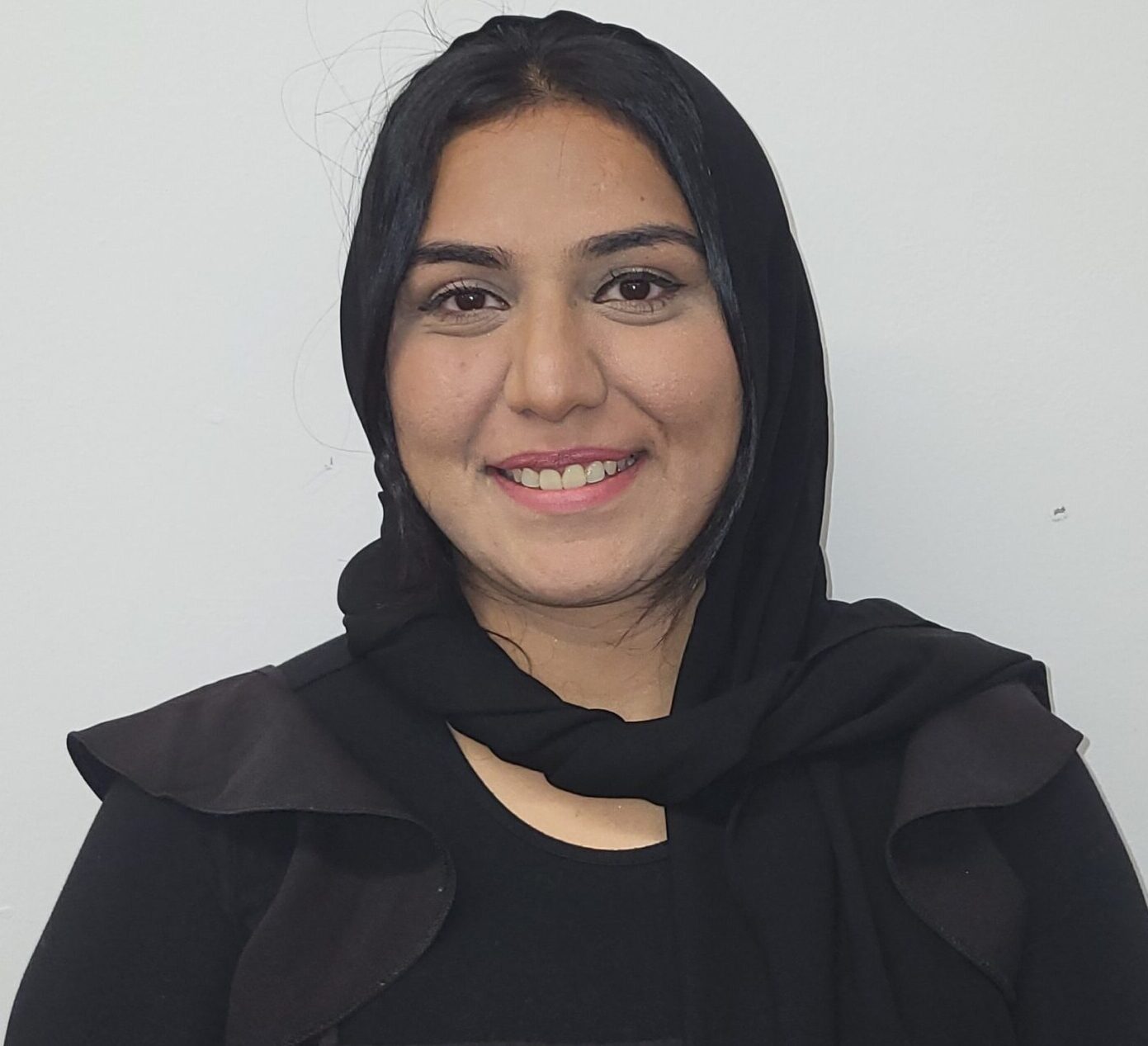
For SCQF Week 2025, we’re highlighting real stories that show how learning in all its forms — whether gained through education, work or life experience — can open doors and shape futures.
Glasgow Clyde College student Madeeha Kanwal’s story shows how determination and the right support can take your lifelong learning journey on a new and exciting path.
A fresh start
In her 30s, Madeeha was ready to take her life in a new direction. A single mum of three, she had recently left a women’s aid refuge, and knew that full-time work wasn’t an option just yet. But she also knew she didn’t want to stand still.
I never wanted to waste the year sitting in the house, especially when I had had some hard experiences. I wanted to do something positive. I am very passionate about career progression and sitting in the house does not help with that.
With previous qualifications — including a Masters degree and an HND in Legal Services — as well as a wealth of personal resilience, she decided to apply for an HNC in Physical Activity and Health at Glasgow Clyde College’s Cardonald Campus.
Recognition of Prior Learning (RPL)
Madeeha’s earlier qualifications didn’t include recent biology study, usually a requirement for her chosen course. But the college recognised her previous learning, so she was able to use her old school qualifications from Pakistan alongside her HND to gain entry.
Glasgow Clyde College thankfully accepted my old school qualification from Pakistan for the biology knowledge. Everything was easy and quick to access. I just uploaded my qualification … I found the support from Glasgow Clyde College, which is a nurture college, to be excellent.
RPL meant that her past learning was recognised, saving her from having to repeat study unnecessarily and allowing her to move forward more quickly.
Confidence, support and success
Madeeha flourished at college, benefitting from encouragement, feedback, and childcare support.
I am not exaggerating but Glasgow Clyde College has provided me with the skills, confidence and opportunities I needed to accelerate my career. I have always felt included and encouraged doing assessments and class work.
That support paid off and she completed her HNC with distinction.
Beyond the classroom
Madeeha also stepped into leadership. Encouraged by her course manager, she ran in the student elections and was elected student president.
I always knew I wanted to work for people, the community and students, but never thought I had time. Since it is a paid job and is a little flexible, I am glad to make that choice.
At the same time, she is preparing for the Scottish Law Society exams, which will allow her to qualify as a solicitor in Scotland. She is also working towards a personal trainer qualification online and even considering a future Masters in Physiotherapy.
Looking ahead
Having passed her course with distinction, Madeeha’s plans are ambitious – spanning law, fitness, business, and even education policy. But at the heart of her journey is a belief in the value of learning in all its forms.
I love gaining knowledge … I never leave things without trying and deciding myself.
Why her story matters
Madeeha’s story is a celebration of lifelong learning, and how a determination to succeed can see you through the hardest of times. It also shows how RPL can remove barriers and create opportunities by valuing every type of learning — past, present and future. It’s a reminder that no learning is ever wasted, and that with the right support, learners can create new futures, built on the foundations of their experiences.
Useful links

At the heart of the Scottish Credit and Qualifications Framework (SCQF) lies a simple but powerful belief – every learner, every pathway and every achievement matters.
Whether you’re a young person navigating school qualifications, an apprentice gaining hands-on skills, a college or university student, or an adult returning to learning later in life – your journey has value, and the SCQF is here to recognise and support it.
Why ‘All Learning Counts’
In Scotland today, learning is lifelong and it is happening everywhere – in classrooms, workplaces, community groups, online platforms, and through lived experience. Too often, people underestimate their skills or see certain routes as ‘lesser’ than others. SCQF Week 2025 is about challenging those perceptions and celebrating the wide range of pathways that help people succeed.
The SCQF provides a common language for learning, showing how qualifications and learning programmes relate to each other. By doing so, it breaks down barriers, opens doors and creates opportunities. From SCQF level 1 to level 12, every level has value, and every learner deserves recognition.
Recognition of Prior Learning
This week, we will be unveiling our revamped Recognition of Prior Learning (RPL) Hub, packed with guidance and resources for learners, RPL advisers and employers.
RPL enables learners to get credit for the skills and knowledge they already have, so they don’t have to repeat learning, saving them time and money. Significantly, RPL can help address skills gaps across Scotland by ensuring that people’s existing expertise is recognised and deployed effectively in the workforce, helping employers fill critical roles and supporting economic growth.
The Partnership has long called for a coherent Scotland-wide approach to RPL, and earlier this year we were asked by the Scottish Government to help them deliver the first phase of a national RPL system for Scotland. Work is already underway and we look forward to sharing our progress with you.
Looking ahead
2026 will mark the 25th anniversary of the SCQF, and as we look forward to that milestone, SCQF Week 2025 is a timely reminder of why the Framework matters. Scotland has one of the most inclusive and flexible education systems in the world, and the SCQF is central to making that a reality.
Join the conversation
Throughout SCQF Week, we’ll be sharing case studies, resources and insights on how the Framework is helping people take the next step in their learning or career. I encourage you to join the conversation, share your own stories and help us spread the message that all learning truly counts.
Together, we can ensure that no one’s achievements go unrecognised, and that every learner in Scotland sees the value of their journey.