


Have you heard of the SCQF? And have you heard about the SCQF Register?
The SCQF is Scotland’s National Qualifications Framework (NQF), but did you know it has an international reach? The SCQF Register is the central repository where all Credit Rating Bodies in Scotland list their credit rated programmes. It is accessible to all visitors to the SCQF website from Scotland, the UK and internationally.
 Ever wondered why having your programme on our database may help you as an institution, organisation or employer to achieve global recognition? Well, let’s look at some facts that might just make you think!
Global reach – the facts
We have analysed the global reach of the database throughout March, and you might be surprised to see who is looking at our data. Around 60 countries, excluding the UK and Ireland, were searching our data, from Australia to Azerbaijan, and everything in between.
 Over March and the first couple of weeks in April, our register was accessed over 600 times by our international visitors and over 2,500 times from the UK and Ireland. The searches ranged from looking at programme owners such as ACCA or SQA to subjects like energy or creative industries.
If you have completed a programme or qualification you would like to search for, go to our register and use the different search functions – you’ll be surprised at what’s on there.
What are the benefits of your programme being on the SCQF?
All programmes on the Framework have been credit rated by SCQF Approved Credit Rating Bodies, and are listed in the database. All programmes have been rigorously Quality Assured to SCQF principles. The benefits of this include the ability to:
- explain the level of difficulty and complexity of your programme to others;
- compare your programmes to those included on other countries’ NQFs (including those across the UK); and
- increase the mobility of your learners internationally, enabling them to more easily explain the level of their qualification.
This also means that any individual or employer can access this register and make decisions. Find a few examples below. If any of these ideas appeal, simply use the hyperlinks for further information:
- Is this the course for me or my employees?
- Do my SCQF qualifications demonstrate the skills I can bring to a job?
- Can I take SCQF qualifications abroad or to other UK countries?
- Can my certificates be used for Recognition of Prior Learning (RPL)?
How do I get my learning programme on the SCQF?
If you would like some more information about how to have your programme credit rated, please visit Get Your Programme on the SCQF.
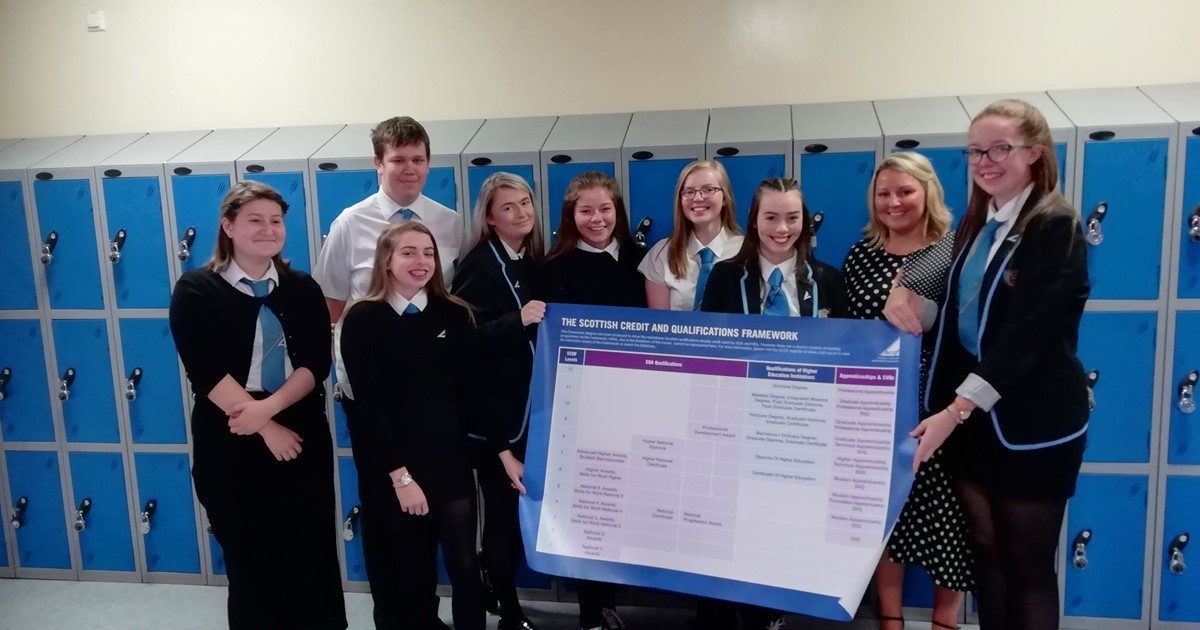
Background and aims
Since 2015, the SCQF School Ambassador programme has helped schools raise awareness of our framework and how it can be used to develop a whole range of different learning pathways. With significant changes taking place to Scottish qualifications over the last 10 years, it’s important that schools, pupils and parents not only have an understanding of what’s being delivered in schools, but also how all these qualifications compare.
With that in mind, everyone in the school community can develop an understanding of the parity of esteem between thousands of vocational and academic qualifications available to schools including SQA qualifications, Foundation Apprenticeships and those from other providers like Youth work organisations.
In 2019-20, 50+ secondary schools across Scotland joined the SCQF School Ambassador programme, committing to raise awareness and promote the SCQF among their school communities. In total, 107 schools are now engaged with the programme with many more schools keen to take up the opportunity.
Schools the length and breadth of the country are signing up, from Orkney and Shetland to the Borders, regardless of their size, demographic or location. All secondary schools in Scotland are encouraged to be involved with the programme and work with neighbouring schools to share ideas and work collaboratively.
In order to become an Ambassador school an SCQF Development Officer will come and deliver a staff session for senior management or all members of staff covering how the SCQF can be used in schools, developing learner pathways for pupils and raising awareness with parents. Following this session, schools appoint pupil ambassadors who will be responsible for running sessions for their peers and presenting at parents’ night with mentor support from staff. The SCQF offers support and lots of great resources to help schools and we look for schools to engage with our social media and showcase some of the great work their staff and pupil ambassadors are involved in.
By using SCQF resources, pupils can begin to map out potential study or career pathways and what learning they might need to complete in order to get there. The traditional route to university may not suit all students, so it’s important for schools to have pathways to further education, work or apprenticeship programmes. With so many different routes into careers, university or college, the journeys that pupils can take can be very flexible.
For example, a pupil might progress from school to an HNC/HND at college and progress into a degree at university, whereas another pupil may complete a graduate apprenticeship. Now more than ever, there are so many options for pupils to develop their own individual learning pathways and it’s key that schools, pupils and parents understand the SCQF and how it can be used to shape those journeys. For an example of using the SCQF and learner pathways, have a look at the blog from Beth.
Benefits of being an Ambassador school
There are various benefits of being involved in the programme, including:
- Access to continuous support from the SCQF Partnership team
- Staff resources in the Ambassador training area of our website
- Take part in our annual Ambassador event
- Sharing of ideas and best practice with schools across Scotland
- Free printed and digital resources for your school
- Access to case studies and blogs about how schools are using the SCQF
- Stay up to date with news in our School Ambassador e-zine
Tiered accreditation
This year we have decided to enhance the School Ambassador programme through a new tiered accreditation system where schools can apply to be a bronze, silver or gold level school. Through this process, we can recognise the great work and dedication in schools and highlight their successes, as well as identify any areas for development.
The process is designed to be as simple and take up as little time as possible for busy staff and pupils, but also let them understand where they sit nationally and have their work and effort appreciated. Currently making an application to move up a tier is a manual process supported by our Development Officer Donnie Wood but it is our aim to have an online assessment tool to help with this in place for the new school year in August.
Schools will be encouraged to continuously develop and work towards their silver and gold status and will receive support from the SCQF Partnership team and our school ambassador resources. For more information on the criteria download our resource.
Visit the School Ambassador Programme section of our website for more information or, contact Donnie Wood on d.wood@scqf.org.uk. Donnie will be happy to take any questions you may have and can arrange an online meeting, or in person at a later date (when COVID-19 restrictions are lifted).
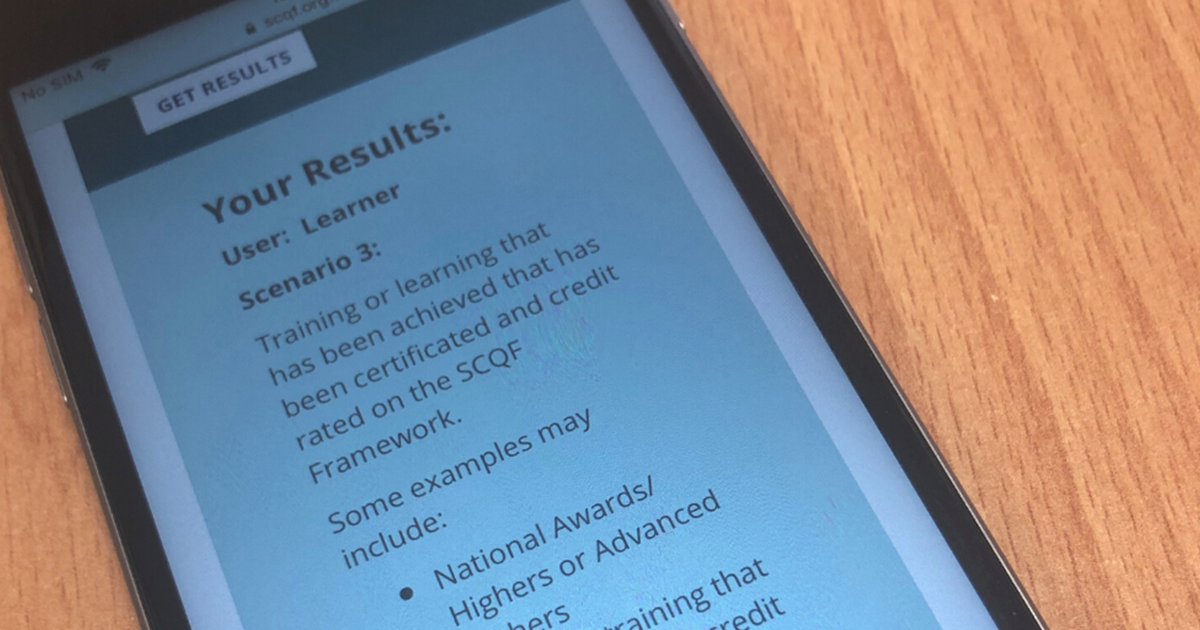
Recognition of Prior Learning (RPL) is a process where learners can be recognised for the work or experience they have gained in a variety of settings.
Here are just a few:
• Learners can gain formal credit for their learning for credit transfer or admission to a programme
• Learners can benchmark their skills, knowledge and experience to update their CV
• Learners can reflect upon their experience, from life, work and education and training to build confidence
• Employers can identify training needs for their employees
• Employers can recognise learning to map knowledge and skills to jobs within their organisation
Our RPL tool can be used as a guide for learners, employers and learning providers to help them start the process.
Sometimes the exercise is seen as time consuming and labour-intensive and organisations are nervous about undertaking the process, however the benefits do outweigh the work!
Here are a few topical examples of good practice from a variety of settings.
Support for Veterans
We have bench-marked a number of qualification for our armed forces and here is the link to the work we have undertaken with the MOD which showcases how our veterans can use their learning into civilian work roles.

RPL for Advanced Entry
We also have a number of inspirational videos on our website that show how RPL has successfully shortened a learner’s journey. Morag describes how RPL shortened her journey and was offered advanced entry to her degree.
RPL for Employers and Employees
Our NHS is currently undertaking an aspirational RPL journey for its staff called “Transforming Lives through Lifelong Learning” and recently presented at our Sharing Good Practice event to an enthusiastic audience. They are helping staff recognise employees’ learning using SCQF principles and have developed their own guiding principles. They hope to be able to encourage further learning when needed and develop a confident 21st century workforce to meet the changing needs of our NHS. Download here

RPL for Credit Transfer and Inspiration
And finally this short video is an inspirational journey about how RPL and education can change a person’s life and demonstrates how all learning and life experience really do matter.
We hope that this inspires you to start recognising your own skills and potential and if you are an employer or a training provider to take this forward. Please visit our RPL Tool for information and guidance about how the SCQF Partnership can help you or your organisation.
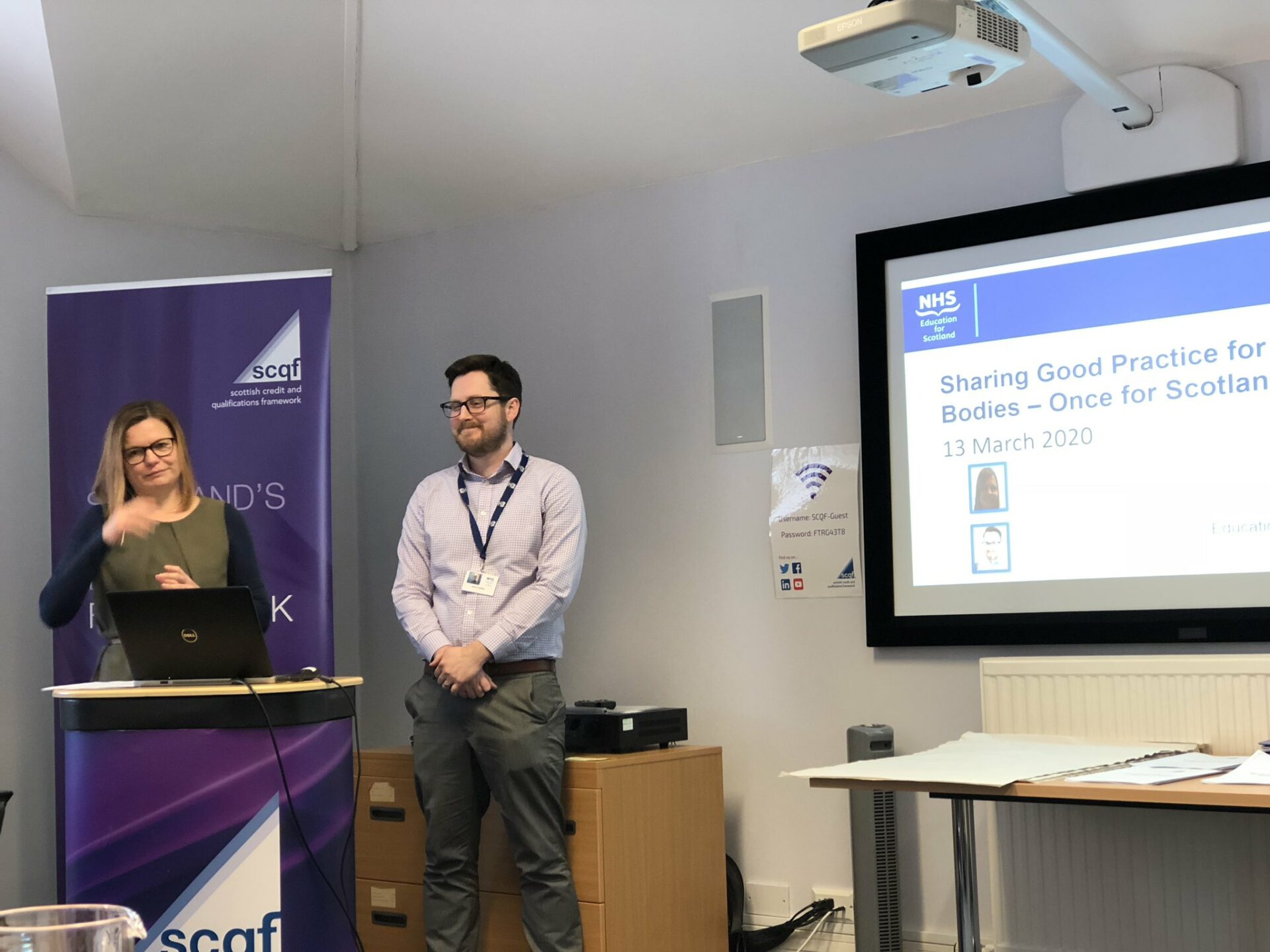
Universities, Colleges, approved SCQF Credit Rating Bodies and SCQF Partners attended this event to discuss a broad range of uses of the SCQF. The speakers from Young Enterprise Scotland (YES), NHS Education (NES) and Skills Development Scotland (SDS) presented inspirational, aspirational and progressive uses of the Framework.
The speakers shared their practice on how they are using the Framework. The successful YES Company Programme has been credit rated by Glasgow Kelvin College giving learners an SCQF qualification to add to their CV. NES are rolling out a Recognition of Prior Learning (RPL) scheme to its employees to recognise and retain employees in our National Health Service. SDS discussed how Scotland’s apprenticeships are generating skills for the future which are all on the SCQF Framework.
YES Company Programme SCQF Level 6 SCQF Credit Points between 26 and 30
The YES Company Programme inspires young people to learn and succeed through enterprise via a range of activities and programmes. The programme which is built around nine key employability skills was credit rated in 2019 in partnership with Glasgow Kelvin College.
Learners gain valuable meta skills that employers are searching for such as:

There are 8 milestones within the Company programme and these lend themselves to individual units which were developed and are supported by a range of online support material via the GKC Moodle platform.

Since the programme has been credit rated a number of new schools have come on board and the Company programme is being delivered across a range of schools via a range of volunteers – for session 19/20 this means 2000 learners are taking part in the challenge with 220 student companies set up.
Credit rating the Company programme means learners now receive formal recognition for all the great work that they undertake and the programme has also been registered with Insight which is another benefit derived from the having the programme on the SCQF.
Geoff Leask and Fraser Morrison inspired our audience with their presentations and are delighted with the outcome of this activity and also the partnership working that has developed with Glasgow Kelvin College and the hope is that in the future further programmes will be credit rated.
NHS Education for Scotland -Transforming Lives Through Lifelong Learning
In 2019 guidance materials were finalised and workshops delivered for staff involved in a pilot scheme within the NHS. This has identified NHS Board Leads who will support RPL activity in line with local requirements for the national roll out in 2021 for NHS Scotland. The RPL five-step process has many anticipated benefits for staff and the NHS.

Staff will have their learning validated and feel happier and more confident in their roles using SCQF to benchmark learning and plan for future learning if desired.
The NHS anticipate improved staff retention, minimising duplication of learning and offering a more supportive environment where careers are inclusive and flexible. Laura Christie and Stuart Caulfield demonstrated the aspiration and foresight of our NHS and a real life example of RPL using the SCQF level descriptors, which provided much debate within the group!
SDS Apprenticeships and Skills for the Future
Suzanne Hendry rounded off the morning by highlighting that research has shown that the world of work is changing and Scottish Apprenticeships need to be ready for the future, and that an effective apprenticeship system will benefit all of us. Suzanne spoke about “An internationally-respected apprenticeship system equipping businesses and citizens with the right knowledge, skills and capabilities to fuel a thriving Scottish economy” SDS aim to:
• Engage more employers in the creation and quality assurance of standards and frameworks
• Ensure standards & frameworks are relevant and meet the needs of learners and employers
• Build coherent learner journeys: linking across the apprenticeship family
• Deliver better value for money through more cost effective development, and greater uptake and use of standards
SDS define Meta Skills as “Meta-skills are embedded in Scottish apprenticeships, which in the work of work includes skills such as focusing, communication and creativity, skills which will help individuals to perform in a rapidly changing work environment”
Any future work to develop the future apprenticeship family will include a range of key partners from the labour market, social partners, education and training providers and across both government and public sector bodies.
And Finally…………
All of our speakers brought something different to the event showcasing the different uses of the SCQF, with a common thread of how important our national Framework is to Scotland and its future development within the education and employments landscape of Scotland.
Should you want to find out more about the Yes programme, the NES Recognition of Prior Learning Scheme and SDS Apprenticeship Schemes you can look them up on the following links:
YES Programme
NHS Recognition of Prior Learning
Skills Development Scotland Apprenticeships
Some feedback from participants on the day:

Scotland is home to the highest mountains in the UK and many people enjoy exploring them all year round. In the winter months, when they’re covered in snow and ice and blasted by cold winds, looking after yourself, let alone anyone else, can be a challenge. Winter Mountain Leaders are trained and assessed to do just that.
Individuals must have already gained the Mountain Leader qualification which involves six days of training and a five-day assessment in ‘summer’ conditions before entering into the winter equivalent; a further six-day training course and five-day assessment. Between training and assessment for both qualifications is a consolidation period where individuals develop their personal and leadership skills, using a syllabus to focus on any weaker areas.
Winter Mountain Leader is a qualification awarded by Mountain Training Scotland and is at SCQF Level 9
Winter Mountain Leader is a qualification awarded by Mountain Training Scotland and is at SCQF Level 9, the same level as a bachelor’s degree. The credit rating of 31 points is great evidence of the status of the qualification and allows employers to benchmark its level of difficulty against other qualifications, in this case, a university degree or graduate diploma. In many cases, it can also be used to transfer credit points between different learning programmes.
Outdoor instructor and Winter Mountain Leader Crystal Patton describes her motivation for pursuing the qualification:
“You can climb a mountain numerous times in summer conditions but in winter it can be a completely different place and is a really unique experience. Being able to facilitate others’ enjoyment of this was a huge factor in wanting to lead groups in winter.
Also from a professional development point of view, I think it is really good to keep learning and Winter Mountain Leader was always a qualification that I had held in high regard. After hearing tales of friends’ and colleagues’ experiences whilst going through the qualification, I knew the preparation and assessment would put me through my paces but equally would reward me with that feeling of achievement and satisfaction that you only seem to get after working hard!”
Winter Mountain Leader assessment involves spending two nights in the mountains, at least one of which will be in a snow hole; a shelter dug into a snowbank which provides protection from the elements. The winter mountain environment has many hazards including avalanches and cold injuries such as frostbite. To operate effectively requires a great deal of experience, gathered over several seasons, which involves a massive investment of time and money.
Crystal’s best advice to anyone else considering the scheme:
“Don’t let the fear of the unknown or your perception of the qualification hold you back. The fact that the qualification is well respected is a double-edged sword – it is this that makes you aspire to it but it is easy to listen to people’s tales of suffering and believe it is virtually unobtainable!
I very nearly backed out because I felt there was some magic formula that people who were Winter Mountain Leaders had that I didn’t have access to!! It is hard work but it is not so hard that you cannot achieve it by just putting in the time and effort. Invest in some good boots and try to keep your feet as happy as possible!”
For more information visit Mountain Training Scotland

Our children are the first generation to grow up in a digital world. It’s exciting and scary, and it will define their lives’ courses in ways older people can only begin to imagine. Awareness of how it works, how to live a secure, private and successful digital life, is hard to teach when they’re the pioneers.
Civic Digits is a digital theatre company devoted to exploring the use of technology, drama and interaction to explain and even more importantly to experience what it is to be human in that digital world.
The course in cyber-resilience and digital citizenship came out of a live performance, The Big Data Show, which tells the real-life stories of British teenage hackers in the 1980s. Alongside the story on stage, the audience of S1 and S2 pupils plays along with an app on their phones to interact with the actors and the storyline, using gaming and a variety of surprises to demonstrate how everything you do on line, just like in everyday life, has consequences. Data can’t be destroyed only changed!
We toured an early version of the show around Scottish schools in 2019, and realised that by involving the students before and after the show, we could build a solid foundation of awareness of what data is and how to be responsible with it. So, we developed in-school workshops that begin by relating the pupils’ personal experiences to data and showing by hands-on experimenting how even the most personal aspects of life – like how your face reflects your emotions – can be turned into data, and how data can be turned into emotion.
After the show, the second workshop covers explicit issues in how data is created and consumed in ways that affect our privacy and our life choices, with a focus on understanding what data breaches are, how they happen, and the areas where consent and awareness guard against abuse of our data by organisations.
The course was credit rated by SQA Credit Rating Service at SCQF Level 3 with 1 credit point in October 2019, so any pupils participating in the course receive formal recognition of their achievement.
We’re very excited to be doing this, as it addresses a lot of fascinating and important societal issues.
- How do you start teaching younger pupils the very basics of data and cyber resilience?
- How do we use the same tools the big companies use to capture our data to educate about and guard against the many potential problems that digital life throws up?
- How do we bring the age-old cultural techniques of story-telling and dramatic involvement into the world of smartphones and online communities?
It’s a privilege to build the course within the discipline and structure of the SCQF, and to feel we’re helping our pioneering children in ways that work and ways that matter. Schools are the crucible for creative engagement between generations, and partnership is everything in making things happen.
For more information on Civic Digits and the Big Data Show visit CivicDigits.com

Whilst academic qualifications remain hugely important, employers tell us over and over that ‘it’s the right attitude and aptitude skills that young people bring to the workplace that are critically important’ [i]
Can’t argue with that.
‘…gaining entry to university is not all about your qualifications, it’s also about the wider context…’ [ii]
Can’t argue with that either.
So future choices and opportunities are shaped and influenced not just by exam results, but by the totality of learning, skills, experiences and achievements that a young person brings to the table. Well, sometimes it doesn’t feel that way. No matter how often it is said that skills gained through extra-curricular activities such as volunteering and youth work are important, there will be voices saying that ‘it’s formal subject qualifications that really matter’.
So, what then of the ‘wider context’? In many instances, such voices are merely reflecting a lack of awareness of the spectrum of non-formal learning options available to young people within and beyond the school gates and a failure to recognise the real value and contribution of such opportunities to the development of skills for learning, life and work.
How do we ensure that such ‘wider learning and achievements’ are properly recognised and valued alongside formal education qualifications? Changes to policy and practice will certainly help and a number of strands of work are being pursued to assist this. Non-formal learning youth awards [iii] also have a significant role to play. A HMIe Review of Youth Awards in Scotland [iv] in 2015 recognised that:
- Young people gain a wide range of skills such as confidence, interpersonal, team working, leadership and employability through participation in youth awards.
- Youth awards support young people in their learning and to progress to further and higher education, training and employment on leaving school.
- For some young people facing additional challenges participation in youth awards is life-changing.
It also noted that ‘A lack of detailed knowledge and awareness of the full range of awards available, particularly in schools, is leading to missed opportunities.’
The Awards Network – a forum of (currently) 28 youth award organisations and 5 Strategic Partners – is working to address this lack of awareness and to promote the participation and achievements of young people gained through youth work awards. Its Vision is that Youth Awards are widely valued and recognised as critical evidence of every young person’s learning and achievement.
A Scottish Parliament debate on Year of Young People 2018 [v] secured a commitment from the Scottish Government to work towards wider achievement/youth awards being ‘recognised to be as valuable as traditional qualifications, as a legacy for Scotland’s Year of Young People.’
Subsequently, Education Scotland was tasked with establishing a National Working Group on Recognising Wider Learning and Achievement, to identify and share good practice around capturing and recognising these experiences in line with government’s Learner Journey Review [vi].
More youth awards are now on the Scottish Credit and Qualifications Framework (SCQF), delivering recognition for non-formal learning that complements and supplements that from formal education. As examples, Youth Scotland’s awards span from Hi5 at SCQF Level 2 to the Platinum Youth Achievement Award at SCQF Level 7 – recognising learning at the same level as an Advanced Higher; the Boys’ Brigade’s KGVI Leadership Award also sits at SCQF Level 7; Sports Leaders Awards are credit-rated from SCQF Levels 4 to 6; the Lowland Reserve and Cadet Forces have mapped their programme awards to SQA qualifications at Levels 4, 5 and 6; the Young Enterprise Scotland Company Programme now delivers an SCQF Level 6 qualification.
Achievement of some non-levelled awards can deliver evidence to satisfy requirements of other awards that are credit-rated, e.g. the John Muir Award providing evidence for achievement of SQA Personal Development Awards (SCQF Level 4) and Wellbeing Awards (SCQF Level 5); Girlguiding’s Young Leader Qualification and the SQA Leadership Award (SCQF Level 5); the Duke of Edinburgh’s Award and Volunteering Awards (SCQF Levels 3-5).
Youth Awards are achieved in a variety of settings, but whether through school, youth work, other community settings and workplaces, they are equally valid as evidence of learning achievement. Being aware of activities young people are engaged in outside of school can enable schools to help pupils design a learner journey more appropriate to their skills and aspirations. Being aware of the transferable skills developed through youth work programmes can strengthen the support youth workers provide to young people on their learner journey. Being aware of the growing range of non-formal learning awards will help employers to recognise skills that young people offer beyond exam results.
The Awards Network’s Awards Aware Scheme seeks to encourage awareness and understanding of youth awards and reflection on practice with respect to recognising the wider learning, skills and achievements of young people. Being Awards Aware is a win-win for young people, educators and employers.
Being Awards Aware ensures that young people have wider opportunities to shape their learner journey and that educators and employers recognise the skills and achievements gained by young people through youth awards.
Sign up to Awards Aware as a school/employer/educator, and demonstrate that you value the wider learning and achievements of our young people.
[i] See Tracy Black, CBI Scotland Director https://youtu.be/uKKGPT-m-tE
[ii] from ‘A guarantee of fairness when applying to university in Scotland’, Universities Scotland, 2019
[iii] Amazing Things – a guide to youth awards in Scotland (4th ed.), Awards Network, Sept 2017
[iv] A review of youth awards in Scotland – Helping young people to be successful, confident, effective and responsible citizens, Education Scotland, 2015
[v] Official Report – Parliamentary Business, Scottish Parliament 12/12/2017
[vi] The 15-24 Learner Journey Review, Scottish Government, May 2018
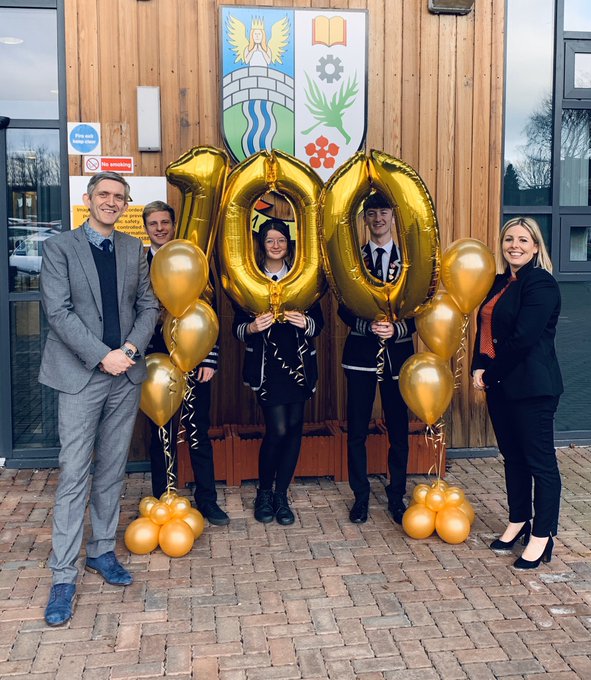
The SCQF Partnership has just recruited the 100th school into its School Ambassador Programme. The SCQF School Ambassador programme offers schools the opportunity to learn more about the benefits of the SCQF and the wider ways in which it supports learners such as recognising wider achievement, developing Senior Phase learning pathways in line with the Developing the Young Workforce strategy and giving equality between vocational and academic qualifications.
The milestone was marked with a celebratory visit to the school by Development Officer for the SCQF Partnership, Donnie Wood.
Donnie, who manages the programme, said:
“The School Ambassador programme has been incredibly well received by schools across the nation and is helping to raise awareness about the SCQF to staff, pupils and parents. Understanding the range of learning available to pupils and how they relate is key for pupils and parents and using the Framework can really bring that to life. Having positive and forward thinking schools like Denny involved can only strengthen the School Ambassador programme further as we continue to engage schools across Scotland.”
Jamie Vaughn-Sharp, Acting Rector at the school added:
“We are delighted to be involved in the excellent SCQF School Ambassador programme. As a school we are committed to ensuring that all our young people can achieve their very best. The opportunities to develop pupil, staff and families’ knowledge about the wide range of courses on the SCQF which pupils can access is an extremely exciting development. By ensuring that the courses which we deliver best meet pupil need, we feel confident that we can develop our curriculum to ensure Denny High pupils are achieving whilst in school and successfully moving onto a positive destination beyond school.”
The SCQF School Ambassador Programme is free to join and is open to any secondary school in Scotland.
If you would like your school to get involved, contact Donnie at d.wood@scqf.org.uk or visit the SCQF School Ambassador section of our website