

A unique project to profile and recognise the skills of veterans will launch next month. The SCQF Partnership (SCQFP) will work with colleagues at Skills Development Scotland (SDS) and the Ministry of Defence (MoD) to develop an online skills profiling tool specifically for service leavers, to support them in understanding the skills they have gained in the military.
The tool, which will be hosted on the My World of Work site owned by SDS, will help veterans identify how their skills translate into language easily understood by civilian employers or institutions in order to gain a job or move into further learning. It will also allow service leavers to better understand the qualifications they have gained by mapping these against the SCQF. Over 14,000 skilled and experienced individuals across the UK leave the armed forces every year.
Funded by Scottish Government, the project runs between April-October 2021, and will initially examine up to 20 job roles within the forces considered to be priorities for transitional support, and which are held by service leavers primarily settling in Scotland.
The SCQF Partnership began work in 2018 to simplify the system for mapping and translating qualifications gained in the armed forces, with the aim of helping veterans understand the level of the learning they have achieved in the Scottish context. The SCQF website currently features a number of leaflets designed for service leavers from a range of armed forces units. The leaflets provide information on the SCQF, Scotland’s national qualifications framework, and signpost individuals to organisations which support veterans with their transition into civilian life.
Graeme Dey, Minister for Parliamentary Business and Veterans said:
“We are delighted to support this project which will help those leaving the Services make an effective transition to civilian life as well as ensuring employers recognise the wide range of valuable skills, qualifications and experiences they have to offer.
“The Scottish Government remains wholehearted in our commitment to supporting our Armed Forces and veterans community and our ambition is for an approach to employability and education that focuses on the needs of the individual.”
Aileen Ponton, Chief Executive of the SCQF Partnership, added:
“The SCQF Partnership is delighted to be working with Scottish Government, SDS and the MoD to deliver greater recognition for the skills held by services personnel. The profiling tool will help individuals to articulate their skills clearly in order to find employment or education which will add value to them and improve Scotland’s economic future.”
For more information on the SCQF resources available for veterans, visit the website at https://scqf.org.uk/support/support-for-individuals/support-for-veterans/

Steiner Waldorf Schools across the world will expect that teachers have completed a specialist teacher education course like the one offered by Edinburgh Steiner Teacher Education Course (ESTEC). However, an increasing number of countries demand that teachers in independent schools are registered with the country’s teaching council as well. Since 2017, Scotland is one of those countries.
The SCQF framework provides a way of showing how qualifications relate to each other in Scotland and around the world. Gaining SCQF recognition for their in-house teacher training programme was especially important for ESTEC as it builds on its longstanding reputation for training teachers who now work throughout the world, as well as here in Scotland.
Globally the Steiner Waldorf Movement is the largest and fastest growing independent school system, now with over 1,100 schools in 70 countries and 2,000 early years settings. This international aspect has always been a feature of Edinburgh Steiner School, with many teachers and pupils from overseas.
“Our training course presently has students from 11 countries and over 90% of our students are non-British”, says Senior Course Tutor, Deirdre Hill. “We experience the international flavour of our Course to be a great strength, as we gain insights from our different educational and cultural backgrounds. Recent graduates have found positions in schools in Bulgaria, Spain and Cyprus, as well as Edinburgh.”
ESTEC’S Steiner Waldorf Initial Teacher Training programme has gained national recognition by being credit rated on to the SCQF by the University of Edinburgh. Designed to be underpinned by a BA, BSC or equivalent degree, it offers six Courses, each challenging and interesting in its own right and each accredited with a Certificate at SCQF Level 10. The SCQF is acknowledged internationally – aligned to other qualifications frameworks across the UK and Ireland and also to the European Qualifications Framework.
ESTEC has always been at the forefront of Steiner Education in the UK, recognised by the Steiner Waldorf Schools Fellowship for four decades. Over the last five years, it has been working tirelessly to widen awareness of its rigour and holistic approach to teaching that looks at education from a different standpoint to the mainstream school sector and to work with the GTCS to agree arrangements that will enable Steiner-trained teachers to remain compliant with the law and to obtain recognition for the Course.
The SCQF framework provides a way of showing how qualifications relate to each other in Scotland and to other qualifications around the world, measuring qualifications by level of difficulty (Levels 1 – 12) and time taken (1 SCQF credit = 10 hours of learning time). Accredited with an SCQF Level 10 rating, the Course is now commensurate with other Initial Teacher Education (ITE) programmes.
“Students on this Course are now recognised as working at Level 10 of the Scottish Credit and Qualifications Framework (SCQF)” says Quality Assurance Coordinator, Emily Maclean. “We have been guided and supported by The University of Edinburgh to ensure that we reach and maintain that credit-rating in our delivery and assessments. This assurance of the good standing and credibility of our Courses is invaluable in enhancing our training as a valid international Steiner Waldorf training programme, not just by Steiner Waldorf schools, but by governing bodies too.”
Successful graduates of the 3-year (part-time) Professional Diploma in Steiner Waldorf Education are now eligible to gain registration with the General Teaching Council for Scotland (GTCS) as a Named School Only Steiner Teacher within Steiner Waldorf Schools in Scotland, enabling graduates to comply with new legislation phased in in October 2020, which requires all teachers in independent schools to be registered, outlined in The Education (Scotland) Act 2016.
ESTEC students strive towards autonomously working within a set of unifying principles that call out to be adapted: a framework that advocates practical and creative activities are as important as the development of thinking for learning to take place; offering a broad curriculum that encourages creative teaching for sustainable learning which embraces the individual child on their developing journey.
“I was drawn to ESTEC because I was having doubts about going back into mainstream education. I remember thinking to myself, I want this [Steiner] education so badly for my children, why shouldn’t I look into it for myself”, says Second Year student, Tess McNatt.
To learn more about the six Courses, read their new prospectus now.
Glasgow Clyde College is one of Scotland’s largest colleges, employing more than 1000 staff and with 17,000 enrolled students. The College has three campuses in Anniesland, Cardonald and Langside and also offers a range of community-based, adult learning courses in local venues, including community centres, schools and libraries across south and north-west Glasgow.
During a year which has proven to be like no other, Glasgow Clyde College Community Learning & Development (CLD) team has continued to use the SCQF to support community learners in making positive changes to their lives and to recognise wider achievement, as well as increasing the College’s work with regional partners such as schools, communities and training providers, to support successful learner journeys.
In response to the current exceptional circumstances created by the COVID pandemic, it was recognised that people required to look to different means to access their educational, work and personal needs.
To meet this need, Alan Milson, CLD Officer, developed a new unit introducing learners to Video Conferencing. The Introduction to Video Conferencing: assisting online meets for learning, work and family (SCQF Level 3 with 2 credit points) was approved by the College in January 2021.
This new 20-hour unit is designed to provide accreditation and support to new and existing learners who wish to understand the basics of video conferencing in order to undertake activities such as online learning, interviewing for jobs, supporting their children’s learning and engaging in family and social activity through apps such as Microsoft Teams, Zoom, Google Meets. Or simply to use this medium to continue to virtually meet and communicate in their everyday life to reduce the isolation experienced during lockdown.
The unit aims to provide practical IT skills from the downloading of the app to the setting up and hosting of online meets. It allows learners to assess which video conferencing app would most suit their needs in differing situations. It also allows them to engage with a variety of different video conferencing apps, when selected by others.
Sheila White, Community Learning and Development Manager, said:
“As a result of the COVID-19 pandemic the CLD team recognised the value in creating a unit around video conferencing platforms for our use within the college/community environment. Colleagues from both the voluntary and statutory sectors identified that there is a real need and demand for people in the community to be more confident and competent in the use of video conferencing platforms.”
There are no other accredited community focused IT qualifications like this available or delivered at this level. On successful completion of this unit, learners can progress onto other SQA or other SCQF credit rated qualifications.
Some comments from current students:
“This video conferencing course has helped me have a deeper insight on zoom. Am now able to do my dissertation interviews with ease.”
“I really enjoyed the course. It gave me the confidence to apply for a volunteering position – working with people with learning difficulties online. When the organisation heard I was doing this course they were very excited and accepted me as a volunteer immediately.”
“Doing this course had made me realise I am not alone in needing to learn more about new technology – my confidence has grown along with my skills to use different video conferencing platforms.”
“I really liked that the course focused on practice. By being asked to do things like taking control of the videoconferencing meet, I moved from being just a guest on a call to taking a real active part.”
“I know so much more about what Zoom and Teams are capable of doing by being part of the course.”
For more information on courses available at Glasgow Clyde College, visit the website
Background
Renfrewshire has 11 Secondary, 49 Primary and 2 Additional Support Needs schools. All establishments provide a variety of personal/wider learning and achievement opportunities for children and young people.
Renfrewshire joined the Scottish Attainment Challenge in 2017 and with this, a deeper analysis of need was carried out around the poverty related attainment gap and the required action to support closing the gap and raising attainment for all. As such, personal/wider learning and achievement activities run through a number of attainment challenge and core workstreams, as a key element of improving outcomes for children, young people and families.
Rationale
Although school establishments within Renfrewshire offer personal and wider learning opportunities for children and young people, ongoing work is required to ensure greater cohesiveness to the Building the Developing Workforce agenda.
Wider learning opportunities are used extremely well to build self-efficacy and confidence in children and young people. However, evidence suggests that improvement is required to link wider learning to more opportunity and ‘currency’ in the form of awards and the creation of alternative pathways.
Change Process
A collaborative group was established consisting of secondary school senior leaders, an education manager and a development officer. The purpose of this group was to consider:
1) what wider achievement awards were being successfully offered to young people in the senior phase
2) how these awards were supporting ‘currency’ i.e. tariff points, and
3) in what ways establishments could be encouraged to offer a great range of wider achievement award opportunities.
The group agreed that an effective approach to supporting schools to move ahead with offering a greater range of wider achievement award opportunities in the senior phase, was the establishment of a wider achievement website.
The purpose of Renfrewshire’s Wider Achievement Award website is to support professional learning and thinking, share practice, share resources and make important links to the wider Developing the Young Workforce agenda.
The website was launched in September 2020.
Impact and Next steps
Initial feedback around the website has been positive. Secondary practitioners find it extremely helpful as a ‘one stop shop’ for supporting their professional learning and as a place where they can access all the resources required for moving forward with wider achievement awards, including; the SQA Leadership, Personal Development and Mental Health and Wellbeing awards.
However, feedback has shown that the primary sector would also like to use the website to increase their knowledge and understanding, share practice and get access to resources. As a result, the ‘Wider Achievement in the BGE’ tab has been added.
There has also emerged a need for more knowledge development around using wider achievement awards to create alternative pathways for young people, especially in response to concerns around post-school opportunities as a result of the COVID pandemic. Therefore, we have now added the ‘Alternative Pathways’ tab.
Finally, it has emerged that practitioner awareness of the website is not far-reaching enough and so we have agreed to create termly ‘Sways’ to raise the profile of the resource and highlight any additions or important wider achievement award news. The Sway also allows us to analyse how many practitioners are viewing the information at a deeper level.
The Website
Members of the central Renfrewshire Council team are really keen for practitioners not only in Renfrewshire, but across the whole of Scotland, to make use of the website and to consider contributing examples of best practice at their schools or within their Local Authority Area. Comprehensive templates are available to download from the website and the team would encourage as much participation and information-sharing as possible.
The site also contains lots of useful resources from education partners such as the SCQF Partnership, Awards Network, Education Scotland and YouthLink Scotland. In addition, the website features input from SCQF Ambassador School, Galashiels Academy. The school has very well developed wider achievement learner pathways for its pupils and the head teacher, Kevin Ryalls, and some S6 pupils recently appeared in a video produced by the SCQFP to demonstrate how successful these pathways have been for pupils of all abilities. The video is available to view here or on the Renfrewshire Wider Achievement Awards site or
If you have any ideas on how to improve the website, or would like to make a contribution, get in touch with Zoe Inglis, Development Officer (Curricular Transition, Parental Engagement) on zoe.inglis@renfrewshire.gov.uk
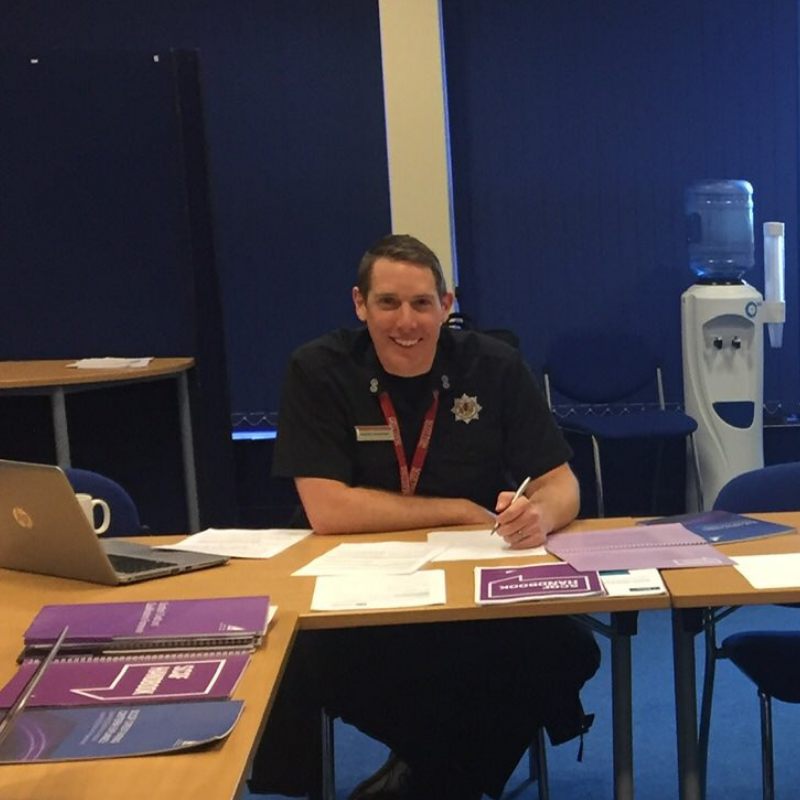
Roger Crawford, Scottish Fire and Rescue Service – Training Function
Roger has held a number of operational and non-operational roles within the East and West Service Delivery Areas of the Scottish Fire and Rescue Service. He currently works within the Training Function and is responsible for the development and delivery of training which includes the review and implementation of governance and quality assurance processes for training across Scotland. He is a member of the SFRS Credit Rating Team and was actively involved in the initial application to become a Credit Rating Body and has subsequently worked closely with both the SCQF Partnership and course owners within the SFRS in order to expand the set of credit rated courses and programmes.

Richard Jefferies, Lecturer in Management and New Technologies, UWS
Before embarking on an academic career Richard gained extensive industrial experience in the retail and hospitality sectors undertaking a range of jobs within a number of organisations. Richard’s research interests are based in the Organisational Studies area with specific interest in Change Management, Organisational Development & Culture and Leadership. As chair of the Organisational Transformation, Change and Development Special Interest Group of the British Academy of Management Richard is engaged with the latest research and knowledge exchange in this dynamic and exciting area of management scholarship.
As a Lecturer in Management and New Technology at the University of the West of Scotland Richard undertakes course development, teaching and student supervision on undergraduate and postgraduate degree programmes and creates training and development materials for academic studies and industrial training programmes.
A Chartered Manager with the Chartered Management Institute, Associate at the Chartered Institute of Personnel and Development and a Fellow of the Higher Academy Richard recognises the importance of professional qualifications and works to bridge the gap between academic learning and professional practical experience.
Joining Richard from the SCQF Partnership is Development Officer, Fiona Garry.

Diane Drummond, Director at B-DACS Air Conditioning Services
My career started in retail and I went into banking in 1999. I progressed my career with the bank over 15 years and on leaving held a senior position, travelling the UK rolling out Learning and Development programmes. I took voluntary redundancy in 2012 and took a short break before moving to B-DACS full time.
B-DACS is a family-run business providing air conditioning and ventilation services in Glasgow, Edinburgh and Scotland. Our best assets are our people and getting it right is important, so we launched the academy into our business last year.
The programme itself is unit based with all onsite evidence being the main focus. Having the right values is important and at B-DACS we pride ourselves on nurturing our people to their full potential.
We are now developing a digital platform, but the results have shown that our staff value training and we have seen staff loyalty at an all time high. We have had little attrition in our engineering field and taking people from unemployment has seen us reap the rewards.
Joining Diane from the SCQF Partnership is Julie Cavanagh, Head of Partnerships and Communication
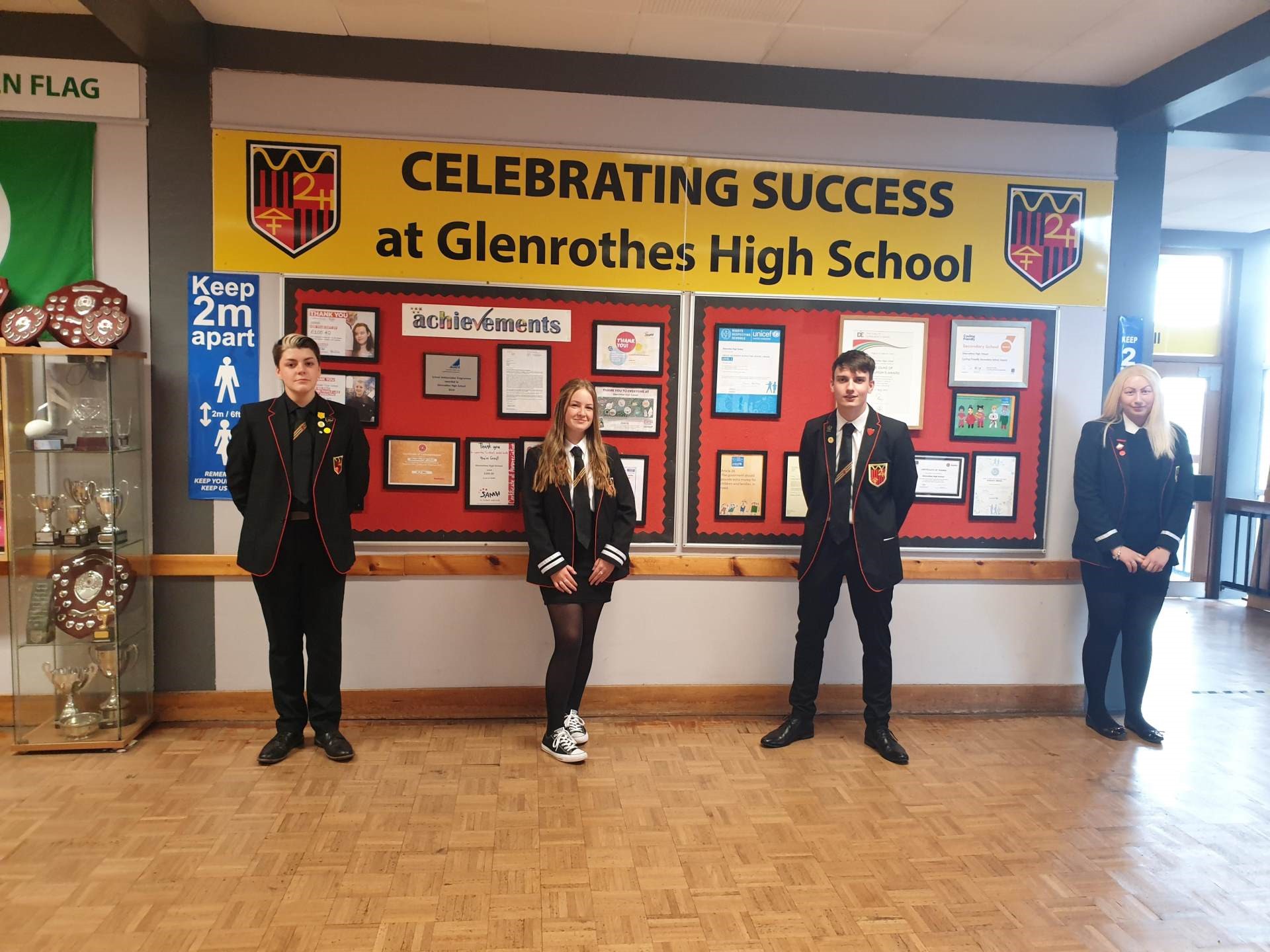
By Alan Cumming, Depute Head Teacher, Glenrothes High School
Glenrothes High School has approximately 780 pupils. Our school serves the centre of a new town, where there has been, over the last 10 years, significant changes in the demographic and employment opportunities across Glenrothes. Several major employers either closed down completely or relocated. Almost 86% of our pupils live in SIMD 1-5.
On taking up post in August of 2014, Glenrothes High School had a very traditional curriculum with a limited number of National 3 or alternative qualifications, including Skills for Work courses. At the time it was a priority to review our Curriculum Rationale, to reflect changes in the town and take cognisance of current Labour Market Information from SDS. Links with local colleges were also limited at that time.
Initially we worked with Scotland’s Rural College (SRUC) to introduce a bespoke course for Glenrothes High School; Grow Eat Make Sell (GEMS), where pupils gain a SCQF level 4 Horticulture qualification and units of Hospitality, Enterprise and Employability. This course has been particularly successful in engaging a range of learners and providing them with a direct pathway to SRUC.
Within our own curriculum context, we quickly developed courses at SCQF level 3 which were delivered within our main curriculum offering and discretely through our Support for Learning department.
Foundation Apprenticeships are a superb addition to our curriculum which have afforded our learners the opportunity to gain vocational experience in various fields of work, with clear employment opportunities. In session 2017-18, there were four Foundation Apprenticeship programmes being delivered within Glenrothes High School: Social Services (Children and Young People), Social Services (Healthcare), Engineering and ICT Software. This alternative pathway has been hugely successful with one of our pupils winning National Foundation Apprentice of the year. This in turn led to his appearance on Scottish Television’s advertisement for Foundation Apprenticeships.
Over the last 5 years we have made significant progress in the delivery of courses in partnership with Fife College, to the extent that Fife College certificated 186 qualifications for Glenrothes High School learners last session. Most of these were delivered by college lecturers in school and resulted in pupils gaining a range of awards from National 4s and 5s, National Progression Awards (SCQF levels 4, 5 and 6) and HNCs. This year we have worked closely with the college to align timetables to allow learners to attend a combination of both school and college. A good example of this are pupils who wish to study law at university. We arranged that they would study a HNC for two days a week at Fife College alongside Advanced Higher English and one other subject at Glenrothes High School. Fife College also delivered during May (exam leave) a National Progression Award in Administrative Activities SCQF level 4 (which includes SCQF level 4 Employability) to our learners who would benefit from extra qualifications. The pleasing aspect of this work is the pathways that become clearer to the learners.
Our curriculum is developing on an annual basis. Glenrothes High School is offering a wider range of qualifications in line with localised Labour Market Information, which are better suited to meet the needs of our young people and community. The newest curricular subjects include the delivery of NPAs in Bakery, Cake Craft, Exercise and Fitness Leadership, Data Science, Computer Games Development, Travel and Tourism, Business and ICT and PC Passport, in addition to Skills for Work in Early Education and Childcare.
As an SCQF Ambassador School we have worked successfully with the community in promoting the range of qualifications available. Learners and parents now understand that different qualifications facilitate specific pathways better. For example, National Progression Awards often offer a vocational or practical element which fits well with the progression to college, or that the Foundation Apprenticeships offer a direct route into employment through a Modern Apprenticeship. As a result, learners make smoother and more efficient transitions to their chosen positive destinations. We are witnessing less pupils working towards traditional National 5 (SCQF level 5) courses in school, then moving to college to complete a SCQF level 5 course. An example would be pupils who complete a Business and IT NPA at SCQF level 6 who will progress straight onto HNC Business at SCQF level 7 at college.
If your school would like to find out more about the SCQF School Ambassador programme, or contact Donnie d.wood@scqf.org.uk